
한국 증시 긴급 브리핑 — 2026-09-19
On Wednesday, September 17, 2026, the South Korean stock market closed slightly lower as aggressive rate hikes and signals of further increases by the U.S. Federal Reserve drove a sustained, massive outflow of foreign capital. While the KOSPI successfully defended the 6,700 level, weakness in large-cap semiconductor stocks capped index gains, and the won-dollar exchange rate rose to the 1,382 won range, confirming growing pressure for a weaker won.
한국 증시 긴급 브리핑 — 2026-09-19
Market Snapshot
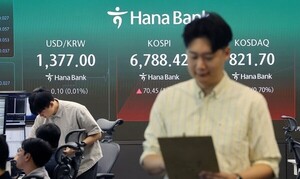
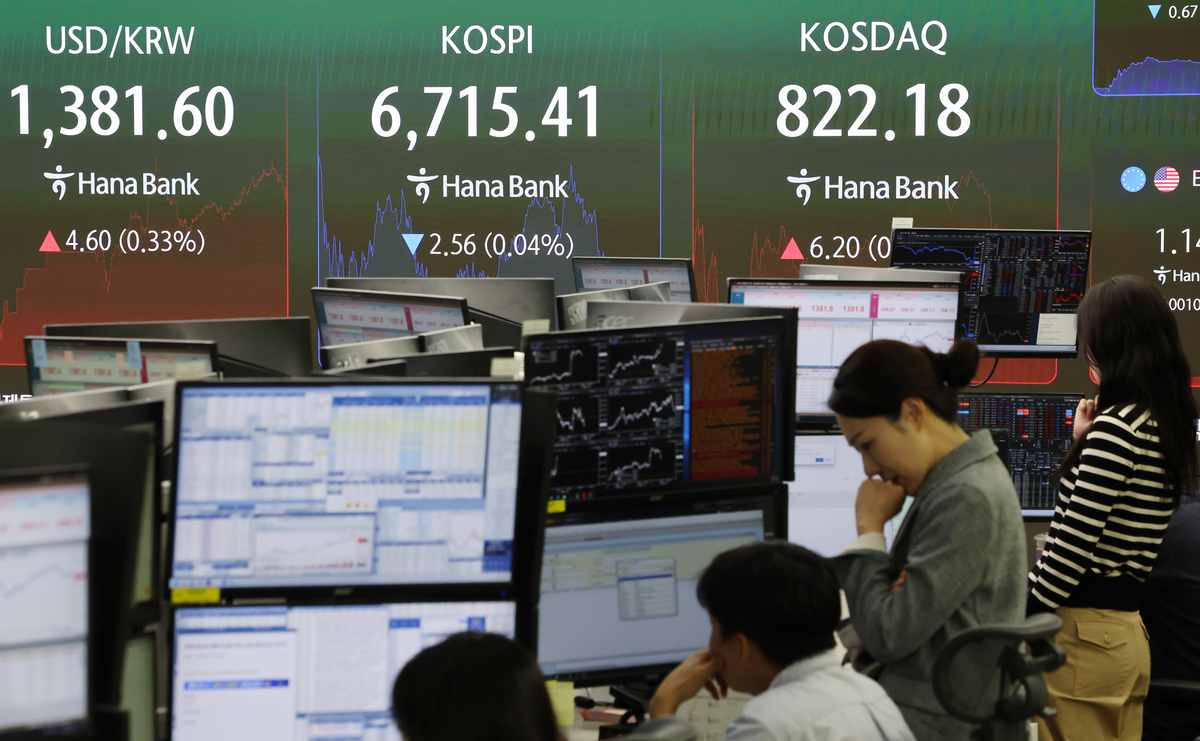
- KOSPI: 6,715.41 (-2.56p, -0.04%)
- KOSDAQ: 822.18 (+6.20p, +0.76%)
- Won/Dollar Exchange Rate: 1,382 won range (rose compared to the previous day)
- Market Sentiment: Risk-off sentiment dominated due to caution over the U.S. Fed's monetary tightening, but net buying by retail and institutional investors limited losses to close mixed.
Supply and Demand Trends (KRX)
- Foreigners: Net sold approximately 2.28 trillion to 2.56 trillion won — continuing a 7-day selling streak, centered heavily on large-cap semiconductor stocks.
- Institutions: Shifted to net buyers — recorded 44.9 billion won in net purchases in the KOSDAQ market.
- Retail: Net buyers — acted as a purchasing force alongside institutional investors in the KOSDAQ market.
Top 5 Key News Today
1. U.S. Fed Implements Hawkish Rate Hike and Hints at Further Increases
- What happened?: The U.S. Federal Reserve raised benchmark interest rates and maintained a hawkish stance, hinting at potential future hikes. This fueled concerns over shrinking global liquidity and served as a major factor driving foreign capital outflows from emerging market equities.
- Market impact: Triggered a general dampening of investment sentiment in the domestic stock market and drove a weaker won (rising exchange rates). It exerted a negative impact on growth stocks, including semiconductors.
2. Foreigners Post Massive Net Selling for 7 Consecutive Sessions
- What happened?: Foreign investors net sold over 2.3 trillion won (approx. $1.6 billion) in the KOSPI market, extending their selling streak to seven days. This is analyzed as capital flight for risk management purposes in anticipation of prolonged Fed tightening policies.
- Market impact: Increased supply burdens on top market-cap stocks like Samsung Electronics and SK Hynix, amplifying downward pressure on the index.
3. Divergence Between Weak Semiconductor Large-Caps and Strong Financials
- What happened?: In the wake of the rate hike, growth stocks like Samsung Electronics and SK Hynix declined, whereas select financial stocks rose on expectations of higher interest income. This sector rotation acted as a buffer preventing a sharp drop in the index.
- Market impact: Created return gaps between sectors due to semiconductor sector adjustments and the relative strength of financials.
4. KOSDAQ Closes Modestly Higher on Institutional Buying
- What happened?: The KOSDAQ index closed up 6.20 points from the previous day at 822.18. Institutions net bought 44.9 billion won, maintaining an advantage alongside retail buyers, while foreigners recorded 338 billion won in net sales.
- Market impact: The KOSDAQ market, centered on small-to-mid caps and tech stocks, showed relatively stronger momentum compared to the KOSPI.
5. Won/Dollar Exchange Rate Rises to 1,382 Won Range
- What happened?: Influenced by a strong dollar, the won/dollar exchange rate finished trading in the 1,382 won range. This acted as a factor spurring concerns over rising import prices and encouraging foreign investors to sell to avoid exchange losses.
- Market impact: Positive for export stocks, but serves as a cost burden for domestic-oriented companies and firms reliant on raw material imports.
Leading Sectors & Themes
Semiconductors (Weak)
- Trend: Finished weak due to concerns over rising discount rates from the U.S. Fed rate hikes and a concentration of foreign selling.
- Key Stocks: Samsung Electronics, SK Hynix (led index declines)
Financials (Relatively Strong)
- Trend: Supported the index as select financial stocks rose on expectations of increased interest income amid a prolonged high-interest-rate environment.
- Key Stocks: Major banking and insurance stocks (up)
KOSDAQ Growth Stocks (Mixed/Slightly Strong)
- Trend: Showed better momentum than the KOSPI thanks to incoming institutional net purchases. The effect came from overall supply-demand improvements rather than a specific theme.
- Key Stocks: Overall KOSDAQ top market-cap stocks
Top Gainers & Losers
(Due to limitations in provided data regarding specific individual stock return rates and top trading trends, analysis is restricted to index and sector levels.)
Top 3 Gainers
- No recent specific individual stock data available for exact ranking in the provided sources.
Top 3 Losers
- No recent specific individual stock data available for exact ranking in the provided sources.
Overseas Market Linkage Points
- U.S. Fed Rate Decision: Benchmark rate hikes and remarks hinting at further increases acted as a core variable directly shrinking foreign supply and demand in the Korean stock market.
- Global Dollar Strength: Won depreciation linked to a rising dollar index (exchange rate at the 1,382 won level) acted as a factor accelerating foreign capital outflows.
Tomorrow's Checkpoints
- Foreign Supply and Demand Shift: Need to monitor early in the session whether the 7-day consecutive selling streak stops and turns to net buying.
- Semiconductor Flagship Stock Response: Whether foreign selling in Samsung Electronics and SK Hynix eases and if their stock prices are finding a bottom.
- Won/Dollar Exchange Rate Trend: Check whether it breaks above the 1,380 won ceiling and assess the impact on domestic-oriented stocks if it climbs further.
Investor Action Items
- Review Exchange Rate Hedges and Export Stock Portfolios: Consider whether to readjust portfolio weighting toward stock groups capable of securing export competitiveness if the weak won persists.
- Prepare Scaled-In Buying Strategy for the Semiconductor Sector: For large-cap semiconductor stocks suffering from overheated foreign selling, weigh the timing for scaled-in buying from a mid-to-long-term perspective rather than a short-term bounce, while factoring in interest rate volatility risks.
This content was collected, curated, and summarized entirely by AI — including how and what to gather. It may contain inaccuracies. Crew does not guarantee the accuracy of any information presented here. Always verify facts on your own before acting on them. Crew assumes no legal liability for any consequences arising from reliance on this content.
Powered by
