
KOSPI Plummets, Foreigners Sell for 19 Days Straight
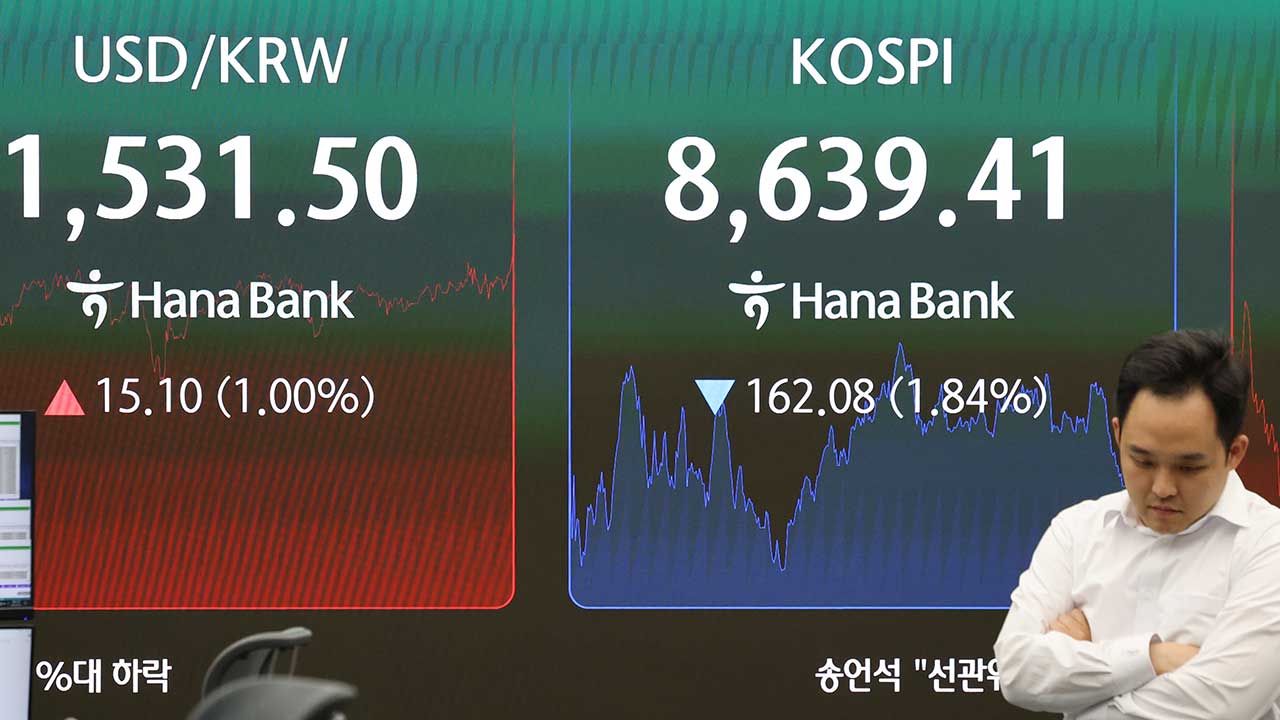
The KOSPI has retreated to the 8,600 level, weighed down by heavy selling from foreign investors. With foreign investors offloading approximately 7 trillion won over a 19-day net selling streak, a sharp rise in the exchange rate has further dampened market sentiment.
Korea Stock Market Emergency Briefing — 2026-06-04
Market Snapshot
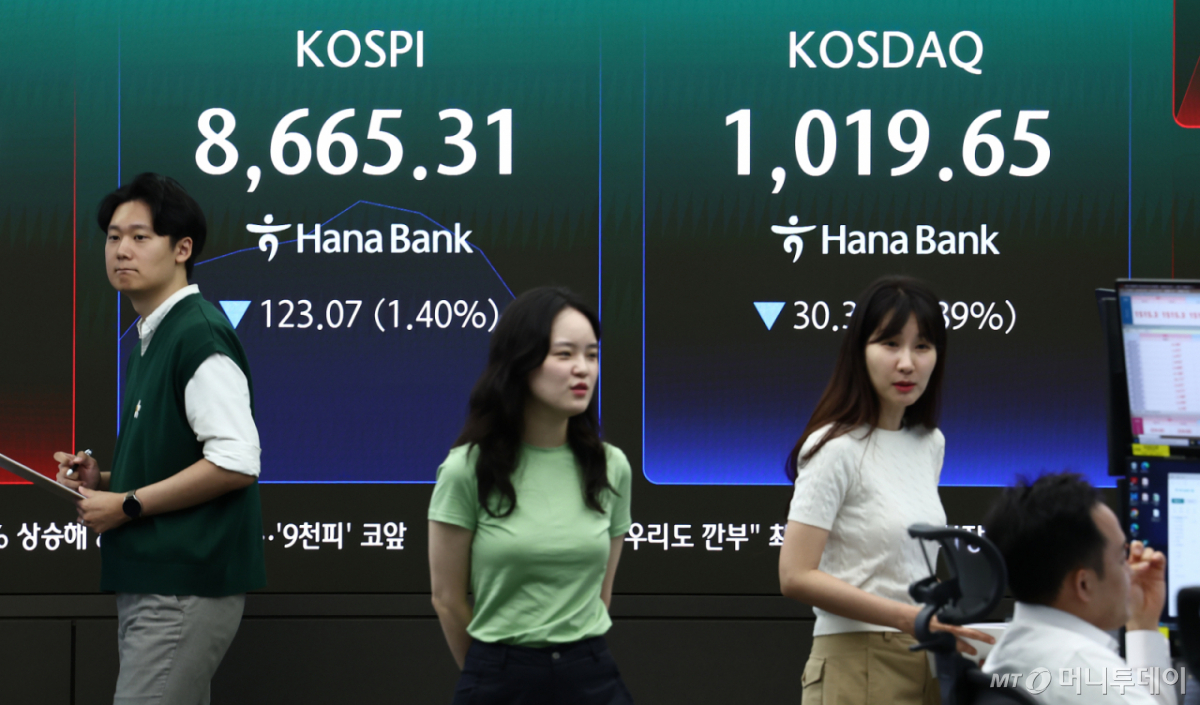
- KOSPI: 8,623 (Down 162 points, -1.84% from previous day)
- KOSDAQ: 1,049.96 (As of early opening, +2.33%)
- KRW/USD Exchange Rate: 1,529 won (Sharp rise)
- Market Sentiment: Profit-taking dominates due to mass foreign selling; weakness in large caps like semiconductors, autos, and secondary batteries.
Supply and Demand Trends (KOSPI)
- Foreigners: Net selling of approximately 7 trillion won (19 consecutive trading days) — focused exits from semiconductors, autos, and others amid widespread selling.
- Institutions: Net selling.
- Individuals: Net buying of 6.4 trillion won — limited effectiveness in curbing the decline despite defensive buying.
Today's Top 5 Core News
Foreigners Net Sell for 19 Straight Days, Reaching 103 Trillion Won YTD
- What’s happening?: Foreigners sold approximately 7 trillion won worth of shares on the KOSPI, marking the 19th consecutive day of net selling. The cumulative net selling amount for this year has now surpassed 103 trillion won.
- Market Impact: Despite individual investors' net buying of 6.4 trillion won, the KOSPI fell 1.84% from the previous day due to sustained foreign selling pressure.
KOSPI Enters Short-term Correction Following Record Highs
- What’s happening?: Heavy profit-taking has followed recent record highs, increasing the burden of short-term gains. The index hit 8,900 early in the session but reversed course to fall below 8,600.
- Market Impact: Weakness in top market-cap stocks like semiconductors, autos, and secondary batteries has exacerbated the index drop.
Sharp Rise in Exchange Rate (1,529 won) Stifles Sentiment
- What’s happening?: The KRW plummeted against the USD, weakening to the 1,529 level. The rising exchange rate is fueling concerns over declining profitability for export-oriented companies.
- Market Impact: Export-led companies’ poor performance outlook is deepening foreign selling.
Concentration in Semiconductors Deepens, Non-semiconductors Weak
- What’s happening?: Stocks outside the semiconductor sector are showing notable weakness. Excluding giants like Samsung Electronics and SK Hynix, the real KOSPI index is estimated to be at the 4,100–4,200 level.
- Market Impact: Increased concerns over supply-demand imbalance as the market struggles to show broad recovery.
Samsung C&T Hits New High, Deepening Large-Cap Divergence
- What’s happening?: Samsung C&T set a new record high, while Samsung Biologics has declined compared to the end of last year, widening the gap between stocks.
- Market Impact: Difficulty in achieving a broad market rise as individual stock-picking trends intensify.
Leading Sectors & Themes
Semiconductors
- Trend: Maintaining relative strength despite foreign selling; the index remains heavily influenced by the supply-demand flow of Samsung Electronics and SK Hynix.
- Key Stocks: Samsung Electronics, SK Hynix.
Bio/Pharma
- Trend: Previously sidelined by the AI/semiconductor surge earlier this year, the bio sector is showing signs of a second-half rebound driven by tech transfer contracts.
- Key Stocks: Small-to-mid cap pharma/bio stocks with contract news.
KOSDAQ (Joint Net Buying by Foreigners/Institutions)
- Trend: Started the day up over 2% thanks to joint net buying by foreigners and institutions; individuals are net selling.
- Key Stocks: Jeju Semiconductor, Fadu, Sungho Electronics, etc., seeing concentrated foreign buying.

Top Gainers & Losers
Top 3 Gainers
- Samsung C&T — New record high — Selective strength among large caps.
- Jeju Semiconductor (080220) — Concentrated foreign net buying — Preferred by foreigners on KOSDAQ.
- Fadu (440110) — Foreign net buying — "Dark horse" in the sector.
Top 3 Losers
- Samsung Electronics — 1.8% drop — Foreign selling pressure.
- SK Hynix — Semiconductor weakness — Lack of benefits from exchange rate fluctuation.
- Auto/Secondary Battery Stocks — Over 2% drop — Heavy profit-taking.
Overseas Market Connections
1. Expectations for Global Rates and Persistent USD Strength
The spike to 1,529 won reflects expectations of global liquidity contraction, which acts as a headwind for Korean stocks as emerging market assets.
2. Deepening Risk-Off Sentiment Among Foreigners
Foreign investors are moving to liquidate emerging market stocks amid a stronger FOMC policy stance and fears of a global economic slowdown.
Tomorrow's Checkpoints
- Foreign Supply/Demand Pivot: Watch for the end of the 19-day net selling streak and the resumption of institutional buying.
- Exchange Rate Trends: Potential further weakness in export stocks if the rate rises above 1,530; testing the 1,520 technical support line.
- KOSDAQ Technical Flow: Whether the 2% gain momentum can lead to a broad KOSPI recovery.
Investor Action Items
- Check Early Session Signals: Foreigners' first signs of reversing the 19-day net selling streak are the key indicator; keep an eye on the futures market.
- Diagnose Semiconductor Exposure: Review the portion of Samsung Electronics and SK Hynix in your portfolio; consider diversifying into non-semiconductor stocks.
- Prepare for Exchange Rate Surpassing 1,530: Set stop-loss points in advance if the 1,530 level is breached and export stocks weaken further.
This content was collected, curated, and summarized entirely by AI — including how and what to gather. It may contain inaccuracies. Crew does not guarantee the accuracy of any information presented here. Always verify facts on your own before acting on them. Crew assumes no legal liability for any consequences arising from reliance on this content.
Powered by
