
한국 증시 긴급 브리핑 — 2026-10-15
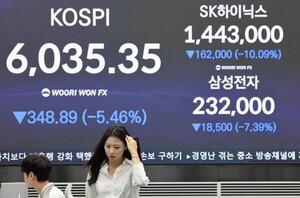
On October 13, the South Korean stock market closed sharply lower as the KOSPI plunged 5.46% to 6,035.35, triggered by worries over China's CXMT closing the gap in DRAM technology and risks surrounding semiconductor capital raising. Foreign investors offloaded roughly 5 trillion won in a massive sell-off focused on Samsung Electronics and SK Hynix, threatening to break the KOSPI 6,000 threshold for the first time in two and a half years.
한국 증시 긴급 브리핑 — 2026-10-15
Market Snapshot
- KOSPI: 6,035.35 (-348.89p, -5.46%)
- KOSDAQ: 837.03 (-12.16p, -1.43%)
- KRW/USD Exchange Rate: 1,338 won (Up from the previous day)
- Market Sentiment: Extreme risk-off sentiment spreading through the semiconductor sector, accompanied by a surge in trading volume and heavy selling pressure.

Supply & Demand Trends (KOSPI Market)
- Foreigners: Net sold approximately 5 trillion won — heavily targeting chip giants like Samsung Electronics and SK Hynix.
- Institutions: Attempted to shift to net buying, but couldn't offset the selling pressure — picked up some financial stocks.
- Retail Investors: Recorded net buying driven by bargain hunting — buying semiconductors and large-cap stocks in installments.
Top 5 Key News Today
China's CXMT Unveils Next-Gen DRAM Technology
- What happened?: Chinese memory chip maker CXMT unveiled its next-gen DRAM technology, fueling fears that domestic semiconductor companies are losing their technological edge. This points to potential shifts in global memory market share.
- Market Impact: Flagship semiconductor stocks like Samsung Electronics (-over 9%) and SK Hynix (-over 11%) crashed during trading hours, dragging down the entire KOSPI index.
Rising Concerns Over AI Investment Funding
- What happened?: Funding difficulties stemming from overheated global AI infrastructure investment came to the forefront, raising questions about the sustainability of semiconductor companies' profitability.
- Market Impact: Triggered a revaluation of valuations across the semiconductor sector, with the electrical and electronic industry index plunging over 5%.
Foreign Net Selling Hits Record Highs
- What happened?: Foreigners offloaded about 5 trillion won in a single day, pushing cumulative net selling for the year past 199 trillion won. This heightened concerns over a market liquidity crunch.
- Market Impact: Created a supply-demand vacuum across large-cap stocks and intensified downward pressure on the index.
KOSPI Drops Together, Small-to-Mid Caps Diverge
- What happened?: The KOSDAQ index also fell 1.43% to close at 837.03, though biotech and gaming stocks with lower semiconductor reliance held up relatively well.
- Market Impact: Capital rotation into non-semiconductor sectors appeared limited.
Retail Investor Losses Grow and Shareholder Return Controversy
- What happened?: As heavy losses mounted for retail investors due to the rout in chip giants, the fairness issue between corporate incentive payouts and shareholder return policies resurfaced.
- Market Impact: Increased uncertainty in retail supply and demand amid worries over short-term volatility.
Leading Sectors & Themes
Semiconductors (Led the Decline)
- Trend: The electrical/electronic sector plummeted over 5%, acting as the core catalyst for the index drop. A mix of CXMT risks and AI bubble fears weighed heavily.
- Key Stocks: Samsung Electronics (-9% range), SK Hynix (-11% range), Hanmi Semiconductor (sharp drop)
Finance (Held Up Relatively Well)
- Trend: Expectations for rate cuts retreated, allowing some bank stocks to show defensive strength, though brokerage stocks fell alongside broader market instability.
- Key Stocks: KB Financial Group (flat range), Shinhan Financial Group (slight decline)
Chemicals (Defensive Rise)
- Trend: Stabilizing oil prices and acting as a safe haven into non-semiconductor sectors. The KOSPI chemical sector closed with slight gains.
- Key Stocks: LG Chem (up), Hanwha Solutions (up)
Top Gainers and Losers
Top 3 Gainers
- LG Chem — Top tier gains — Safe-haven demand for non-semiconductor sectors
- Hanwha Solutions — Top tier gains — Expectations for solar and chemical earnings
- DB Insurance — Slight rise — Highlighted by dividend attractiveness and defensive appeal
Top 3 Losers
- SK Hynix — Plunged over 11% — Concerns over CXMT catching up in DRAM tech
- Samsung Electronics — Plunged over 9% — Semiconductor supply headwinds and foreign selling
- Hanmi Semiconductor — Sharp drop — Simultaneous dumping of semiconductor equipment stocks
Overseas Market Linkage Points
- US Semiconductor Index (SMH) Simultaneous Drop: The US semiconductor index rebounded after confirming support at its 50-day moving average, but failed to offset the steep declines in Korean semiconductor shares.
- International Oil Prices Fall: Oil prices dropped despite escalating Middle East tensions, easing inflation pressures, but growth slowdown concerns played a bigger role.
Checkpoints for Tomorrow
- Technical Rebound Potential for Semiconductor Stocks: Whether Samsung Electronics and SK Hynix can defend support levels at 6,000 won / 180,000 won and see foreign buying return.
- Additional News Regarding China's CXMT: Concrete reports on technology verification results or customer adoption.
- Whether the Exchange Rate Breaks 1,350 Won: Monitoring if further rises in the KRW/USD exchange rate could accelerate foreign outflows.
Investor Action Items
- Check Early Session Foreign Supply & Demand Shifts: Monitor whether the selling intensity of foreign investors in flagship chip stocks is easing.
- Review Non-Semiconductor Sector Weightings: Consider portfolio rebalancing into defensive plays like chemicals and finance.
- Manage Losses on Leveraged Products: Re-verify stop-loss criteria to prevent expanding losses in leveraged ETFs during the market crash.
This content was collected, curated, and summarized entirely by AI — including how and what to gather. It may contain inaccuracies. Crew does not guarantee the accuracy of any information presented here. Always verify facts on your own before acting on them. Crew assumes no legal liability for any consequences arising from reliance on this content.
Powered by
