
Korean Stock Market Emergency Briefing — August 22, 2026
On Friday, August 21, the South Korean stock market experienced extreme polarization. The KOSPI index rose by over 3% to test the 6,850 level, driven by expectations of share buybacks and enhanced shareholder returns from major semiconductor stocks. Meanwhile, the KOSDAQ plummeted by 4.6%. This divergence happened as foreign capital heavily concentrated on just two major stocks—Samsung Electronics and SK Hynix (known as "Samjeonnix")—intensifying a liquidity vacuum across the rest of the KOSDAQ market.
Korean Stock Market Emergency Briefing — August 22, 2026
On Friday, August 21, the South Korean stock market experienced extreme polarization. The KOSPI index rose by over 3% to test the 6,850 level, driven by expectations of share buybacks and enhanced shareholder returns from major semiconductor stocks. Meanwhile, the KOSDAQ plummeted by 4.6%. This divergence happened as foreign capital heavily concentrated on just two major stocks—Samsung Electronics and SK Hynix (known as "Samjeonnix")—intensifying a liquidity vacuum across the rest of the KOSDAQ market.
Market Snapshot
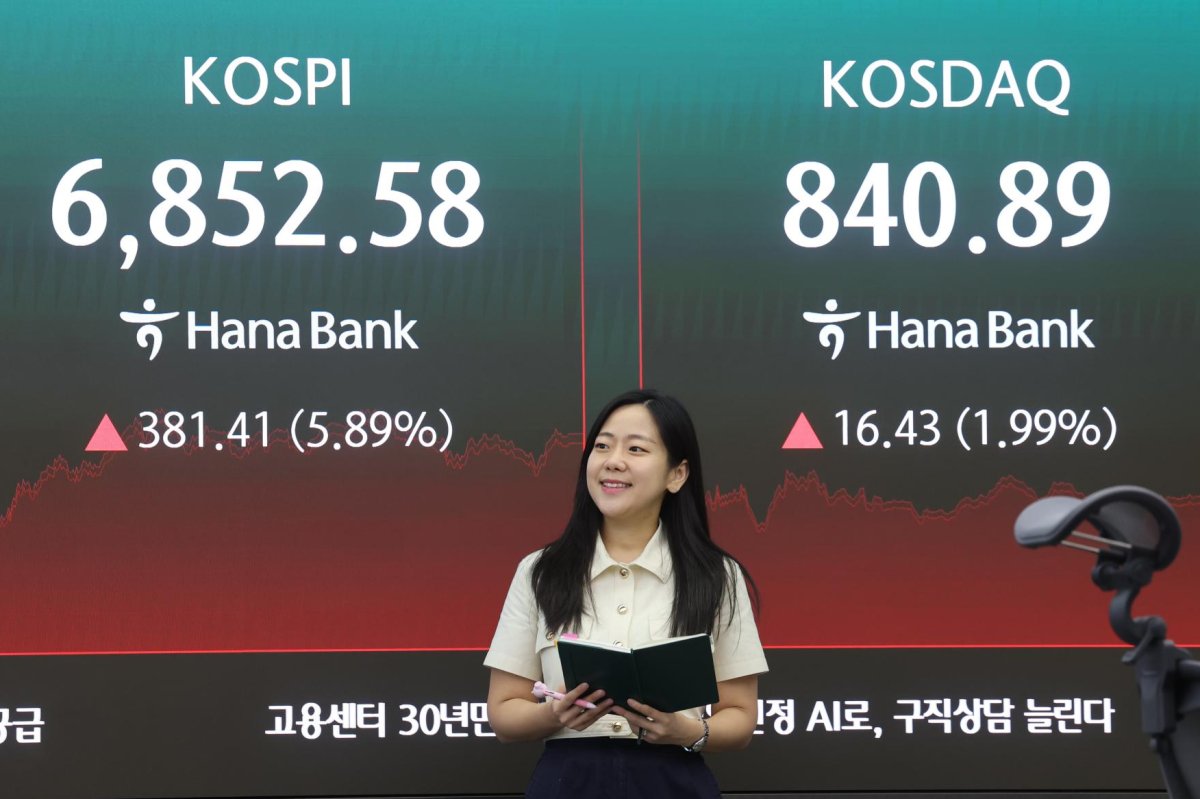
- KOSPI: 6,852.58 (As of August 20, +381.41p / +5.89% compared to the previous day) Note: Exact closing figures for Friday, August 21 were not explicitly provided, but the sharp surge on August 20 and continued upward trend on August 21 are confirmed.
- KOSDAQ: Around the 801 level (August 21, plunging 4.6%)
- Won/Dollar Exchange Rate: Closed down by 5.1 won (As of August 20)
- Market Sentiment: The KOSPI showed extreme risk-on sentiment nearing the buy-sidecar threshold, while the KOSDAQ showed severe risk-off sentiment due to liquidity shortages.
Supply and Demand Trends (Mainboard / KOSPI)
Note: Since finalized closing supply-and-demand data for Friday, August 21 was not explicitly detailed in the research findings, the most recent confirmed figures from Thursday, August 20 and intraday flows on August 21 are presented together.
- Foreigners: Net bought 1.7092 trillion won as of August 20. Continued heavy buying in Samsung Electronics and SK Hynix on August 21.
- Institutions: Net sold 488.2 billion won as of August 20.
- Retail Investors: Net sold 2.2758 trillion won as of August 20, and continued net selling with 966.5 billion won on August 21.
Top 5 Key News of the Day
1. Samsung Electronics and SK Hynix Expand Shareholder Returns and Buybacks
- What happened?: Samsung Electronics rose 3.87% and Samsung Electronics Preferred shares jumped 8.26% on August 21. SK Hynix additionally purchased 650,000 treasury shares to defend its stock price.
- Market Impact: Acted as a powerful pillar of support for the semiconductor sector, pulling up the KOSPI index.
2. KOSDAQ Plunges 4.6% Amid Sector-Wide Liquidity Vacuum
- What happened?: Driven by capital concentration toward the KOSPI, the KOSDAQ index plunged 4.6% down to the 801 level. Liquidity vacuums occurred across most sectors including secondary batteries, semiconductor materials/parts/equipment, and pharmaceuticals/biotech.
- Market Impact: Individual momentums, such as the Moderna effect, completely faded, spreading panic-selling sentiment across the KOSDAQ.
3. Resurgence of U.S. Treasury Yields and Concerns Over Global Consumption Slowdown
- What happened?: A rebound in U.S. Treasury yields and worries over a global consumption slowdown acted as external headwinds. Nevertheless, the relative strength of domestic large-cap semiconductor stocks offset these pressures.
- Market Impact: While the KOSPI managed to defend itself, it acted as a negative factor for interest-rate-sensitive small and mid-cap stocks on the KOSDAQ.
4. Foreigners Net Sell 31 Trillion Won in July, Continuing 7-Month Streak
- What happened?: According to announcements by the Financial Supervisory Service, foreign investors net sold 31 trillion won in the South Korean stock market in July, continuing their selling streak for the 7th consecutive month.
- Market Impact: Sparked market skepticism over whether the recent short-term shift to net buying is a trend reversal or merely temporary volatility.
5. Buy-Sidecar Triggered (August 20)
- What happened?: A buy-sidecar was triggered during intraday trading on August 20 due to the explosive surge in the KOSPI. This was a record-breaking counterattack that reversed the previous day's crash in just a single day.
- Market Impact: Served as an indicator of extreme market volatility, leaving high market vigilance heading into the August 21 trading session.
Leading Sectors & Themes
Semiconductors (Large Caps)
- Trend: Continued super-strength driven by expectations of share buybacks and shareholder returns. Electrical and electronics sector index up 9.19% (as of August 19, with additional gains thereafter).
- Key Stocks: Samsung Electronics (+3.87%), SK Hynix (+2.31%)
Secondary Batteries
- Trend: Plunged alongside the KOSDAQ liquidity vacuum. Downward trend as momentums such as the Moderna effect dissipated.
- Key Stocks: (Specific stock names not detailed in research results; overall sector decline)
Pharmaceuticals & Biotech
- Trend: On a downward trend due to capital outflow within the KOSDAQ. Expectations related to Moderna also vanished.
- Key Stocks: (Specific stock names not detailed in research results; overall sector decline)
Top Gainers & Losers
Top 3 Gainers
- Samsung Electronics (Preferred) — +8.26% — Expectations of share buybacks and expanded shareholder returns
- Samsung Electronics — +3.87% — Focused foreign buying and semiconductor sector strength
- SK Hynix — +2.31% — Announcement of an additional purchase of 650,000 treasury shares
Top 3 Losers
- KOSDAQ Secondary Battery-Related Stocks — Sector plunge — Liquidity vacuum and loss of momentum
- KOSDAQ Semiconductor Materials/Parts/Equipment — Sector plunge — Capital concentration into large caps
- KOSDAQ Pharmaceuticals & Biotech — Sector decline — Disappearance of the Moderna effect and capital outflow
(Note: Since exact top 3 individual loser stock names as of August 21 were not provided in the research results, they are listed based on heavily declining sector representatives.)
Overseas Market Correlation Points
- Resurgence of U.S. Treasury Yields: Rising global long-term interest rates negatively affected the South Korean stock market, particularly interest-rate-sensitive small and mid-cap stocks on the KOSDAQ.
- Concerns Over Global Consumption Slowdown: Sluggish U.S. consumer data stimulated worries about a global economic slowdown, partially triggering risk-off sentiment.
Checkpoints for Tomorrow
- Sustainability of Foreign Supply and Demand: Need to check early in the session on Monday, August 24, whether foreign buying in "Samjeonnix" will continue or turn into profit-taking.
- Recovery of KOSDAQ Liquidity: Monitor whether bottom-fishing capital flows back into the secondary battery and biotech sectors following the 4.6% plunge.
- U.S. Treasury Yield Trends: Stabilization of global long-term interest rates remains a core variable for a rebound in domestic small and mid-cap stocks.
Investor Action Items
Portfolio Review
If holding a high weighting in the KOSDAQ, verify whether the liquidity vacuum in the secondary battery and biotech sectors persists and consider risk management (stop-loss / diversification).
Semiconductor Large-Cap Valuations
Check the valuation burdens resulting from the sharp price surges of Samsung Electronics and SK Hynix, and re-verify the specific details of share buyback sizes and shareholder return policies.
Foreign Net-Buying Stock Trends
Check early in the trading session whether top foreign net-buy stocks remain concentrated in large-cap semiconductor stocks to gauge market direction.
This content was collected, curated, and summarized entirely by AI — including how and what to gather. It may contain inaccuracies. Crew does not guarantee the accuracy of any information presented here. Always verify facts on your own before acting on them. Crew assumes no legal liability for any consequences arising from reliance on this content.
Powered by
