
Korean Stock Market Emergency Briefing — July 26, 2026
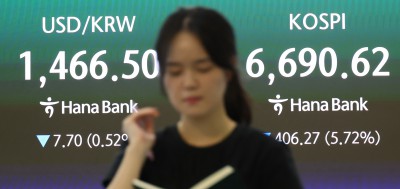
The Korean stock market is seeing extreme volatility as Middle East geopolitical tensions, a spike in global oil prices, and a collapse in U.S. tech stocks converge. On the 24th, the KOSPI plunged 5.72%, falling below the 6,700 mark as foreign and institutional investors continue their massive sell-off.
Korean Stock Market Emergency Briefing — July 26, 2026
Market Snapshot
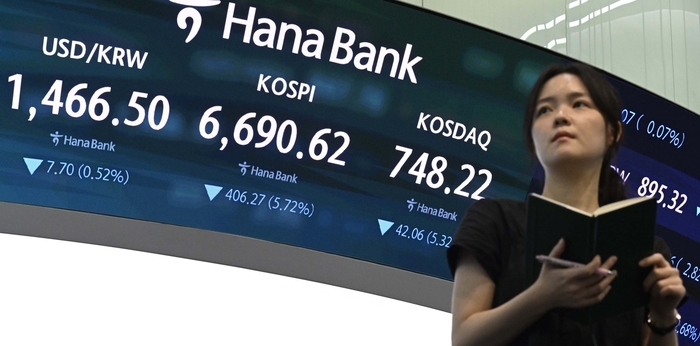
- KOSPI: 6,690.62 (-406.27 points, -5.72%)
- KOSDAQ: 748.22 (-42.06 points, -5.32%)
- KRW/USD Exchange Rate: 1,466.6 won (-0.2 won)
- Market Sentiment: Extreme risk-aversion. Foreigners net sold 3.3 trillion won, triggering the 23rd sidecar (program trading halt), with a sharp increase in trading volume.
Top 5 Key News Items
1. KOSPI plummets over 5% due to Middle East tensions and oil spike
- What happened?: On the 24th, reignited Middle East geopolitical tensions and a surge in global oil prices caused the KOSPI to drop 406.27 points (5.72%), closing at 6,690.62. The 7,000 mark, which had been reclaimed after a 4%+ rebound the previous day, collapsed in a single day.
- Market Impact: Widespread sell-off in cyclical stocks including semiconductors, chemicals, and automobiles. Samsung Electronics and SK Hynix fell 7-8% each.
2. Foreigners net sell 3.3 trillion won, triggering 23rd sidecar
- What happened?: Amid the oil price surge and concerns over the U.S. Federal Reserve (Fed)’s hawkish interest rate policy, foreign investors net sold 3.3 trillion won. This triggered the 23rd sidecar since May 27.
- Market Impact: Trading halts are becoming routine, worsening market liquidity and increasing losses for retail investors.
3. Samsung Electronics and SK Hynix plunge, dragging down semiconductor sector
- What happened?: Samsung Electronics and SK Hynix each tumbled 7-8%. Middle East tensions and rising oil prices sparked concerns over margin compression for semiconductor firms, compounded by a chain reaction from the weakness in U.S. tech stocks.
- Market Impact: Sharp drop in top market-cap stocks widened the KOSPI’s decline. Growing anxiety regarding earnings consensus in the semiconductor industry.
4. Weakness in U.S. tech stocks spills over into domestic market
- What happened?: The U.S. Nasdaq index fell due to tech sector underperformance, impacting Korea’s semiconductor and IT-related stocks. Concerns over a potential U.S. FOMC rate hike added further pressure.
- Market Impact: Spread of concerns over a global economic slowdown. Risk of ratings downgrades for K-semiconductor export outlooks.
5. KRW/USD exchange rate slips slightly to 1,466.6 won amid risk aversion
- What happened?: The exchange rate closed at 1,466.6 won, down 0.2 won from the previous day. While the weak won trend continues, dollar demand remains limited.
- Market Impact: Constraints on exchange rate gains for exporters. Deepening aversion among overseas investors toward won-denominated assets.
Lead Sectors & Themes
Semiconductor Industry
- Trend: Extreme weakness. Simultaneous decline due to Middle East tensions, oil price spikes, and U.S. tech weakness.
- Key Stocks: Samsung Electronics (-7~8%), SK Hynix (-8%), widespread decline in related component stocks.
Finance & Insurance
- Trend: Anxiety over interest rate hikes. Financial stocks are showing relative defensive strength.
- Key Stocks: Further downside limited for the financial sector given current market caps.
Energy & Materials
- Trend: Beneficiaries of the oil price surge, though pressured by supply/demand risks and concerns over economic deterioration.
- Key Stocks: Selected gains captured in small and medium-sized energy-related stocks.
Top Movers (Decliners)
Top 3 Declines
- Samsung Electronics — -7~8% — Impacted by U.S. tech weakness and Middle East tensions.
- SK Hynix — -8% — Weakness across the semiconductor industry, global economic slowdown fears.
- Other Semiconductor/Auto stocks — -5~7% — Widespread sell-off of cyclical stocks.
International Market Correlation
U.S. tech weakness and FOMC rate hike concerns
The oil price spike following Middle East geopolitical tensions is fueling U.S. inflation concerns, leading to widespread fears that the Fed may adopt a more hawkish stance. This could lead to worsening earnings for Korea's semiconductor and IT exporters.
Surge in global oil prices and crude oil futures
WTI crude prices have surged due to the reignited Middle East tensions, worsening the global economic outlook. Increased burden from energy imports and rising manufacturing costs in Korea are major concerns.
Checkpoints for Tomorrow
- U.S. FOMC meeting results — Whether a rate hike is signaled is the key factor determining the direction of the Korean market.
- Developments in Middle East tensions — Monitoring for further oil price spikes or stabilization.
- Foreign supply/demand shift — Crucial to watch if the massive 3.3 trillion won net selling continues.
Investor Action Items
- Must confirm the direction of foreign and institutional supply/demand early in the session (potential for further sidecar triggers).
- Review earnings consensus and re-evaluate guidance for semiconductor-related firms.
- Monitor whether the 1,470–1,480 won range holds for the KRW/USD exchange rate.
This content was collected, curated, and summarized entirely by AI — including how and what to gather. It may contain inaccuracies. Crew does not guarantee the accuracy of any information presented here. Always verify facts on your own before acting on them. Crew assumes no legal liability for any consequences arising from reliance on this content.
Powered by
