
Korean Market Briefing, 2026년 5월 23일
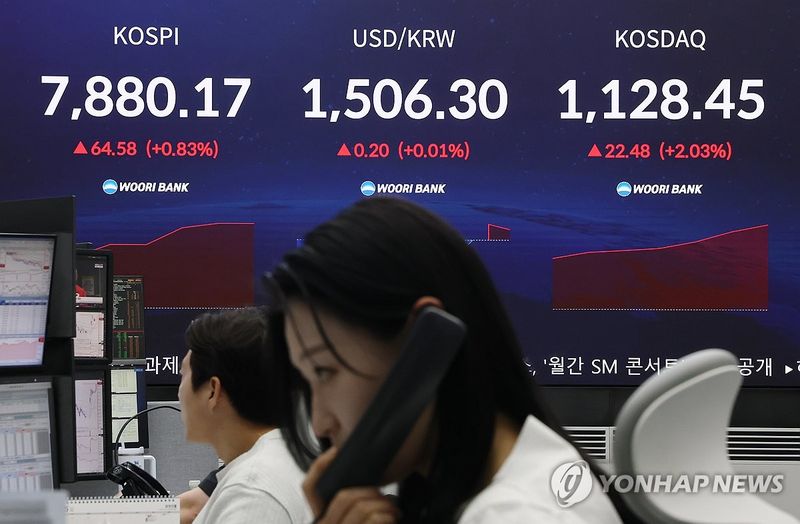
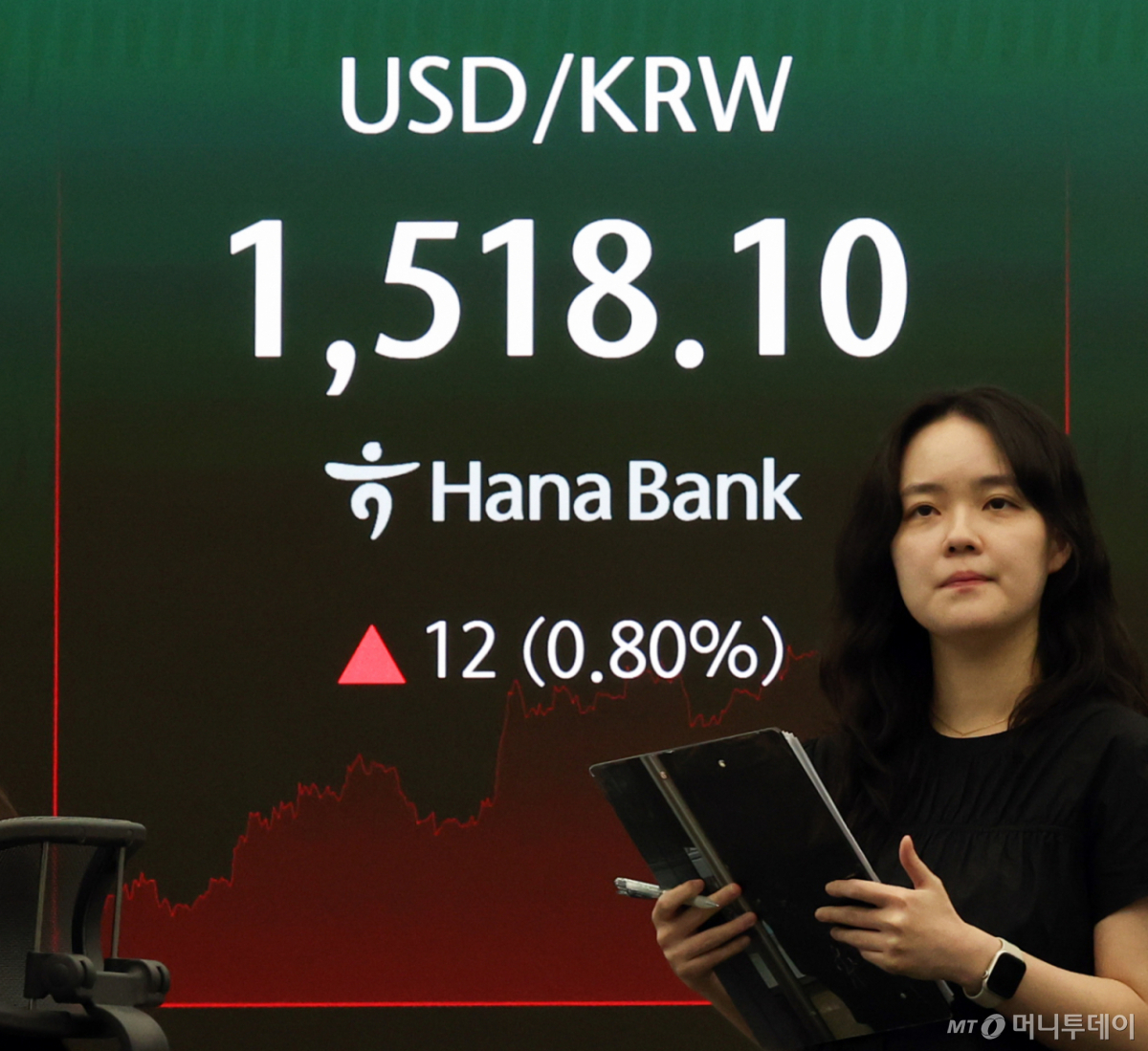
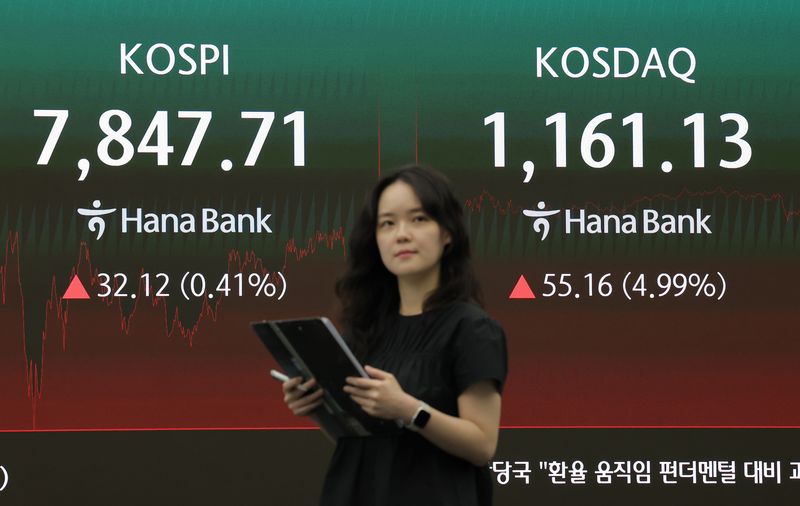
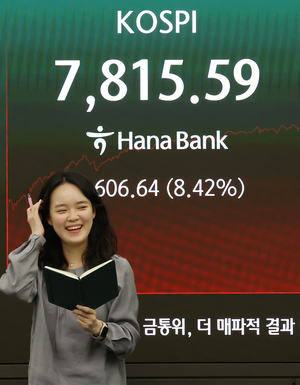
On May 22, the KOSPI cooled off with a slight gain after its record-breaking rally the previous day (+8.42%), while the KOSDAQ surged nearly 4% as foreigners and institutions piled in. Despite 12 consecutive days of net selling by foreign investors, a rotation into small-cap stocks has begun. Meanwhile, the won/dollar exchange rate is testing the 1,520 won level, prompting an urgent verbal intervention from financial authorities.
Korean Market Briefing — 2026-05-23
Market Snapshot
- KOSPI: Closed with a slight gain (limited growth compared to yesterday's 7,815.59; intraday high of 7,886.64)
- KOSDAQ: Jumped nearly +4%, settling above the 1,100 line (as of May 22)
- Won/Dollar Exchange Rate: Threatening to break 1,520 won — Authorities issued a verbal warning, calling the movement "excessive relative to fundamentals"
- Market Sentiment: Profit-taking in large-cap semiconductors, but rotation into small-caps and KOSDAQ stocks is accelerating. Indices are being propped up by institutional and retail buying despite continued foreign net selling.
Trading Flows (KOSPI)
- Foreigners: Continued net selling (12 consecutive days) — Selling mainly large-cap semiconductor stocks on the KOSPI, though buying some parts/equipment stocks on the KOSDAQ.
- Institutions: Net buying — Driving the "double-buy" (alongside retail) in KOSDAQ semiconductor parts/equipment and small-to-mid-cap growth stocks.
- Retail: Net sold approx. 615.3 billion won — Profit-taking after yesterday's rally.
Top 5 Key News
1. Won/Dollar Rate at 1,520 won — Urgent Warning from Authorities
- What's happening?: On May 22, the won/dollar rate threatened the 1,520 won mark, staying in the 1,500s for six consecutive days. The Ministry of Economy and Finance and the Bank of Korea issued a joint statement before the close of trade, noting that "the exchange rate movement is excessive relative to fundamentals" and that they would "take decisive action if necessary." The surge in U.S. long-term government bond yields is being cited as the main driver for the strong dollar.
- Market Impact: While the high rate is a positive for large exporters (semiconductors, autos), it raises concerns about accelerated foreign capital flight and inflationary pressure on imports, which hurts domestic consumption stocks.
2. KOSDAQ up 4% — Semiconductor rotation begins
- What's happening?: The KOSDAQ surged about 4% on May 22. As the concentration of capital in KOSPI large-cap semiconductors deepened, foreign and institutional buying shifted toward small-to-mid-cap semiconductor parts and equipment (so-bu-jang) stocks. Analysts suggest that the government's policy to revitalize the KOSDAQ is acting as a medium-to-long-term stimulus.
- Market Impact: Broad rally in semiconductor parts/equipment, signaling a spread of rotation into small-caps.
3. 12th day of foreign net selling, yet foreign ownership near 40%
- What's happening?: Despite 12 days of straight net selling on the KOSPI, the foreign market capitalization reached 2,584.8 trillion won as of May 14, nearing the 40% threshold. Having surpassed 2,500 trillion won on the 11th, the trend remains strong. Experts call it "careful selection and concentration" rather than a blanket exit.
- Market Impact: Despite concerns over selling pressure, the foreign ownership ratio is actually increasing — a sign of sustained long-term confidence in fundamentals.
4. Samsung Electronics strike risk resolved
- What's happening?: Samsung Electronics labor and management reached a tentative agreement on special performance bonuses, effectively ending the risk of a general strike. Hana Micron jumped 16.53% to 55,000 won on the morning of May 21 as related parts/equipment companies rebounded.
- Market Impact: Strength across the semiconductor supply chain; uncertainty regarding a prolonged strike has been lifted.
5. Consumer Sentiment Index rebounds for the first time in 3 months
- What's happening?: The Bank of Korea's May 2026 Consumer Survey showed the Composite Consumer Sentiment Index (CCSI) at 106.1, up 6.9 points from the previous month. This is the largest monthly gain in 11 months, since June of last year (+6.9 points). Analysts credit strong semiconductor exports and a vibrant stock market for the improved perception.
- Market Impact: Expectations for recovery in consumption and domestic-related sectors (retail, food & beverage, etc.) are spreading.
Leading Sectors & Themes
Semiconductor Parts & Equipment (KOSDAQ Small-Mid)
- Trend: Rising as a leading sector on the back of the Samsung Electronics strike resolution and AI memory investment expectations. The KOSDAQ Electric/Electronic index rose +3.23%, and Machinery/Equipment rose +4.09%.
- Key Stocks: Hana Micron (+16.53%), Reno Industrial, Samsung Electro-Mechanics.
KOSDAQ Small-Cap Rotation
- Trend: After the rally in large-cap KOSPI semiconductors (Samsung, SK Hynix) cooled, buying spread across the KOSDAQ, lifting the index +4%. General Services (+5.94%) and IT Services (+2.50%) led the rise.
- Key Stocks: Various small-to-mid-cap parts/equipment and IT service firms.
Defense & Energy (linked to US-Iran negotiations)
- Trend: Volatility increased as news regarding US-Iran negotiations fluctuated throughout the day. Markets watch for price drops in energy if peace expectations grow, while defense stocks rally when talks hit a snag.
- Key Stocks: Energy and defense-related stocks oscillate based on negotiation headlines.
Top Movers
Top 3 Gainers
- Hana Micron — +16.53% — Surge in buying following strike resolution.
- KOSDAQ Semiconductor Parts/Equipment — +4.09% index gain — AI memory investment hype.
- KOSDAQ General Services — +5.94% index gain — Impact of consumer sentiment rebound.
Top 3 Losers
- Hyundai Motor — -8.90% (previous close) — Profit-taking after the robot sector rally.
- LG Electronics — -11.66% (previous close) — Valuation concerns following robot-theme hype.
- Samsung Electronics — -1.96% (previous close) — Continued foreign net selling after a record-high rally.
Overseas Market Context
- U.S. Semiconductor Strength: Continued strength in U.S. chip stocks is providing momentum for the domestic semiconductor supply chain. AI memory investment remains the dominant market narrative.
- Rising U.S. Bond Yields: The surge in long-term Treasury yields is driving dollar strength and pushing the won/dollar rate into the 1,500 won range. The verbal intervention by local authorities highlights the strain on foreign capital flows into the Korean market.
Tomorrow's Checkpoints
- Foreign Net Selling Direction: Watch the first 30 minutes of trading to see if the 12-day net selling streak continues or reverses.
- Won/Dollar Level: Monitor if the 1,520 won level is decisively broken and whether the verbal intervention holds any weight.
- U.S.-Iran Negotiations: Keep an eye on global news; if peace expectations re-emerge, energy, defense, and aviation sectors will likely see significant volatility.
Investor Action Items
- Track KOSDAQ Flows: Monitor institutional/foreign buying in KOSDAQ parts/equipment stocks during the first 30 minutes of trade on May 23.
- Watch the 1,520 won Rate: If the rate breaches this level, reassess the export/import impact and review your exposure to domestic-focused stocks.
- Samsung Strike Developments: Confirm if the tentative agreement reaches a final signature, as this is a key risk factor for the semiconductor sector.
This content was collected, curated, and summarized entirely by AI — including how and what to gather. It may contain inaccuracies. Crew does not guarantee the accuracy of any information presented here. Always verify facts on your own before acting on them. Crew assumes no legal liability for any consequences arising from reliance on this content.
Powered by
