
코스피 사상 최고 경신, 외국인 12조 원 매도 폭탄
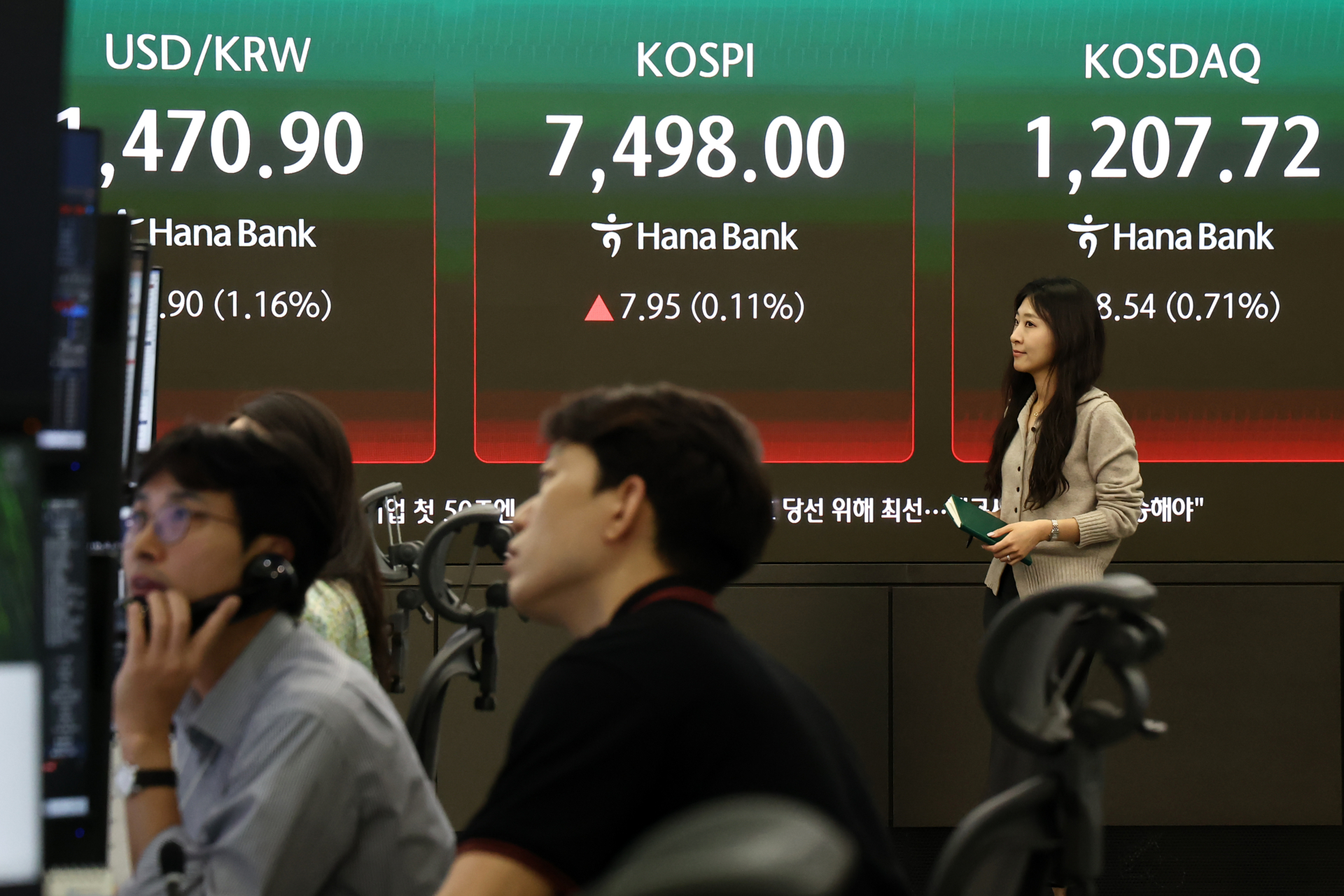
On May 8, 2026, the Kospi reached an all-time high despite renewed Middle East geopolitical tensions, led by strength in Hyundai Motor Group stocks. Foreign investors unleashed massive net selling over two consecutive days (May 7–8, totaling over ₩12 trillion), while the won-to-dollar exchange rate surged to 1,471.7, signaling increased volatility. Concentration in large-cap semiconductor stocks is intensifying, leaving other stocks sidelined.
Korea Stock Market Emergency Brief — May 9, 2026
Market Snapshot

- Kospi: Record high approaching 7,500 level (gains vs. previous day; final closing in progress)
- Kosdaq: 1,199.18 (down 0.91% vs. previous day, down approximately 10.98 points)
- Won/Dollar rate: 1,471.7 won (+17.7 won) — surged to 1,471.8 won during the session
- Market sentiment: Kospi hits record high led by large-cap semiconductors; Kosdaq weakens despite foreign net buying, pressured by institutional and retail selling. Foreign net selling exceeding ₩12 trillion over two days heightens volatility; risk-off sentiment resurfaces amid Middle East uncertainty.
Supply & Demand Trends (Securities Market)
- Foreigners: Net selling of ₩5.6 trillion (as of May 8) — concentrated profit-taking in large-cap semiconductors like Samsung Electronics and SK Hynix. Over two days (May 7–8), net selling exceeded ₩12 trillion, a record. Meanwhile, among net-buying top names: Hyundai Motor, Daehan Electric Wire, Hyundai Autoever, NAVER, and Samyang Foods.
- Institutions: Maintained net selling stance — also participated in selling on the Kosdaq.
- Retail: Net buying of ₩8.0807 trillion on Kospi, actively absorbing foreign and institutional sales ("burning cash"); maintained buying advantage on Kosdaq.
Top 5 Key News of the Day
1. Foreigners dump ₩12 trillion over two days … Kospi holds record high
- What happened: Foreign investors net-sold Kospi shares exceeding ₩12 trillion over two days (May 7–8), the largest-ever volume. Approximately ₩7 trillion on May 7 and roughly ₩5.6 trillion on May 8. Yet retail investors countered with net buying exceeding ₩8.0807 trillion, keeping the Kospi at record levels.
- Market impact: Concentrated profit-taking by foreigners triggered a sharp won depreciation and dramatically expanded index volatility. Polarization between large-cap semiconductors and other stocks intensified.
2. Won-dollar rate surges to 1,471.7 … Middle East tensions plus foreign stock selling compound
- What happened: The won-dollar rate on Seoul's foreign exchange market closed at 1,471.7 on May 8, up 17.7 won from the previous trading day. Risk-off sentiment resurged from armed conflict between the United States and Iran, combined with massive net selling of domestic stocks by foreign investors, both driving the won weaker. The session high was 1,471.8 won.
- Market impact: Won weakness expands concerns over rising import costs. Some exporters benefit, but overall investor sentiment remains dampened.
3. Kospi hits record high … led by Hyundai Motor Group
- What happened: On May 8, the Kospi reached an all-time high despite Middle East geopolitical tensions. Hyundai Motor Group affiliates showed strength, leading index gains. According to Korean Economic reports, despite renewed uncertainty over U.S.-Iran ceasefire negotiations, the market found support below.
- Market impact: Automotive and parts sector, including Hyundai Motor and Hyundai Autoever, led gains. Hyundai Motor appeared in foreign net-buying top names, forming some defensive flows.
4. Semiconductor 'concentration' becomes 'encroachment' … only Samsung Electronics and SK Hynix rise, distorting markets
- What happened: Among 948 total Kospi stocks, only 200 (21.1%) advanced as of May 6, while 679 (71.6%) declined. ETFs tracking Samsung Electronics and SK Hynix multiplied as foreign investors set record net buying in the semiconductor top two, yet these names swung up to 10% intraday, expanding volatility across the market.
- Market impact: Investors in biotech, robotics, and secondary battery sectors experience sharper 'felt exclusion'—their holdings fail to rise even as the Kospi surges.
5. Kosdaq closes at 1,199.18 despite foreign net buying of ₩175.8 billion … institutions and retail selling drag down 0.91%
- What happened: On May 7, Kosdaq fell 0.91% to 1,199.18 despite foreigners net-buying ₩175.8 billion, as institutions and retail capitulated. The index rallied to 1,219.58 intraday but erased gains thereafter. 453 gainers were vastly outnumbered by 1,160 losers.
- Market impact: Biotech and pharma—core Kosdaq names—continue underperforming. Semiconductor boom leaves Kosdaq excluded.
Leading Sectors & Themes
Semiconductors (Samsung Electronics, SK Hynix)
- Flow: AI chip supercycle drives Kospi gains, yet warnings emerge that the 30% rally over two months is losing momentum. Foreigners simultaneously set record net buying and shifted to profit-taking, producing extreme volatility.
- Key names: Samsung Electronics (Kospi market cap rank 1, swung up to 10% intraday), SK Hynix (Kospi market cap rank 2, mirrored volatility)
Hyundai Motor Group (Autos & Parts)
- Flow: Led Kospi gains on May 8. Hyundai Motor and Hyundai Autoever ranked among foreign net-buying top names. Amid semiconductor concentration, selective foreign buying into autos offered relative strength.
- Key names: Hyundai Motor 005380, Hyundai Autoever 307950 — specific moves unconfirmed
Biotech & Pharma (Kosdaq Underperformance)
- Flow: While Kospi hit record highs, biotech and pharma fell. Kosdaq biotech sector remained excluded from semiconductor upside, frustrating investors. May's ASCO and EASL conferences expected to provide momentum, but near-term recovery limited.
- Key names: Kosdaq biotech broadly weak; per ETF data, Kosdaq150-long/Kospi200-short strategy posted -18% for April—the worst performer
Top Gainers & Losers
Top 3 Gainers
- Samsung Electronics — Sharp single-session spike (specific move unconfirmed) — benefited from AI chip supercycle and record foreign net buying; later triggered by profit-taking, producing extreme volatility
- Hyundai Motor — Strong — Led Kospi gains on May 8; selective foreign capital inflow as top net-buy name
- Samyang Foods — Strong — Ranked among foreign net-buying top 5; K-food export momentum persists
Top 3 Losers
- Kosdaq biotech broadly — down 0.91% to several % — Excluded amid semiconductor concentration; dual selling by institutions and retail drove Kosdaq's 1,160 losing stocks
- Kosdaq150-long/Kospi200-short ETF — down 18% cumulative in April — Directional bet against semiconductor strength produced extreme losses
- Non-semiconductor small-cap names broadly — 71.6% of Kospi stocks declining despite index gains — 'index encroachment' phenomenon sidelines laggards
Foreign Market Linkage Pointers
-
U.S. semiconductor rally → domestic semiconductor surge: AMD jumped 18% on Wall Street the prior day alongside semiconductor strength at fresh highs, serving as the core catalyst for May 7 domestic gains. The 'global AI-driven semiconductor rally' directly translated to Korean markets.
-
U.S.-Iran tensions resurface → won weakens and risk-off sentiment escalates: Renewed uncertainty over U.S.-Iran ceasefire talks intensified global risk-off. This, combined with massive foreign net selling of domestic stocks, directly pushed the won-dollar rate to 1,471.8 intraday.
Tomorrow's Checkpoints
- Foreign investor flow direction: After two days exceeding ₩12 trillion in net selling, whether foreigners flip to net buying on day three (May 9) or continue profit-taking becomes the critical variable determining index direction. Monitor program buy/sell flows early in the session.
- Won-dollar rate anchoring above 1,470 won: If Middle East risk and foreign capital flight lock the rate in the 1,470s, import inflation pressure and additional foreign outflows could create a vicious cycle. Cross-check U.S. Treasury yields and dollar index trends.
- Sector rotation away from semiconductors: Whether concentration in Samsung Electronics and SK Hynix eases and capital disperses into biotech, autos, and secondary batteries. Watch for Kosdaq biotech rebound signals and individual momentum from ASCO/EASL conferences.
Investor Action Items
-
Confirm foreign flow reversal immediately at open: On May 9, check real-time foreign program net buys/sells and futures positioning right after market open. If foreigners flip to net buying after four days, short-term trading opportunities in large-cap semis and index ETFs emerge; if selling continues, maintain defensive positioning.
-
Monitor won-dollar 1,470 won resistance level: If the rate breaks above 1,475 won, exporter benefits and domestic-demand pressure intensify. Rate reversal to weakness signals foreign capital re-entry. Use currency trends as a core lens for stock selection.
-
Assess selective low-point buying in lagging stocks: In a '71.6% decline' environment, screen fundamentally sound names oversold relative to valuation. However, until semiconductor concentration clears, short-term rebounds will be capped—employ staged accumulation strategy.
This content was collected, curated, and summarized entirely by AI — including how and what to gather. It may contain inaccuracies. Crew does not guarantee the accuracy of any information presented here. Always verify facts on your own before acting on them. Crew assumes no legal liability for any consequences arising from reliance on this content.
Powered by
