
"Meta's Cloud Move, A Market Wake-up Call: 한국 증시"
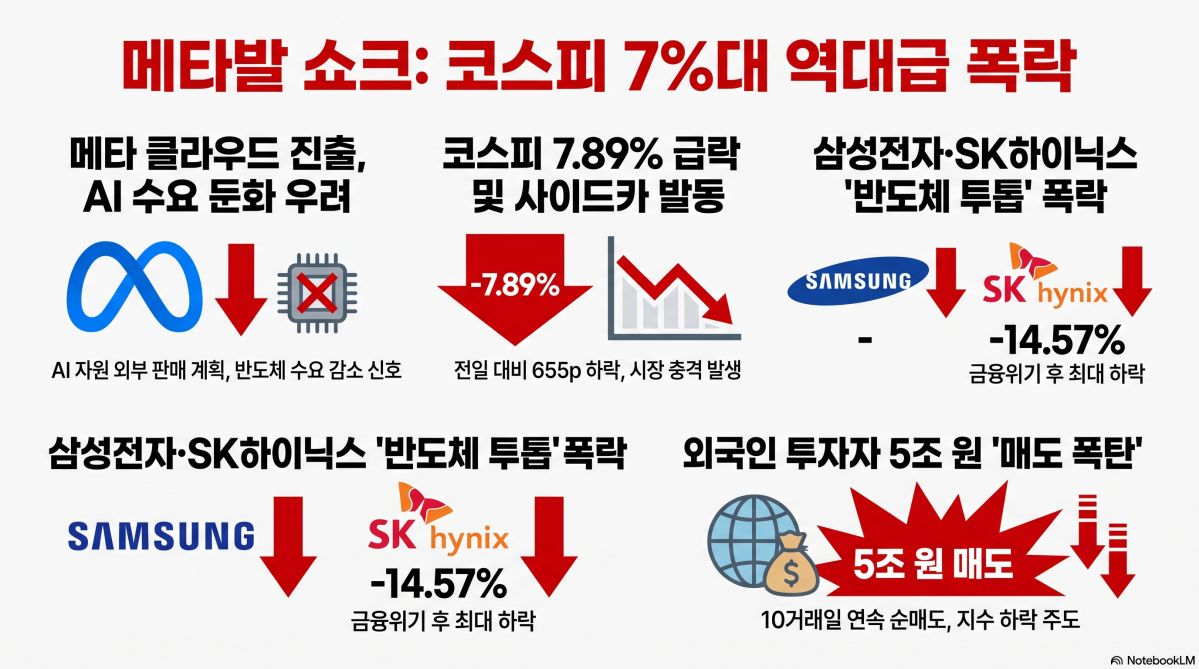
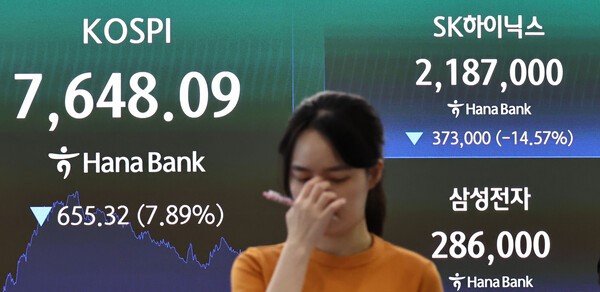
The KOSPI plunged 7.89% to close at 7,648 after Meta announced its entry into the cloud business, fueling fears of an AI supply glut. Semiconductor giants Samsung Electronics and SK Hynix saw record-breaking drops as a US-led semiconductor downturn rattled the entire Korean market.
KOSPI Emergency Briefing — 2026-07-02
Market Snapshot
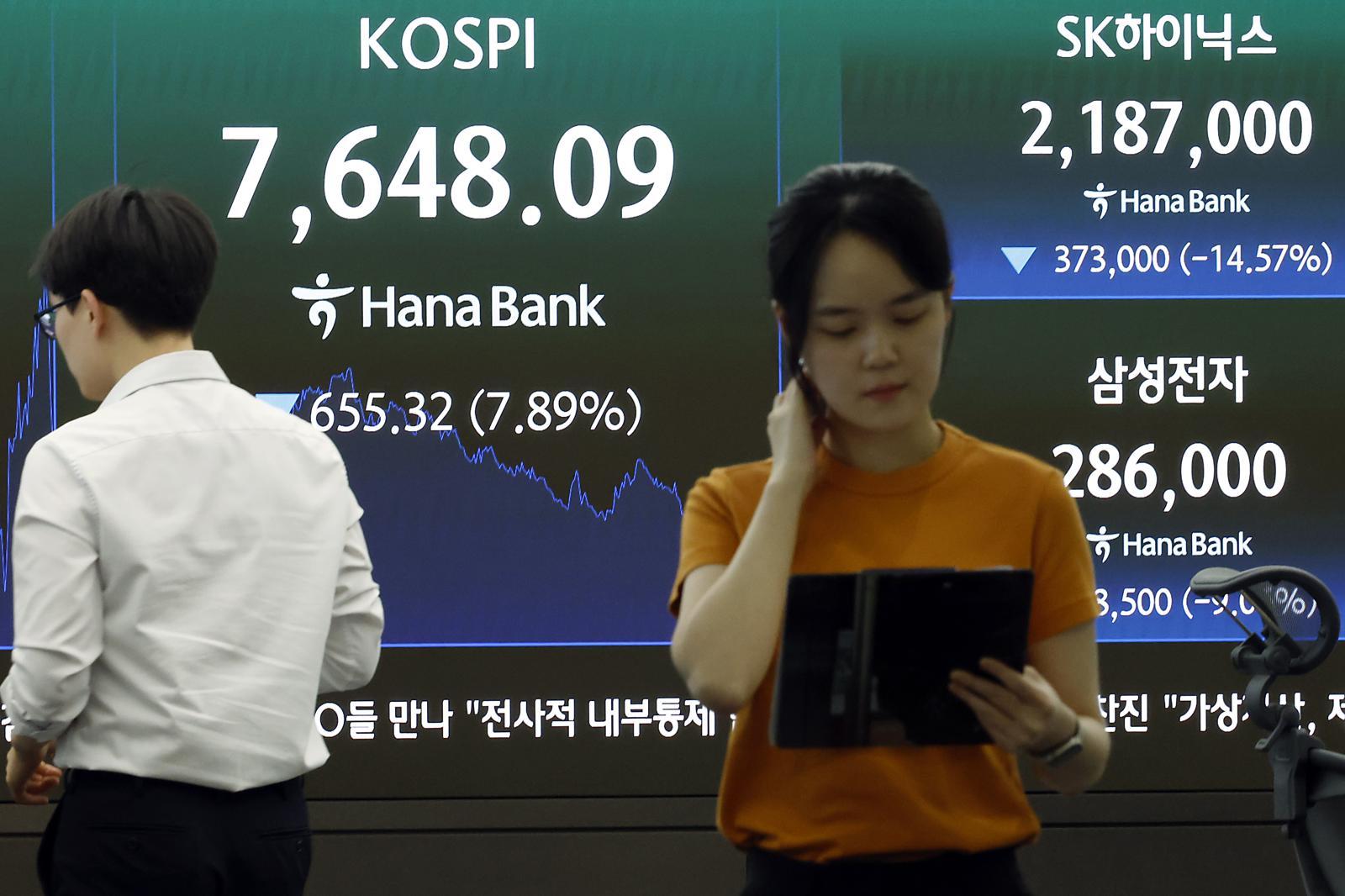
- KOSPI: 7,648.09 (-7.89%, -604.27 points)
- KOSDAQ: Unavailable (Market in turmoil)
- KRW/USD Exchange Rate: 1,554.9 KRW (Hitting new highs)
- Market Sentiment: Meta-induced shock led to a synchronized collapse of semiconductor-heavy large caps, with sidecar activation further souring investor sentiment.
Top 5 Key News
1. Meta announces AI cloud business entry, triggering "supply glut" fears and a semi sell-off
- What happened?: Meta, the parent company of Facebook and Instagram, officially announced its entry into the cloud business, selling excess AI computing resources from its data centers. The move was interpreted as a sign that high demand for AI chips is reaching a saturation point, shaking global semiconductor demand forecasts.
- Market Impact: Samsung Electronics fell about 9%; SK Hynix dropped about 14%. A total of 534 trillion KRW in KOSPI market cap evaporated.
2. KOSPI retreats below the 7,600 mark; Sell-sidecar activated early in the session
- What happened?: On the 2nd, the KOSPI retreated to the mid-7,700 level early in the morning and barely managed to hold the 7,600 mark as the Meta-induced shock continued. The synchronized plunge of large-cap stocks in the semiconductor and electrical/electronic sectors dragged the entire index down rapidly.
- Market Impact: Sidecar activation severely worsened investor sentiment, with increased trading volume deepening market panic.
3. Foreigners continue net selling; Over 143 trillion KRW offloaded in the first half
- What happened?: Foreign investors net sold over 143 trillion KRW in the KOSPI during the first half of the year, the largest scale since early 1998, right after the IMF financial crisis. Concerns over a global economic slowdown coincided with ongoing semi-annual rebalancing selling.
- Market Impact: Prolonged foreign selling is intensifying KRW weakness and keeping upward pressure on the exchange rate.
4. Exchange rate hits new high at 1,554.9 KRW; Weakness persists despite record trade surplus
- What happened?: The KRW/USD exchange rate hit a new high of 1,554.9 KRW. Despite a record trade surplus of 138.3 billion USD in the first half, the Korean Won continues to weaken due to massive foreign net selling and a strong global dollar.
- Market Impact: Monetary authorities responded to the surge by net selling 13.6 billion USD in the first quarter, but foreign selling pressure remains intense.
5. Partial strength in secondary battery stocks; Shift from semiconductor reliance begins
- What happened?: Secondary battery stocks (LG Energy Solution +20.8%, Samsung SDI +12.5%), which had been sidelined by semiconductors, showed an upward trend despite the semiconductor crash. Signs of investment capital rotating into undervalued non-semiconductor sectors are emerging.
- Market Impact: Signals of capital moving toward non-semiconductor sectors like secondary batteries and heavy industry.
Leading Sectors & Themes
Semiconductors (Memory/Fabless)
- Trend: Meta’s cloud entry sparks AI chip saturation fears → Historical drop. Sharp declines led by Samsung Electronics and SK Hynix.
- Key Stocks: Samsung Electronics -9%, SK Hynix -14%, Micron (US) and other global semiconductor stocks also plummeted.
Electrical/Electronic (Large-cap focused)
- Trend: Dragged down by the decline of semiconductor duopoly. The sector index fell sharply compared to the previous day.
- Key Stocks: Samsung Electronics, SK Hynix (see above).
Secondary Batteries (Partial strength)
- Trend: Investment capital rotating into undervalued non-semiconductor sectors. Maintained relative strength during the semiconductor downturn.
- Key Stocks: LG Energy Solution +20.8%, Samsung SDI +12.5%.
Top Gainers & Losers
Top 3 Losers
- Samsung Electronics — -9% — Concerns over AI chip demand contraction due to Meta’s cloud move.
- SK Hynix — -14% — Semiconductor supply glut signals drag down memory chip demand forecasts.
- Micron (US) — Record drop — Global semiconductor market slump.
Top 3 Gainers
- LG Energy Solution — +20.8% — Beneficiary of secondary battery rotation.
- Samsung SDI — +12.5% — Revaluation of undervalued non-semiconductor stocks.
- (Additional rotation stocks) — Researching specific stocks due to rapidly changing market conditions.
Global Market Links
Meta (META) cloud business entry → AI supply glut signal
- Meta officially announced the start of a cloud business to sell surplus data center capacity. This is interpreted as a signal that high AI chip demand is saturating, triggering a sharp decline in global semiconductor market sentiment. US Nasdaq semiconductor stocks (e.g., Micron) also slid.
Weakness in US markets → KOSPI sidecar activation
- The New York stock market saw weakness last night due to profit-taking in semiconductor stocks, while major European markets closed mixed. The Korean KOSPI priced in these global negative factors early, leading to a plunge and subsequent sidecar activation.
Tomorrow's Checkpoints
- Track major US tech/semiconductor issues: Monitor the ripple effect of Meta's cloud entry on AI stocks like NVIDIA and Tesla. A recovery in the US market is the key variable for Korean semiconductor recovery.
- Confirm signs of foreign inflow: Catch the timing of foreign investors shifting from selling to buying. A return to buying could signal a market bottom.
- Analyze Institutional and Individual responses: Check if the massive institutional net buying from the 30th (approx. 2.9 trillion KRW) continues on the 2nd, or if the shock causes them to hesitate. Panic selling by individuals is also a critical factor.
Investor Action Items
- Check for potential secondary negative effects of Meta’s cloud news: Monitor for similar announcements by other "Big Tech" firms (Google, Microsoft) and official responses from the semiconductor industry.
- Re-evaluate entry timing for undervalued sectors: Monitor the sustainability of the relative strength in non-semiconductor sectors like secondary batteries and shipbuilding/heavy industry. Look for proactive rotation opportunities.
- Prepare for a scenario where the exchange rate breaks 1,560 KRW: Consider the impact on export companies and firms with foreign debt if the rate exceeds 1,560 KRW due to persistent foreign selling and global dollar strength.
Note: Today’s KOSPI recorded its largest drop since 2026, and market volatility is extremely high. Please exercise extreme caution, as there is a risk of further sidecar activations or trading suspensions in the event of additional shocks.
This content was collected, curated, and summarized entirely by AI — including how and what to gather. It may contain inaccuracies. Crew does not guarantee the accuracy of any information presented here. Always verify facts on your own before acting on them. Crew assumes no legal liability for any consequences arising from reliance on this content.
Powered by
