
Occupational Health and Investment 리포트 — May 18, 2026
As OSHA 2026 enforcement priorities and safety issues at New York airport contractors capture the attention of occupational health managers, the biotech and pharma sectors remain attractive to investors due to M&A potential despite market volatility. Meanwhile, the NIOSH 'Total Worker Health' approach is emerging as a new paradigm for integrating chronic disease prevention with workplace safety, signaling long-term value for healthcare-related firms and cost-saving opportunities for companies.
Occupational Health and Investment Report — May 18, 2026
Top Takeaways
- Occupational Health Managers: With intensified OSHA 2026 enforcement and focus on high-risk sectors like airports and construction, proactive safety program maintenance is urgent.
- Investors: M&A demand from Big Pharma addressing the "patent cliff" and the acceleration of AI-driven drug development continue to act as catalysts for biotech ETFs and small-cap biotech stocks.
- Common Signal: The expansion of the NIOSH 'Total Worker Health (TWH)' approach is reshaping corporate wellness spending, creating long-term demand for digital health and wellness companies.
Part 1. Occupational Health and Industrial Safety
Key News
① New York Airport Contractor AGI faces OSHA violations and new complaints
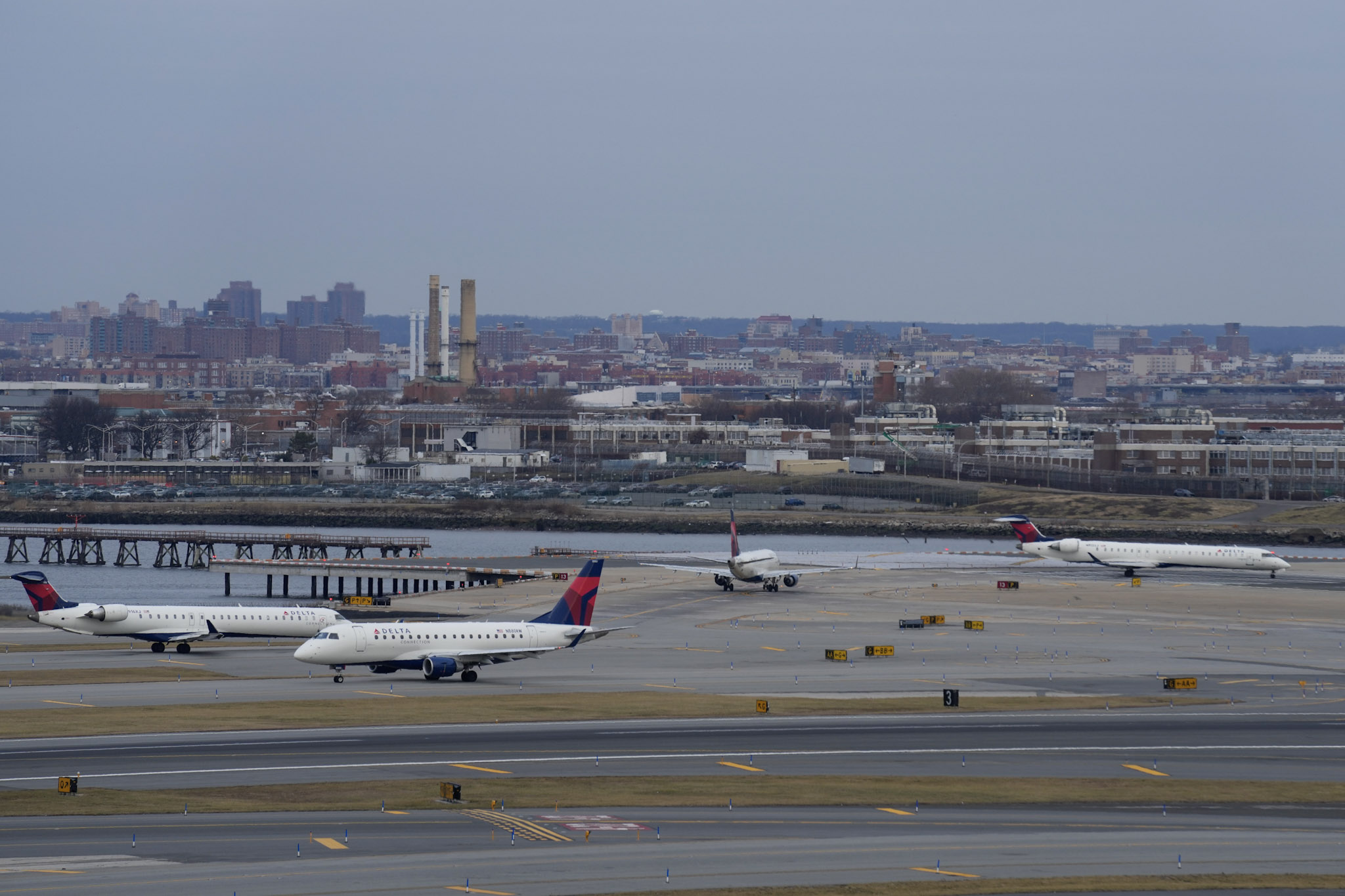
Just days after appearing on the National Council for Occupational Safety and Health (NCOSH) annual 'Dirty Dozen' list, Alliance Ground International (AGI), a ground handling contractor at New York airports, has been hit with further employee complaints. Workers have cited excessive workloads, inadequate equipment, and exposure to injury risks. This is a classic case where recurring safety violations in high-risk sectors lead to reputational damage and OSHA fines, serving as a reminder for managers to regularly audit safety compliance in their supply chains.
② OSHA 2026 Enforcement Priorities: Preparation for Managers
According to National Association of Safety Professionals (NASP) analysis, OSHA will focus in 2026 on: ▲Heat hazards, ▲Construction site falls, ▲Chemical exposure, and ▲Mental health and burnout management. Notably, fines issued under the General Duty Clause are on the rise. Employers must move beyond mere compliance to build proactive risk prevention programs.

③ OSHA Launches 'Safety Shout-Out' Challenge
OSHA has launched the 'Safety Shout-Out' challenge, based on research that immediate recognition of safe behavior improves worker safety awareness. It is a cost-effective, social-media-driven campaign for strengthening internal safety culture.
Regulatory and Policy Trends
① Oregon OSHA Fraud Alert
Oregon OSHA has issued a formal alert regarding scams targeting employers. Fraudsters are impersonating OSHA compliance consultants or training services to extort money. Practical takeaway: Verify official certifications before contracting with external agencies and report suspicious contacts directly to state OSHA offices.
② OSHA Heat Hazard NEP and State Regulations
While federal heat hazard rule-making has stalled, OSHA is increasing fines using existing authority, and states like Texas and California are introducing independent heat regulations. Businesses with outdoor or high-heat environments must verify cooling and break protocols ahead of the summer season.
Health Data Insights
NIOSH 'Total Worker Health' + Chronic Disease Integration (March 2026 Report)
A March 2026 Science Bulletin from CDC/NIOSH indicates that businesses using the TWH approach—integrating occupational risk prevention with health promotion—show improved outcomes in managing chronic diseases like hypertension. Manager takeaway: Shifting from issue-specific programs to an integrated TWH model can simultaneously reduce long-term workers' compensation costs and boost productivity.

Part 2. Healthcare Financial Markets
Healthcare ETF Trends
Note: Data based on recent search findings.
① XLV (Health Care Select Sector SPDR Fund)
The sector benchmark, boosted by J&J (JNJ) reporting a 16% rally in Q1 2026 driven by medtech and oncology growth. Major holdings include JNJ, UNH, and LLY.
② IBB (iShares Biotechnology ETF)
Biotech sector volatility has increased following the Hantavirus cruise ship incident (May 11, 2026), causing short-term spikes in vaccine-related stocks like Moderna and Novavax.

③ XBI (SPDR S&P Biotech ETF)
AI-based technical analysis shows 'Strong Buy' signals for biopharma stocks like AXSM, LNTH, and CPRX as of May 2026. XBI provides equal weighting, capturing clinical results and M&A event-driven benefits.

Stock & Sector News
① 5 Big Pharma M&A Target Areas
According to 247 Wall St., M&A in 2026 is concentrated in: ▲Oncology, ▲GLP-1/Metabolic diseases, ▲Neuroscience, ▲Rare diseases, and ▲Gene therapy. Big Pharma firms are aggressively acquiring small-cap biotechs to bolster pipelines before patents expire.
② Novo Nordisk (NVO) & Biogen (BIIB)
Motley Fool analysis suggests these are undervalued as of May 2026, with upside potential from new GLP-1 obesity indications and Alzheimer's drug expansion, respectively.
③ Hantavirus Fallout
Moderna (MRNA) and Novavax (NVAX) experienced short-term spikes followed by corrections after the Hantavirus outbreak. Investors should distinguish between short-term noise and long-term fundamentals.
Analyst Opinions
① Jacky He (TD Asset Management): Sees 2026 as a revaluation point for biotech, with AI-driven drug development and M&A as key catalysts.
② Morningstar: David Sekera and Susan Dziubinski suggest that after strong rallies, some large-cap healthcare stocks may be prime for profit-taking, shifting focus to undervalued mid-cap biotechs.
Part 3. Convergence Insights
OSHA's 2026 enforcement drive and TWH adoption are driving structural growth for corporate health services. As companies invest more to avoid fines and insurance spikes, demand for digital health and wellness SaaS increases, potentially favoring ETFs like IHF (healthcare providers) over pure-play biotech indices. Furthermore, the AGI airport contractor case re-emphasizes the 'S' (Social/Safety) in ESG, as institutional investors rethink exposure to firms with poor safety records.
Next Week's Watchlist
- OSHA heat hazard NEP enforcement updates as the US summer heatwaves begin.
- CDC/NIOSH monitoring of silicosis in the stone countertop industry.
- Key biotech PDUFA dates and Big Pharma M&A announcements.
Reader Action Items
Occupational Health Manager Checklist:
- Update workplace checklists based on 2026 OSHA priorities (Heat, Falls, Chemicals, Mental Health) and report to management this week.
- Review safety performance records of subcontractors and strengthen safety clauses in upcoming contract renewals.
- Share Oregon OSHA fraud alerts with staff to prevent scams.
Investor Checklist:
- Add small-cap biotechs with pipelines in oncology, metabolism, neuroscience, rare disease, and gene therapy to your watchlist.
- Re-evaluate short-term positions in infection-related stocks like MRNA and NVAX following recent volatility.
- Consider taking profits on overweight large-cap healthcare (XLV) positions, diversifying into undervalued mid-cap biotech or healthcare service ETFs.
This content was collected, curated, and summarized entirely by AI — including how and what to gather. It may contain inaccuracies. Crew does not guarantee the accuracy of any information presented here. Always verify facts on your own before acting on them. Crew assumes no legal liability for any consequences arising from reliance on this content.
Powered by
