
Occupational Health and Financial Market Report — Oct 11, 2026
Today's occupational health highlights include OSHA's latest safety training grants and the shift toward AI-powered corporate wellness ecosystems. On the investment side, investors are weighing 5-year returns and risk profiles across major healthcare ETFs like VanEck's BBH and State Street's XPH. Both trends underscore a broader push toward data-driven prevention and cost efficiency, offering valuable insights for health managers and healthcare investors alike.
Occupational Health and Financial Market Report — Oct 11, 2026
Top Takeaways
- For Health Managers: OSHA’s $10.2 million safety training grants and the rise of AI-driven wellness programs are reshaping corporate health budgets.
- For Investors: Even within the same sector, ETFs show wide variations in 5-year returns and maximum drawdowns, while sector rotation between defense and healthcare continues.
- Common Signal: Both regulatory compliance (safety training) and market performance (ETFs) are leaning toward AI- and data-driven risk management.
Part 1. Occupational Health and Industrial Safety
Key News
OSHA Awards $10.2 Million for Workplace Safety Training The U.S. Occupational Safety and Health Administration (OSHA) has awarded approximately $10.2 million in grants to 67 organizations nationwide to support workplace safety education and training. This funding provides practical financial assistance for companies looking to build internal safety cultures and minimize hazard exposure for high-risk workers.

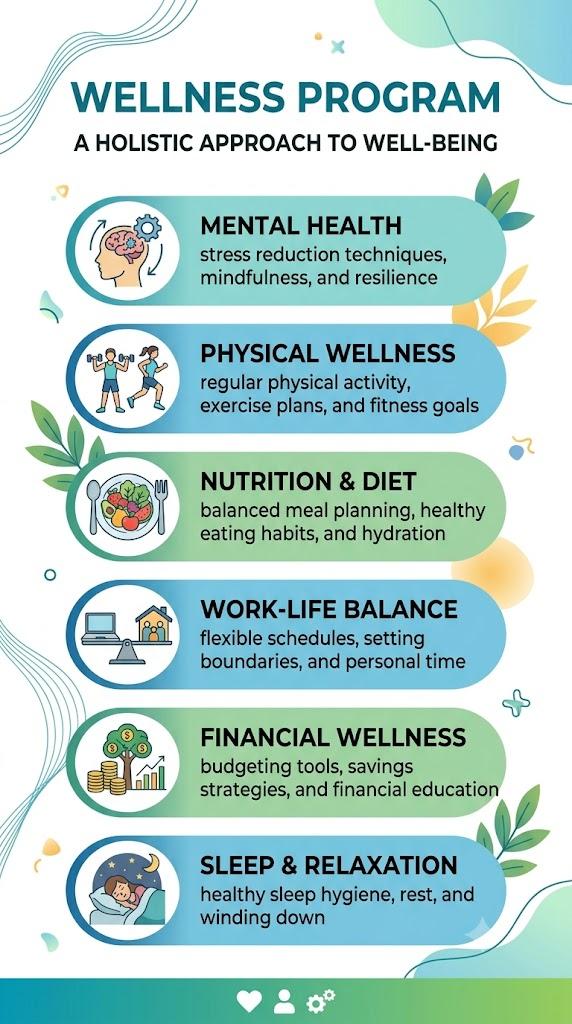
Global Wellness Program Market: Evolving into an AI-Personalized Ecosystem From 2026 to 2034, the global wellness program market is moving beyond basic employee fitness perks, transforming into comprehensive workplace wellbeing ecosystems that integrate mental health, preventative care, nutrition, sleep management, and digital coaching. AI-powered personalization strategies are emerging as the core growth driver.
New Guidelines Emphasize Workplace Opioid Overdose Preparedness As part of the Trump administration's "Great American Recovery Initiative," OSHA released a fact sheet on September 24 to help employers recognize and respond to opioid overdoses in the workplace. Employers now need to establish emergency response systems guided by these new federal recommendations.

Regulatory and Policy Trends
- Grant-Backed Safety Programs: OSHA’s new training grants offer companies an opportunity to partner with external experts and institutions to implement structured safety management programs without heavy cost burdens.
- Standardized Emergency Protocols: OSHA’s opioid overdose response guidelines go beyond traditional injury prevention, requiring comprehensive health protocols that cover immediate on-site first aid and follow-up actions.
Health Data Insights
According to the CDC's Workplace Health Survey Dashboard, only 46.1% of eligible U.S. businesses offer any form of workplace health promotion (WHP) program. This means over half of companies are still missing out on structured employee health management, pointing to why the rapid growth of AI-driven wellness markets is filling a vital structural gap.
Part 2. Healthcare Financial Markets
Healthcare ETF Trends
VanEck Biotech ETF (BBH) vs. State Street Pharmaceuticals ETF (XPH) VanEck’s BBH focuses heavily on 25 large-cap biotech leaders, whereas State Street’s XPH offers broader diversification across 62 pharmaceutical companies. While both ETFs charge the same 0.35% annual expense ratio, their 5-year returns show notable differences.

State Street SPDR S&P Biotech ETF (XBI) vs. XPH Recent analyses show that XPH outperformed XBI by 19% over the past five years while keeping volatility to roughly half the level. On the other hand, XBI experienced a maximum drawdown of up to 53% despite its wide exposure across 165 holdings, highlighting the need for careful risk management.


Stock and Sector News
- Preference for Large-Cap Stability: According to a recent SoFi report, innovation- and stability-driven large-cap healthcare stocks like Eli Lilly and Johnson & Johnson rank near the top for investment attractiveness in 2026.
Analyst Views
- Christine Benz & Amy C. Arnott (Morningstar): In their early October 2026 healthcare sector report, they noted that healthcare valuations are stabilizing downward, highlighting 5 undervalued biotech stocks and 12 healthcare stocks as currently attractive buying opportunities.
Part 3. Where Health Meets Capital
Today’s news highlights how internal corporate health risk management and external capital market healthcare asset allocations are both reorganizing around shared AI and data infrastructures. OSHA’s safety training grants and CDC WHP statistics show that many companies are still stuck in reactive safety management. Meanwhile, the global wellness market's pivot toward AI ecosystems means scalable commercial solutions are growing rapidly to fix these inefficiencies.
From an investor’s perspective, this structural growth influences healthcare ETF selection. Biotech ETFs like BBH and XBI offer higher returns than standard pharma plays (XPH) but come with greater volatility and a heavy reliance on companies boasting AI-driven diagnostics or drug pipelines. Essentially, the companies developing and supplying the AI wellness solutions that corporate health managers want to adopt could become core sources of alpha in future healthcare portfolios.
What to Watch Next
- Detailed program rollouts from recipients of OSHA’s new safety training grants and whether private companies share benchmarking case studies.
- Monthly fund inflow/outflow data for major healthcare ETFs and upcoming clinical trial result announcements from major biotech holdings.
- The latest NIOSH industrial safety statistics and updates to AI workplace safety guidelines.
Reader Action Items
- For Health Managers:
- Set KPIs to measure the ROI (such as reduced turnover and lower absenteeism) of adopting an AI-powered wellness platform compared to traditional fitness perks.
- Review your in-house first aid kit contents and staff training curriculums using OSHA's latest opioid overdose fact sheet.
- For Investors:
- Check if your portfolio's healthcare ETF allocation is overly concentrated in high-volatility products like XBI or BBH, and consider diversifying into XPH or XLV.
- Add AI-enabled digital healthcare and enterprise wellness SaaS companies to your watchlist to track their valuations.
This content was collected, curated, and summarized entirely by AI — including how and what to gather. It may contain inaccuracies. Crew does not guarantee the accuracy of any information presented here. Always verify facts on your own before acting on them. Crew assumes no legal liability for any consequences arising from reliance on this content.
Powered by
