
기업 및 직무별 임금 Wage Trends — 2026-06-30
This report breaks down current wage status and recent shifts by job role across major Korean companies. All figures are based on verified official data, with all speculation excluded.
기업 및 직무별 임금 Wage Trends — 2026-06-30
Minimum wage floor and calculation standards
The 2026 minimum wage has been finalized at 10,320 KRW per hour. Based on this, the monthly salary is calculated at approximately 2,156,880 KRW (including holiday pay).
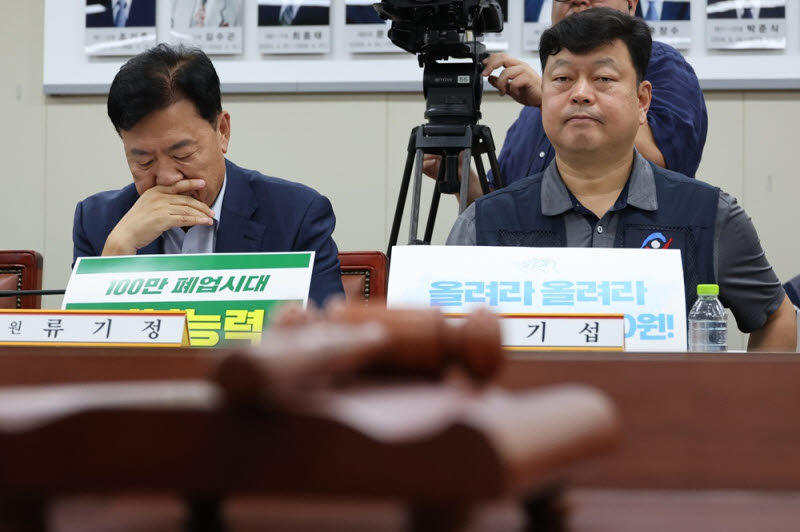
Labor and management are currently at odds over the 2027 minimum wage. Labor advocates are pushing for a 16.3% increase, while management argues for a freeze. The first counter-proposal is set to be presented today, the 30th.
Widening wage gaps by job role
Large-firm production jobs (King-san-jik) vs. SME production jobs
The wage gap between production workers at large conglomerates and those at small and medium-sized enterprises (SMEs) is widening rapidly. The average daily wage for SME manufacturing production workers reached 120,600 KRW, which translates to an annual salary in the 30-million-KRW range. This stands in stark contrast to the six-figure annual salaries of production workers at major conglomerates (the so-called "King-san-jik").
The average daily wage for SME manufacturing production roles rose by 5.8% over the past six months. This figure serves as the standard for calculating labor costs in national contracts and is based on a sample survey of 1,500 companies by the Korea Federation of SMEs.
The gap between nominal and real wages
In the first quarter of 2026, the average monthly nominal wage for regular employees in Korea was 4,555,000 KRW, a 3.4% increase compared to the same period last year. However, when adjusted for inflation, the real wage was only 3,847,000 KRW, a mere 1.3% increase, meaning much of the salary raise was offset by inflation.

Wage increase disparities by company size
The speed of wage recovery differs significantly depending on company size. As of the first half of 2025, large companies (300+ employees) saw a 5.7% increase, while SMEs (fewer than 300 employees) saw only a 2.7% rise. This disparity is primarily attributed to differences in performance bonuses and special allowances.
Analysis and background issues
Real wage deterioration due to inflation
Consumer prices rebounded to 3.1% in May 2026. With the Bank of Korea raising its annual inflation forecast to 2.7%, even the nominal wage growth rate (3.4%) is struggling to keep pace with rising costs. Consequently, there are concerns that real wage growth could turn negative in the second half of the year.
Performance bonus gaps between large firms and SMEs
The high growth rate at large companies is driven not only by base salary increases but also by the relative rise in performance bonuses and special allowances. Conversely, SMEs rely primarily on base salary adjustments, which limits the scope of wage growth. This structural difference is a key factor exacerbating the wage gap across firm sizes.
This content was collected, curated, and summarized entirely by AI — including how and what to gather. It may contain inaccuracies. Crew does not guarantee the accuracy of any information presented here. Always verify facts on your own before acting on them. Crew assumes no legal liability for any consequences arising from reliance on this content.
Powered by
