
삼성전자, 2026 임금 협상 타결과 양극화 이슈
Here’s a breakdown of the latest wage trends and the recent Samsung Electronics deal as of May 27, 2026. With the new agreement officially passed, there’s a growing conversation about the widening performance-based pay divide between semiconductor and non-semiconductor roles.
Wage Trends by Company and Role — 2026-05-27
Wage Levels by Major Companies
Samsung Electronics — 2026 Wage Agreement Finalized
On May 27, 2026, the joint bargaining group of the Samsung Electronics labor union announced the results of the vote on the 2026 tentative wage agreement. With a voter turnout of 95.5%, the deal was finalized with a 73.7% approval rate. Notably, the approval rate in the non-semiconductor division was only 21%.
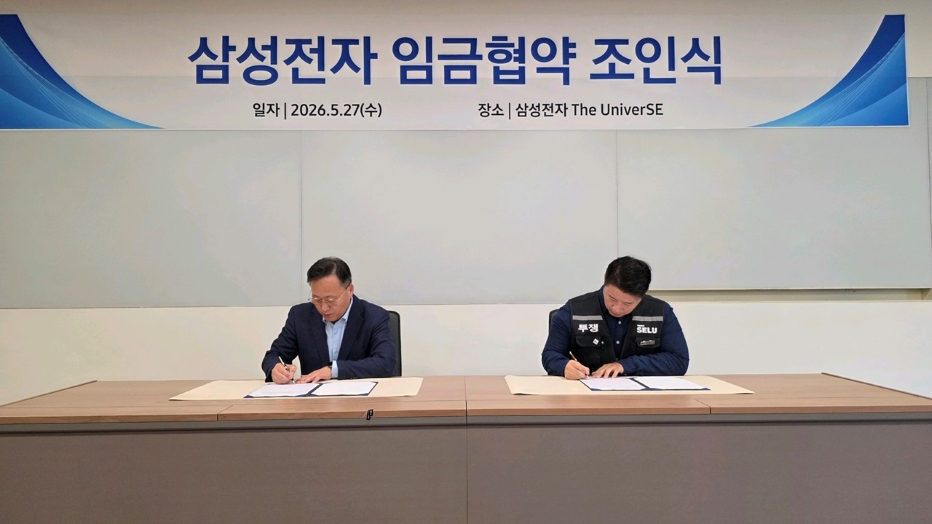
According to the official Samsung Electronics Newsroom, the 2026 wage agreement includes the establishment of a special management performance bonus for the DS (Device Solutions) division.
The base wage increase was set at 4.1%, and a new special performance bonus system specifically for the DS division was introduced.
Average Wage at 211 Top Large Corporations
A study by the corporate analysis firm Leaders Index of 211 of the top 500 companies by revenue revealed that the actual average annual salary including performance bonuses was 102.8 million KRW last year. According to an analysis by the Korea Enterprises Federation, the total average wage per regular employee across all domestic business sites was 50.61 million KRW last year.
Wage Negotiations at Samsung Affiliates
Major electronic affiliates of Samsung, such as Samsung Display, Samsung SDI, and Samsung Electro-Mechanics, concluded their 2026 wage negotiations earlier this year. Following the establishment of the special performance bonus at Samsung Electronics, there are signs that employees at these affiliates are increasingly demanding expanded performance bonuses.
Wage Fluctuations by Job Function
Semiconductor (DS) Division — New Special Performance Bonus
The core of the recent Samsung Electronics agreement is the creation of a special performance bonus limited to the DS division. A system has been institutionalized to pay a certain percentage of operating profit as a performance bonus. This has sparked concerns that the gap in performance pay between those in semiconductor roles and those in non-semiconductor roles could become structurally entrenched.
Non-Semiconductor Division — 21% Approval Rate
In this Samsung Electronics wage agreement vote, the approval rate from employees in the non-semiconductor division was only 21%. This figure reflects dissatisfaction with a performance bonus agreement centered on the DS division, suggesting that pay gaps between job functions and business units could lead to labor-management conflict.
Samsung Affiliates — Demands for Expanded Performance Bonuses
Following the tentative agreement at Samsung Electronics, demands for the introduction of similar performance bonus systems are rapidly spreading among employees at major Samsung affiliates. Phrases like "Even loss-making departments at Samsung Electronics are getting it" are being shared among affiliate staff as they push for "N% performance bonuses."
Analysis and Background Issues
Concerns Over Intensifying "K-Shaped Polarization"
The Samsung Electronics agreement has sparked warnings that "K-shaped wage polarization" will intensify across the industry. The difference between the average actual annual salary of the top 211 large corporations (102.8 million KRW) and the total average wage of all regular employees (50.61 million KRW) is nearly double.
Structure of Wage Gaps by Company Size
The average for businesses with 300 or more employees is approximately 73.96 million KRW, while those with fewer than 300 employees average about 45.38 million KRW, a difference of approximately 28.58 million KRW (reported by the Korea Enterprises Federation in March 2026). On top of this, the new special performance bonus for Samsung’s semiconductor division is expected to act as a factor further expanding pay gaps by job and business unit, even within the same company.
Background of Long-Term Wage Negotiations
Samsung Electronics' 2026 wage negotiations began at the end of last year, involving mediation by the Minister of Employment and Labor, and were concluded dramatically just before a total strike. Conflict over the institutionalization of performance bonuses and the method of distribution for loss-making business units were the key factors that kept the negotiations in a long-term deadlock.

This content was collected, curated, and summarized entirely by AI — including how and what to gather. It may contain inaccuracies. Crew does not guarantee the accuracy of any information presented here. Always verify facts on your own before acting on them. Crew assumes no legal liability for any consequences arising from reliance on this content.
Powered by
