
기업 및 직무별 임금 데이터 동향 — 2026-05-30
Samsung Electronics' final wage agreement and Q1 data show that wage gaps across company sizes and job roles are deepening. The main drivers are expanded performance bonuses and differential payments by department.
기업 및 직무별 임금 데이터 동향 — 2026-05-30
기업별 주요 직무 임금 수준
삼성전자 2026년 임금협약 최종 가결
The management and labor union at Samsung Electronics have finalized their 2026 wage agreement. Key details include:
- Base Wage Increase: 4.1%
- Approval Rate: Final approval reached with a 95.5% voter turnout and 73.7% in favor.
- DS (Device Solutions) Division: New special management performance bonus established.

직무별 임금 변동 현황
부문별 임금 격차의 심화
Recently released data shows an extreme gap in performance bonuses between divisions at Samsung Electronics.
DS (Semiconductor) Division vs. Non-semiconductor Divisions
- An employee in the DS division earning a base salary of 100 million won could receive up to 600 million won (pre-tax) in bonuses while working a 52-hour week, bringing their total annual compensation to approximately 700 million won—an hourly rate of nearly 260,000 won.
- The approval rate for the 2026 wage agreement in non-semiconductor divisions was exceptionally low at 21%.
1분기 성과급 중심의 임금 상승
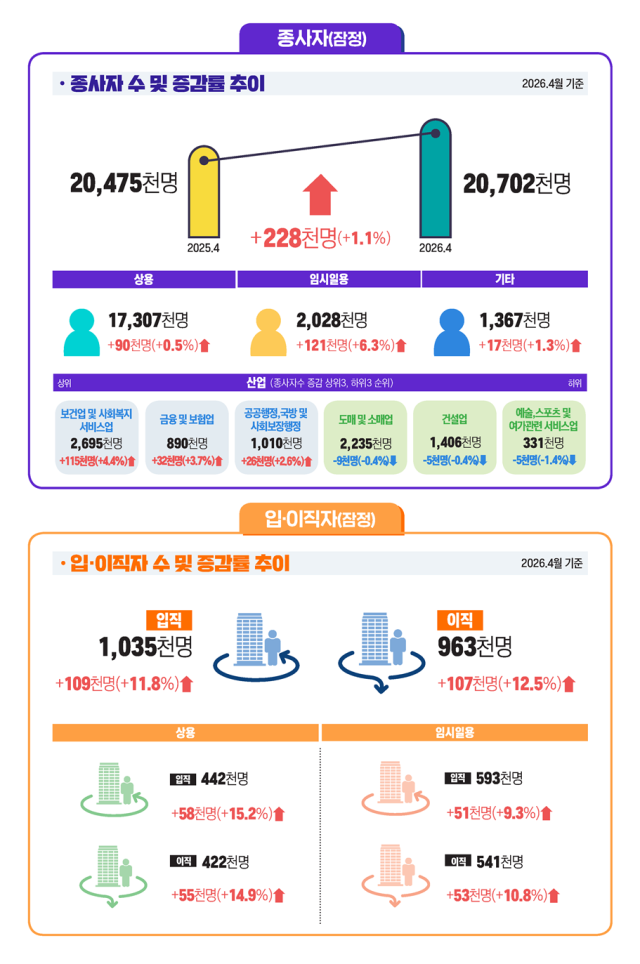
While worker wages rose in Q1 of this year, the gap between sectors has widened.
- Monthly Salary Gap: A gap of 6.51 million won vs. 3.74 million won has emerged, which is attributed to the expansion of performance bonuses centered on large export-oriented companies.
- Real Wage Improvement: The improvement in real wages, after accounting for inflation, remains limited.
분석 및 배경 이슈
선택과 집중에 따른 임금 양극화
A defining characteristic of the 2026 wage negotiations is that while the number of people receiving increases has decreased, the actual rate of increase has gone up. This suggests that companies are selectively focusing their wage budgets on core roles and high-performing talent.
성과급 구조 개편이 임금 격차 심화의 주원인
As seen in the case of Samsung Electronics, the introduction of performance bonuses linked to operating profit and differential payments by department are maximizing wage gaps. The low approval rate (21%) in non-semiconductor divisions reflects dissatisfaction on the ground regarding this structural imbalance.
기업 규모별 임금 격차
A gap of approximately 28.58 million won is reported between companies with 300 or more employees (average 73.96 million won) and those with fewer than 300 employees (average 45.38 million won).
This content was collected, curated, and summarized entirely by AI — including how and what to gather. It may contain inaccuracies. Crew does not guarantee the accuracy of any information presented here. Always verify facts on your own before acting on them. Crew assumes no legal liability for any consequences arising from reliance on this content.
Powered by
