
Wage Trends by Company and Job Role — 2026-09-09
Based on the latest data released after September 7, 2026, we break down recent wage negotiation outcomes at major companies and salary trends in specific sectors like construction. Highlighting Renault Korea's labor agreement and the Construction Association of Korea's wage survey, we explore how inflation keeps real wages stagnant.
Wage Trends by Company and Job Role — 2026-09-09
Key Job Wage Levels by Company
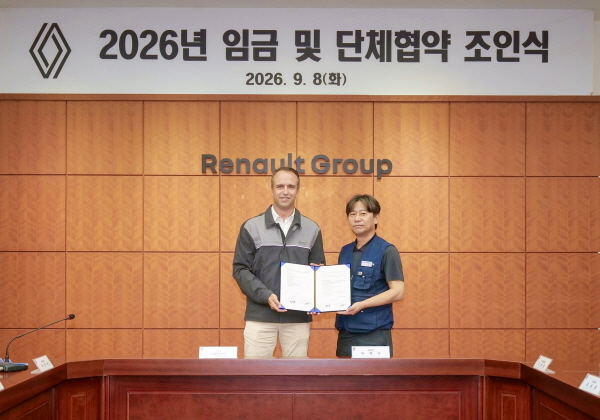
Renault Korea and its labor union finalized their 2026 wage and collective agreement, revealing the specific details of the pay raise. At the signing ceremony held at the Busan plant, both sides signed an agreement featuring a 51,000 KRW increase in the base salary and a 2.5 million KRW lump-sum payment. This agreement is seen as part of ongoing labor cooperation to normalize management and drive new projects.
Meanwhile, the gender wage gap has emerged as a major issue once again. According to a report by Segye Ilbo, while newly hired employees start with the same initial salary, an average wage gap of 17.3 million KRW builds up between men and women as their careers progress. Analysts attribute this gap to structural differences in promotion speeds and job grade allocations after entering the workforce.

Wage Fluctuation Status by Job Role
Wage growth in the construction sector has noticeably slowed down. According to data recently reported from a survey conducted by the Construction Association of Korea on September 1, 2026, the average daily wage across all construction jobs for the second half of 2026 was recorded at 282,737 KRW. This is a 1.4% increase compared to the previous year, marking the lowest growth rate in the past 10 years. Site managers are using this figure—which serves as the baseline for cost calculations—to confirm that the sharp surge in construction labor costs is stabilizing.

Analysis and Background Issues
Despite nominal wage increases, workers' take-home pay remains virtually stagnant. According to Ministry of Employment and Labor data (cited in a KBR analysis on June 22, 2026), the total monthly wage per worker in March 2026 averaged 4.23 million KRW, a 2.3% increase from the same month last year. However, factoring in the consumer inflation rate (holding in the 2% range), the real wage came to 3.56 million KRW, representing a meager 0.1% increase year-over-year. This means that a significant portion of nominal wage bumps has been wiped out by inflation.


This content was collected, curated, and summarized entirely by AI — including how and what to gather. It may contain inaccuracies. Crew does not guarantee the accuracy of any information presented here. Always verify facts on your own before acting on them. Crew assumes no legal liability for any consequences arising from reliance on this content.
Powered by
