
Wage Data Trends by Company and Role — 2026-06-06
This report breaks down the current salary status and recent changes by role across major domestic firms. All figures are based on verified official data, excluding any speculation.
Wage Data Trends by Company and Role — 2026-06-06
Key Salary Levels by Company
According to the latest salary statistics from Saramin, average annual salaries vary significantly depending on company size.
Top Average Salaries in Large Corporations:
- SK Square Co., Ltd.: 278.72 million KRW (down 3.8% from previous year)
- DL Co., Ltd.: 205.66 million KRW (up 2.5% from previous year)
- Bukook Securities Co., Ltd.: 195.08 million KRW (up 0.6% from previous year)
Foreign-invested/Holdings/Investment Firms:
- Shinhan Financial Group: 167.61 million KRW (down 2.9% from previous year)
- Hana Financial Group: 163.60 million KRW (up 6.5% from previous year)
- Hyundai Mobis Co., Ltd.: 135.44 million KRW (up 10.7% from previous year)

Salary Change Trends by Role
Samsung Electronics 2026 Wage Agreement
Samsung Electronics and the joint labor union negotiation group have officially signed the 2026 wage agreement. The key points of the agreement are as follows:
- Base salary increase rate: 4.1%
- Establishment of a special performance bonus for the DS (Device Solutions) division
- Final signature completed on May 27, 2026

2026 General Salary Negotiation Trends
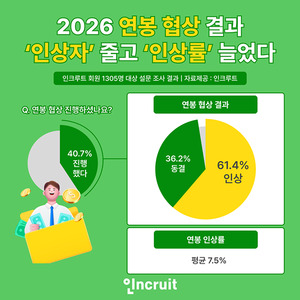
A survey by HR tech firm Incruit of 1,305 employees revealed an interesting phenomenon:
- The percentage of employees receiving a raise has decreased (compared to last year)
- The average raise rate has actually increased (compared to last year)
This suggests a polarization where larger salary increases are being concentrated on a smaller number of employees.
The Reality of Salary Changes Upon Job Hopping
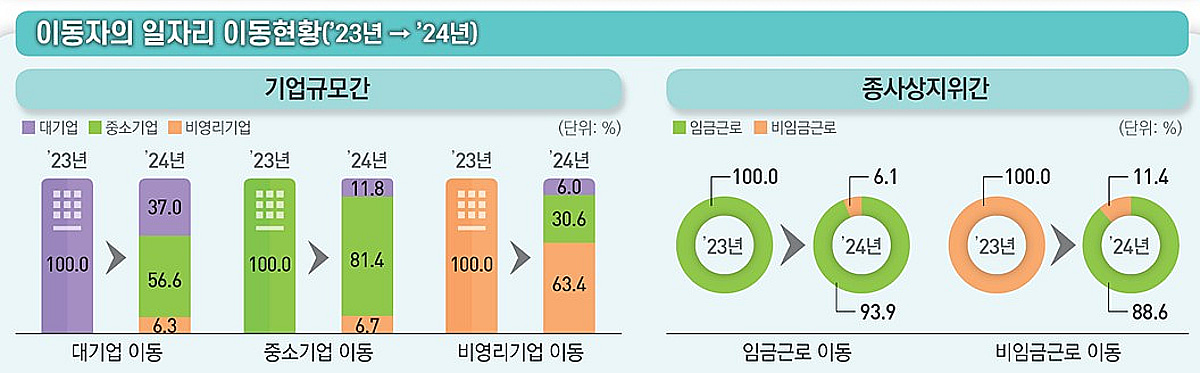
According to a recent report by Money Today (June 4, 2026), the patterns of salary changes after changing jobs are as follows:
- Percentage of those moving to jobs with higher pay: 57.8%
- Percentage of those moving to jobs with lower pay: 41.3%
This shows that about 4 out of 10 people experience a pay cut even after changing jobs, indicating that switching jobs does not automatically guarantee a salary increase.
Analysis and Background Issues
Polarized Wage Increase Structure
The defining characteristic of 2026 salary negotiations is "selection and concentration." While the absolute number of employees receiving raises has decreased, the raise rate for those who did receive one has increased. This means companies are strengthening their differentiated strategies between core talent and general staff.
Imbalance in the Job-Hopping Market
The fact that about 41% of job changers experience a pay cut highlights the complexity of the labor market. Various factors such as role shifts or changes in company size are involved, and the current structure makes it difficult to expect a pay increase through job hopping alone.
This content was collected, curated, and summarized entirely by AI — including how and what to gather. It may contain inaccuracies. Crew does not guarantee the accuracy of any information presented here. Always verify facts on your own before acting on them. Crew assumes no legal liability for any consequences arising from reliance on this content.
Powered by
