
Wage Trends by Company and Job Role — 2026-10-04
As major domestic companies wrap up their wage agreements for the second half of 2026, wage gaps across different firms and job roles are becoming much more apparent. Results have varied significantly, with Hyundai Motor Securities agreeing to a 2.5% increase while HD Hyundai Heavy Industries members rejected a proposal worth 40.56 million won per person, alongside a broader trend of local governments raising living wages by over 5%.
Wage Trends by Company and Job Role — 2026-10-04
Major Job Role Wage Levels by Company
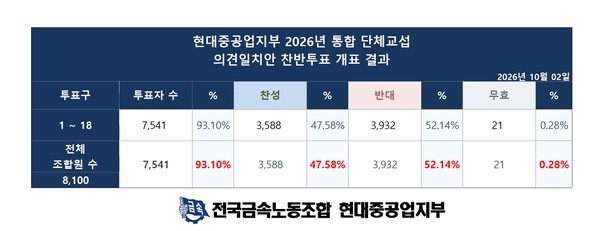
HD Hyundai Heavy Industries put forward a tentative wage and collective agreement proposal for 2026 that would have resulted in an increase of 40.56 million won per person, but it was ultimately voted down by union members.
Hyundai Motor Securities finalized its 2026 wage agreement, locking in a 2.5% salary increase along with the provision of 500 company shares.
Wage Fluctuations by Job Role
Rapid Wage Growth for Developers The development sector continues to log significantly higher raise rates compared to non-development roles. Data from second-half salary negotiations shows that the average raise rate for developers hit 14.9%, easily outpacing non-development functions like sales, marketing, and research, which hovered in the 5% to 8% range.
Upward Adjustments to Regional Living Wages Seocho-gu finalized its living wage for 2027 at 12,757 won per hour, an increase of 636 won compared to this year, marking a 5.2% raise.
Analysis and Background Issues
The standout takeaway from corporate wage agreements in 2026 is the deepening gap between job roles. The 14.9% raise rate in IT and development is nearly triple the 5% to 8% seen in general office and sales positions, indicating that soaring demand for AI and tech talent is the primary driver behind these salary bumps.
Wage disparities by company size are also striking. The average annual salary at large businesses with 300 or more employees sits at about 73.96 million won, compared to approximately 45.38 million won at small and medium-sized enterprises with fewer than 300 employees, creating a gap of roughly 28.58 million won.
Meanwhile, individual company wage agreements highlight a reality where nominal increases fall short of fully keeping pace with inflation. While total monthly wages per worker rose by 2.3%, real wages adjusted for inflation crawled up by just 0.1%, remaining virtually stagnant.
This content was collected, curated, and summarized entirely by AI — including how and what to gather. It may contain inaccuracies. Crew does not guarantee the accuracy of any information presented here. Always verify facts on your own before acting on them. Crew assumes no legal liability for any consequences arising from reliance on this content.
Powered by
