
Wage Trends by Company and Job Role — 2026-06-24
This report breaks down recent wage negotiations and salary fluctuations across key industries in Korea. As of the first half of 2026, shifting compensation demands in the financial sector and large-scale bonuses at major tech firms are driving up total compensation packages across the board. All figures are based on verified official data.
Wage Trends by Company and Job Role — 2026-06-24
Wage Changes by Major Industry
Financial Sector Wage and Bonus Disputes Intensify
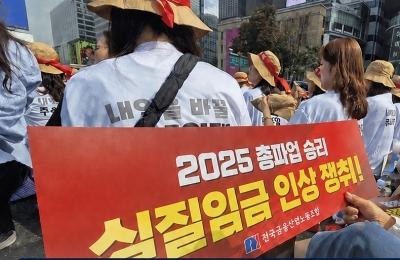
Following the massive bonus payouts at Samsung Electronics and SK Hynix, there has been a surge in compensation demands within the financial sector. Labor and management in the financial industry are currently deadlocked over an "8% wage increase + bonus" proposal.
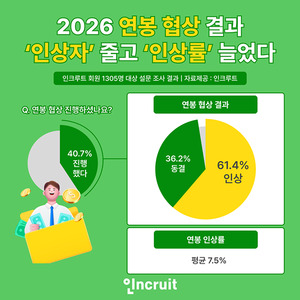
Results of Salary Negotiations by Company: Fewer Increases, Higher Rates
Analysis for 2026 shows that while a smaller percentage of employees received a salary increase compared to the previous year, the actual rate of increase for those who did get a raise has gone up.
Wage Trends by Job Role
Widening Gap Between General and Technical Roles
The median salary increase for employees during the first half of 2026 was 5%.
The wage gap between companies based on size is also widening. The average annual salary at large businesses with 300 or more employees stands at approximately 73.96 million KRW, while the average at small and medium-sized enterprises (SMEs) with fewer than 300 employees is approximately 45.38 million KRW—a difference of roughly 28.58 million KRW.
Analysis and Background Issues
The Domino Effect of Breaking Bonus Caps
Because Samsung Electronics and SK Hynix provided bonuses that exceeded previous limits, these payouts have become the new benchmark for wage negotiations in other industries, including finance. A trend is emerging where companies are managing wage costs by reducing the number of employees receiving raises while simultaneously increasing the percentage of the raise for those who do.
The Structural Nature of the Wage Gap
The annual salary gap of approximately 28.58 million KRW based on company size is being identified as a structural issue that could lead to labor shortages and the drain of talent from SMEs.
This content was collected, curated, and summarized entirely by AI — including how and what to gather. It may contain inaccuracies. Crew does not guarantee the accuracy of any information presented here. Always verify facts on your own before acting on them. Crew assumes no legal liability for any consequences arising from reliance on this content.
Powered by
