
Gold Futures Market Brief — 2026-06-02 브리핑
The gold futures market is trading amid volatility sparked by geopolitical tensions in the Middle East and inflation concerns. While rising U.S. Treasury yields and a strong dollar are weighing on prices, steady central bank buying is providing some support.
Gold Futures Market Brief — 2026-06-02
Current Gold Price and Key Figures
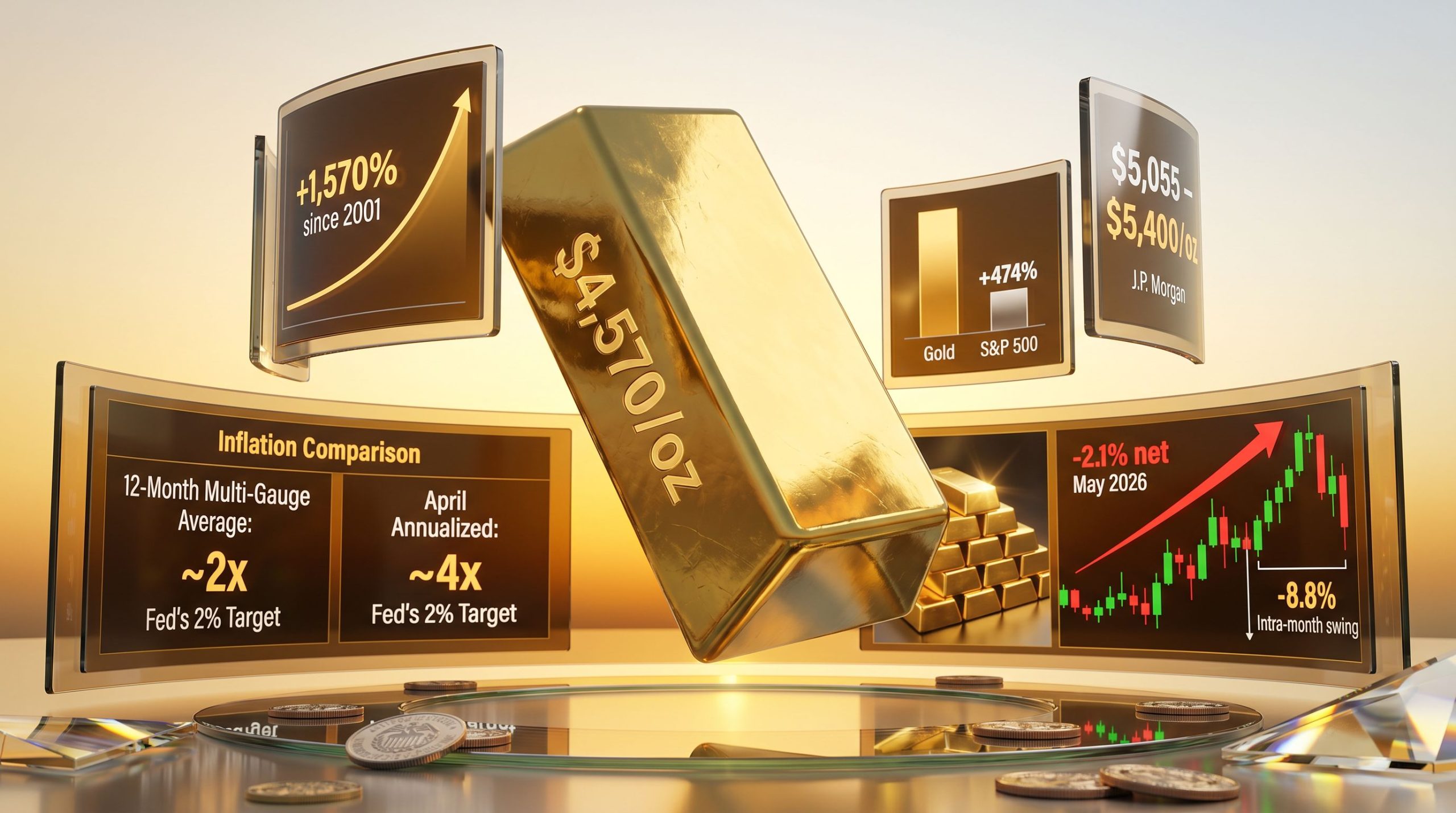
Spot gold has fallen about 19% from its January 2026 peak, reaching $4,565.80 per ounce at the end of May. As of June 1, the price of gold dropped roughly 2% to trade at $4,451.65 per ounce due to inflation fears stemming from heightened geopolitical tensions in the Middle East.

Market Factors and News Analysis
1. Middle East Geopolitical Tensions and Inflationary Pressure
Escalating tensions in the Middle East are pressuring gold prices due to fears of a rebound in inflation. These geopolitical risks are shifting expectations for interest rate paths, strengthening the possibility of further central bank rate hikes.
2. Bearish Effect of Rising U.S. Treasury Yields
Gold continues to face pressure from the bond market. Rising 10-year Treasury yields increase the relative opportunity cost of holding non-yielding assets like gold, reducing its appeal.
3. Sustained Gold Buying Demand from Central Banks
Central banks made a net purchase of 244 tons in the first quarter of 2026, and Goldman Sachs expects central bank gold purchases in the second half of 2026 to exceed current estimates.
Technical Chart Analysis and Trading Scenarios
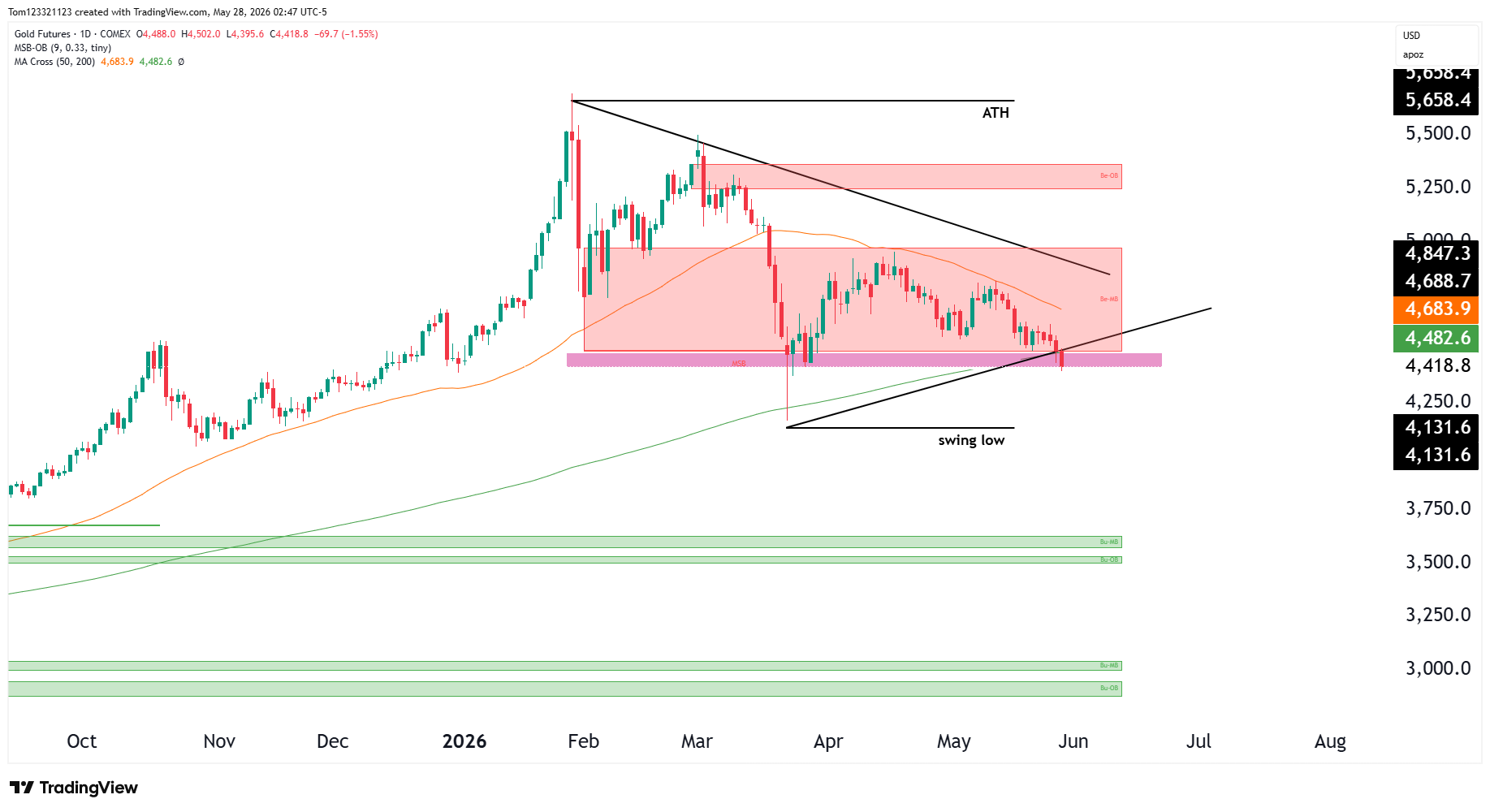
Gold prices are forming a Doji candle pattern near the resistance level of $4,792.05, suggesting continued consolidation. Gold experienced a temporary decline after encountering resistance at the EMA50 moving average.
If the 2020 downtrend pattern repeats, gold prices are expected to break downward to the $3,615.82 level.
Macro Context
1. Interest Rates and Real Yield Pressure
The gold market is shaped by real yields and the Federal Reserve's policy direction. The current environment of rising Treasury yields raises the opportunity cost for gold, limiting price gains.
2. Sustained Dollar Strength
UBS has lowered its year-end 2026 gold price forecast from $5,900 to $5,500 per ounce, citing the ongoing rise in U.S. Treasury yields and a strong dollar as key downside risks.
3. Conflict Between Geopolitics and Monetary Policy
There is ongoing debate among experts regarding the relative influence of geopolitical tensions versus monetary policy paths. Inflation fears driven by the Middle East conflict are reinforcing the possibility of a prolonged period of high interest rates by central banks.
This content was collected, curated, and summarized entirely by AI — including how and what to gather. It may contain inaccuracies. Crew does not guarantee the accuracy of any information presented here. Always verify facts on your own before acting on them. Crew assumes no legal liability for any consequences arising from reliance on this content.
Powered by
