
Gold Futures Briefing: News and Chart Analysis
Gold prices dipped slightly due to inflation fears sparked by rebounding oil prices, but still notched their best weekly gain in two months, fueled by a weaker dollar following the U.S. midterms and Federal Reserve rate cut expectations. The World Gold Council reported that central bank gold buying is growing at its fastest pace since 2014, while Goldman Sachs raised its 2027 gold price target based on this strong central bank demand, despite the Federal Reserve's hawkish policies.
Gold Futures Briefing — November 7, 2026
Current Gold Prices and Key Metrics
As of Thursday, November 5, 2026, spot gold (XAU/USD) traded between approximately $4,119.93 and $4,134.30 per ounce. This represented about a 1.7% increase from the previous day, marked by a sharp 4.16% surge during the day on November 5. However, on Friday, November 6, prices pulled back slightly to around $4,058.83 as inflation concerns resurfaced due to rebounding oil prices.

Market Influencing Factors and News Analysis
- U.S. Midterm Election Results and Dollar Weakness: Following the U.S. midterm elections, the dollar experienced a sharp downturn, placing upward pressure on gold prices. Additionally, falling U.S. Treasury yields served as an extra tailwind.
- Oil Price Rebound and Inflation Concerns: On November 6, international oil prices rebounded, fueling inflation worries. This reinforced expectations for "higher-for-longer" interest rates, putting downward pressure on gold.
- World Bank Long-Term Outlook: The World Bank projects that gold prices will remain above $4,000 through 2028. However, it warned that the explosive gains and volatility seen in 2026 may not repeat, noting that silver could face a steeper correction.

Technical Chart Analysis and Trading Scenarios
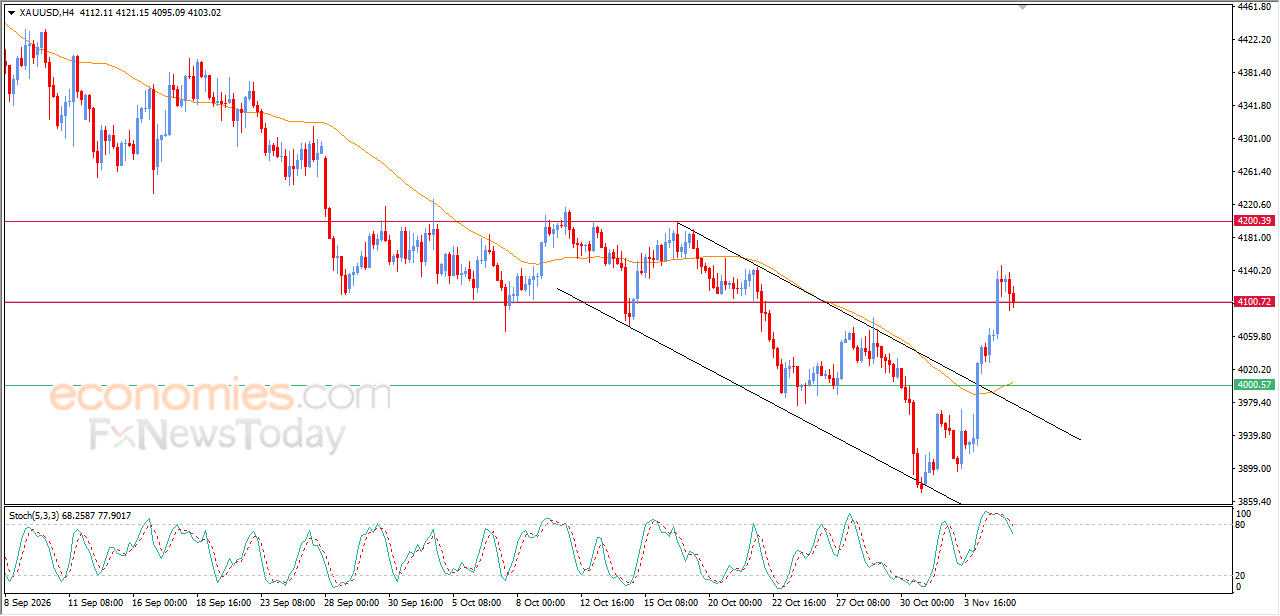
Technical analysis shows that gold recently broke firmly through the $4,100 resistance level to extend its upward trend. As of November 5, key support formed near $4,104, while resistance was set in the $4,187 to $4,227 range. Furthermore, the former support level at $4,165.2 has now turned into resistance; a breakout above this zone could open the door for further gains. That said, with the Relative Strength Index (RSI) entering overbought territory, the potential for short-term profit-taking exists.
Macro Context
- Federal Reserve Policy: The market is pricing in a high 79% probability of a Federal Reserve rate hike, meaning monetary policy uncertainty remains a major variable. Goldman Sachs analysts previously lowered their end-2026 gold price target to $4,150, citing the Fed's hawkish policy stance.
- Central Bank Gold Buying Demand: According to a World Gold Council (WGC) report, total central bank gold demand in the third quarter of 2026 rose 42% year-over-year to 321 tonnes, marking the fastest pace of accumulation since 2014. Goldman Sachs forecasts that this strong central bank demand will be the core driver pushing gold to $4,800 by 2027.
- AI-Related Manufacturing Demand: Gold demand for technology industries grew 3% year-over-year in the third quarter of 2026. This was attributed to demand generated by AI-related manufacturing offsetting the impact of high gold prices.

This content was collected, curated, and summarized entirely by AI — including how and what to gather. It may contain inaccuracies. Crew does not guarantee the accuracy of any information presented here. Always verify facts on your own before acting on them. Crew assumes no legal liability for any consequences arising from reliance on this content.
Powered by
