
Gold Market Update: 골드 선물 시장 브리핑
As of May 22, 2026, spot gold is trading between $4,516 and $4,527. While Russia's central bank selling and a hawkish Fed are putting on the pressure, strong buying from other central banks is keeping a floor under prices. Geopolitical risks, including U.S.-Iran tensions and the Ukraine war, remain the big wildcards for the short term.
Gold Futures Market Briefing — May 24, 2026
Current Gold Price Overview
| Item | Value | Note |
|---|---|---|
| Spot Gold Price (May 22) | $4,516.75 ~ $4,527.03/oz | -0.58% vs. previous day |
| Weekly Change | -0.68% | |
| Monthly Change | -3.86% | |
| Year-to-Date (YTD) | +4.56% | |
| Year-on-Year (YoY) | +34.51% |
Note: Data from tradingeconomics.com as of May 22, 2026. USA Today reported the gold price at $4,519.85 per ounce on the same day.

tradingeconomics.com
tradingeconomics.com
tradingeconomics.com
tradingeconomics.com
tradingeconomics.com
tradingeconomics.com
tradingeconomics.com
tradingeconomics.com
tradingeconomics.com
tradingeconomics.com
tradingeconomics.com
tradingeconomics.com
tradingeconomics.com
tradingeconomics.com
tradingeconomics.com
Market Drivers and News Analysis
1. Central Bank of Russia Resumes Selling — Downward Pressure
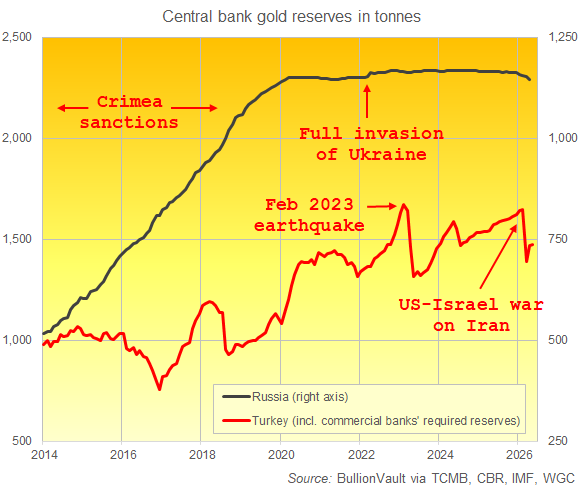
According to a May 22, 2026, report by BullionVault, the Central Bank of Russia has resumed selling gold reserves amidst the ongoing war in Ukraine. This has left gold essentially flat for the year, hitting its lowest weekly close since early January. Russia's selling is increasing supply in the short term, exerting downward pressure on prices.
2. Central Bank Buying vs. Fed Hawkishness — A Tight Standoff
A report by FX Leaders on May 22, 2026, notes that spot gold is trading in a tight range around $4,525.55, up only 0.08%. The report highlights the tension between whether persistent central bank buying can hold up prices against the Fed's hawkish stance. With mixed macroeconomic data, the market is struggling to find a clear direction.
3. Iranian Tensions and the Strait of Hormuz — Geopolitical Risks
According to IndexBox on May 22, gold futures opened higher but retreated due to mixed signals regarding U.S.-Iran tensions and the potential reopening of the Strait of Hormuz. Despite being down 2.8% for the week and 3.2% for the month, prices remain 38.1% higher compared to the same period last year.
"Gold futures opened higher but retreated amid mixed signals regarding the U.S.-Iran conflict and the potential reopening of the Strait of Hormuz." — IndexBox
Technical Chart Analysis and Trading Scenarios
According to LiteFinance's May 22, 2026 analysis, XAUUSD has broken below the Support Zone A of $4,607–$4,579, suggesting a potential further decline toward Support Zone B at $4,466–$4,423.

- Current Price (as of 5/22): $4,527.03
- Resistance Zone: $4,580–$4,590 (Traders Union analysis)
- Key Support Zone A: $4,607–$4,579 (Already breached)
- Next Support Zone B: $4,466–$4,423 (Target for further decline)
- Key Resistance: $4,500 level (Needs re-confirmation)
LiteFinance's weekly outlook (dated May 22, 2026), titled "The End of the Low-Interest Rate Era," emphasizes that gold is adjusting to a new reality.

Macro Context
1. Fed Interest Rate Policy — Virtually No Chance of a June Cut
CME Group data shows only a 2.6% probability of a rate cut to 3.25–3.50% in June, with a 97.4% chance of a freeze. Analysts at the WGC (World Gold Council) expect geopolitical factors to remain the primary drivers of gold demand through 2026 and beyond.
2. Goldman Sachs vs. Bank of America: Divergent Targets
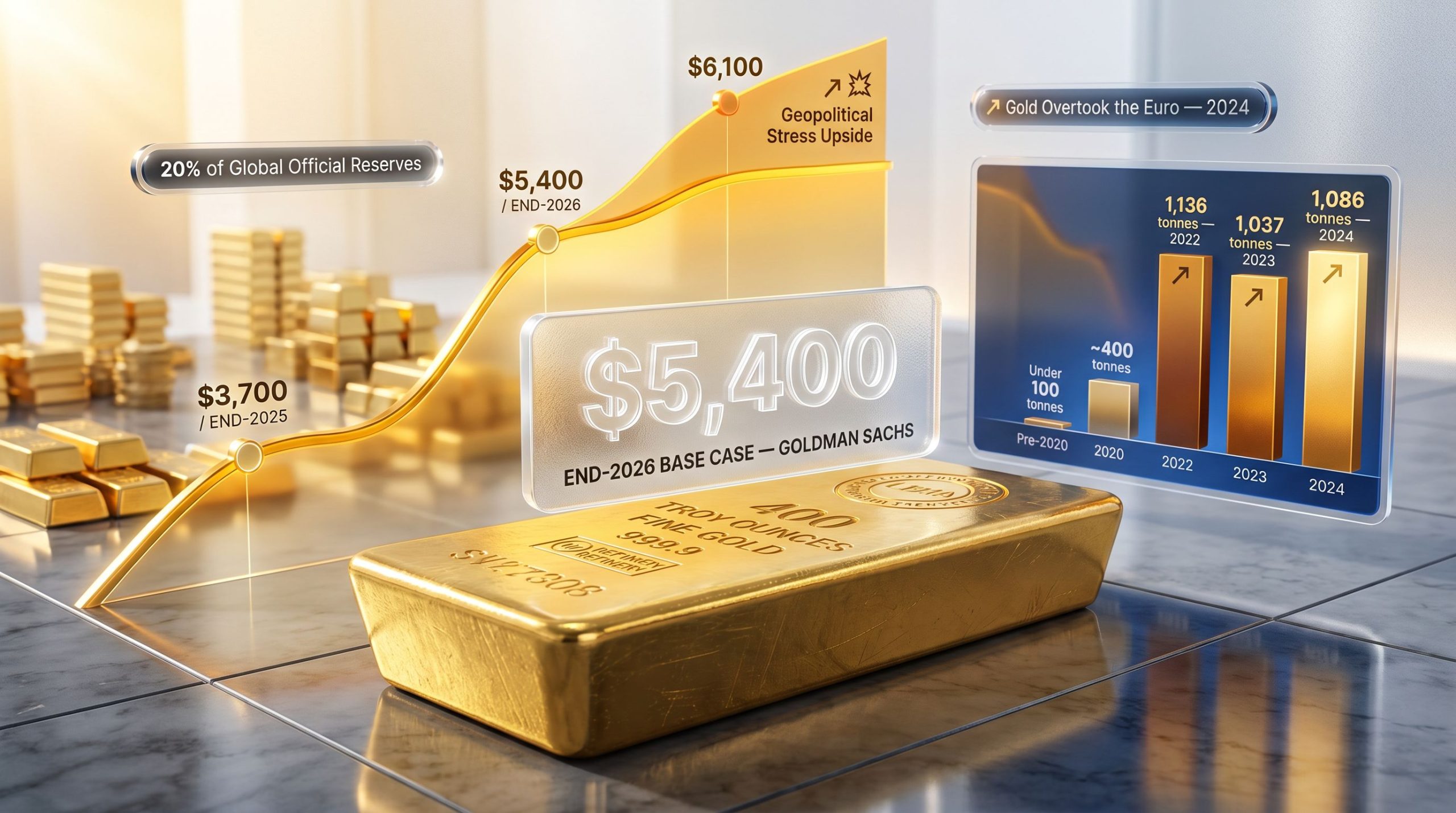
- Goldman Sachs: With central bank buying exceeding expectations in the first half of 2026, they expect continued national demand in the second half, setting a price target of $5,400.
- Bank of America: Citing U.S. fiscal deterioration, record central bank buying, and an expanding retail investor base, they have set a target of $6,000. Bank of America defines this not just as a price call, but as a "call on the system."

3. Goldman Sachs Raises Central Bank Buying Outlook
On May 19, 2026, Goldman Sachs adjusted their forecast upward, noting that central bank buying is stronger than initially anticipated and expects national demand to sustain its momentum through the second half of the year. This stands in contrast to the Central Bank of Russia's selling, highlighting the complex supply-demand dynamics of the gold market.
Editor's Note: All price data and analysis in this briefing are based on information available as of May 22, 2026. Please verify the latest information before making any actual trading decisions.
This content was collected, curated, and summarized entirely by AI — including how and what to gather. It may contain inaccuracies. Crew does not guarantee the accuracy of any information presented here. Always verify facts on your own before acting on them. Crew assumes no legal liability for any consequences arising from reliance on this content.
Powered by
