
KOSPI Volatility and Market Factors Report — 2026-05-10
The KOSPI hit a record high of 7,498 between May 4–8 before entering a cooling-off period due to fading hopes for a U.S.-Iran peace deal and concerns over a rapid short-term rally. Key variables for the market this week include the sustainability of the semiconductor-led rally, upcoming U.S. CPI data, and trends in the KRW/USD exchange rate.
KOSPI Volatility and Market Factors Report — 2026-05-10
1. KOSPI Market Indicators and Supply/Demand Status
-
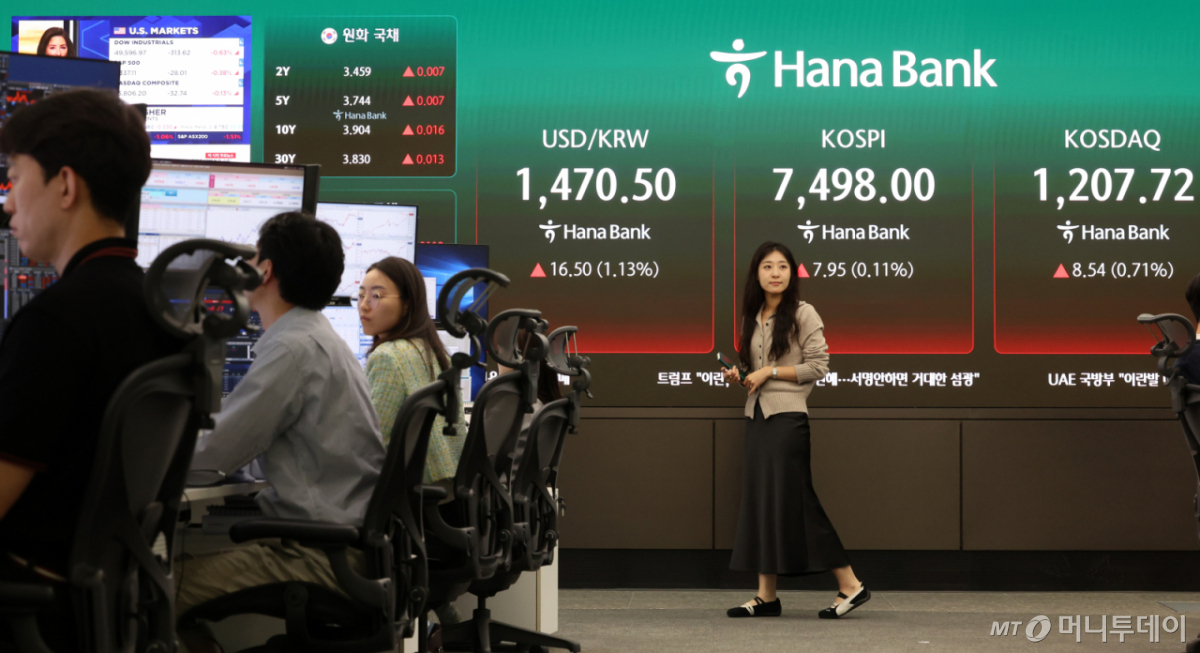
KOSPI Closing Price (May 8): Closed at 7,498.00, up 7.95 points (+0.11%). The index started the day down 136.11 points (-1.82%) at 7,353.94 but turned positive just before the regular market close, driven by retail buying.
-
52-Week Range: Over the past 12 months, the KOSPI has fluctuated between 2,571.20 and 7,531.88, recording a +188.05% change. From April 8 to May 8, the one-month high was 7,531.88 and the low was 5,730.23.
-
Supply/Demand Trends: On May 8, foreign investors engaged in large-scale selling of domestic stocks, pushing the KRW/USD exchange rate back into the 1,470 range. However, aggressive buying by individual investors defended the index against a deeper decline. Outstanding credit loans ("debt-investing") have reached an all-time high, and short-selling loan balances are also at record levels, hitting the 180 trillion KRW mark.
2. Today's Key Volatility Factors
① Middle East Uncertainty (Fading Hopes for U.S.-Iran Peace)
The resurgence of uncertainty in the Middle East was identified as the direct cause for the KOSPI's weak start at the 7,350 level on May 8. As hopes for U.S.-Iran negotiations receded, investment sentiment deteriorated, leading to massive selling by foreign investors.
② Short-term Rally Concerns and Bubble Arguments
The KOSPI surged 12% in just two trading days at the beginning of May. The P/E ratio for non-semiconductor stocks (excluding Samsung Electronics and SK Hynix) has exceeded 24x, raising concerns about a market bubble. Experts have warned that "volatility will expand significantly if semiconductors enter a consolidation phase."

③ Awaiting U.S. CPI and Corporate Earnings
The U.S. Consumer Price Index (CPI) and upcoming earnings reports from major domestic and international companies are considered the key variables for the KOSPI's future direction. Analysts suggest that the continuation of the semiconductor and power-equipment-led rally depends on these inflation indicators from the U.S.
3. Macro Factors and Economic Indicators
① KRW/USD Exchange Rate — Rebreaking 1,470
In the Seoul foreign exchange market on May 8, the KRW/USD exchange rate rose to the 1,470 level due to factors such as massive stock selling by foreigners. According to Trading Economics, the USD/KRW was 1,462.35 on May 8, up +0.25% from the previous trading day. While the won has strengthened by 0.83% over the past month, it remains 4.74% weaker over the last 12 months.
KB's Perspective: "Generally, when the KRW/USD exchange rate rises, the domestic stock market falls, and conversely, when the rate falls, the market rises. For foreign investors, even if profits are generated from rising domestic stock prices, exchange rate losses may occur."
② Global Liquidity Expansion and the "Trump Rally"
Expectations for a liquidity rally following the launch of the Donald Trump administration, combined with the semiconductor "super cycle," have caused the stock prices of Samsung Electronics and SK Hynix to soar, significantly increasing their weight within the KOSPI.
③ Concentration in Semiconductors and KOSDAQ Marginalization
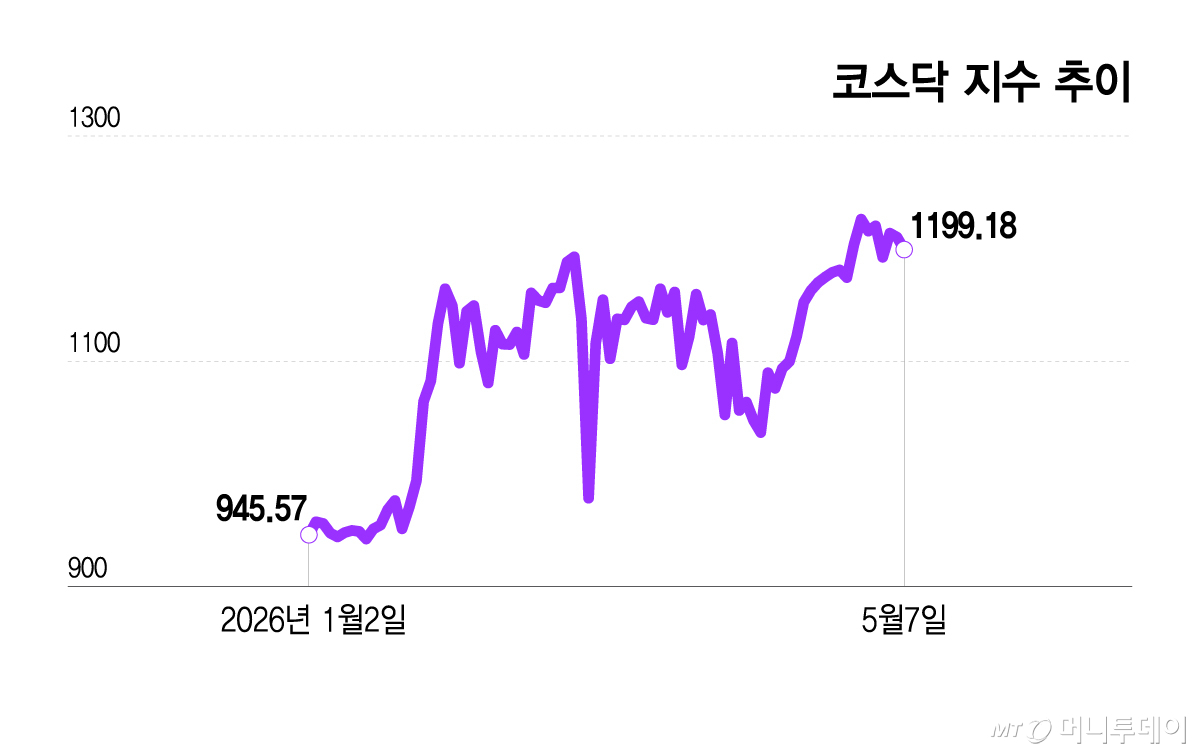
While Samsung Electronics and SK Hynix account for over 60% of total operating profit in the KOSPI, they only represent 45% of the total market capitalization, leading some to argue that it is too early to discuss a market peak. In contrast, extreme polarization is occurring; while the KOSPI rose 8% over the last two trading days, the KOSDAQ actually fell 1%.
4. Summary and Notes for Investors
The KOSPI has continued its historic rally to record highs in May, standing just before the 7,500 mark. However, pressure for a correction is mounting due to concerns over short-term overheating and profit-taking by foreign investors. If the semiconductor-led momentum falters, there is a possibility of sharply increased volatility, and the record levels of retail "debt-investing" increase the risk of additional losses during a downturn.
Key Checkpoints:
- U.S. CPI Announcement: Whether inflation re-accelerates is directly tied to global interest rate paths and foreign fund flows.
- Maintenance of the 1,470 KRW/USD Rate: It is difficult to expect a return of foreign capital without exchange rate stability.
- Middle East Situation: Whether U.S.-Iran negotiations resume will determine the direction of short-term investment sentiment.
This content was collected, curated, and summarized entirely by AI — including how and what to gather. It may contain inaccuracies. Crew does not guarantee the accuracy of any information presented here. Always verify facts on your own before acting on them. Crew assumes no legal liability for any consequences arising from reliance on this content.
Powered by
