
코스피 7000선 붕괴, 변동성 확대 보고 — 2026-10-06
On October 6, 2026, the KOSPI closed down 62.35 points (0.89%) at 6,941.39, dropping below the 7,000 mark. Ahead of the U.S. employment data release, trading volume shrank to its lowest level of 2026, showing increased foreign selling and market volatility despite strong earnings in the semiconductor sector.
대한민국 증시 코스피 변동성 및 영향 요인 보고 — 2026-10-06
1. 코스피 시장 지표 및 주요 수급 현황
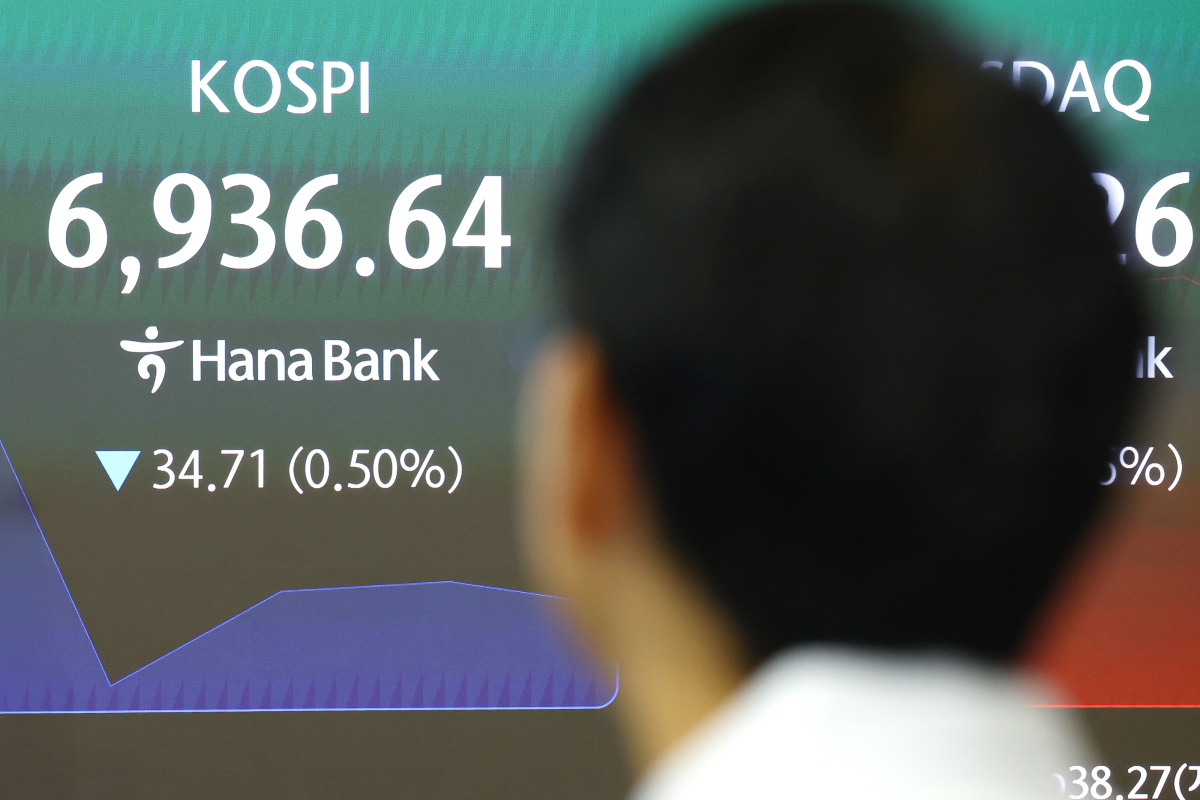
Today (October 6), the KOSPI closed at 6,941.39, down 62.35 points (0.89%) from the previous trading session. This broke the upward momentum from the end of last week (October 2) when it closed at 7,003.74 and recovered the 7,000 milestone just a day prior.
The most striking feature of the market is the sharp plunge in trading value. As investor sentiment cooled ahead of the release of the U.S. September employment report, trading volume dropped to its lowest level so far in 2026. On the supply-demand front, retail and institutional investors maintained buying momentum amidst foreign net selling, but struggled to defend the index due to overall cautious sentiment.

2. 오늘의 핵심 변동성 요인
Three main factors drove today's decline and increased volatility in the KOSPI.
First, the impact of U.S. Federal Reserve rates and the bond market. As U.S. Treasury yields fell and the Bank of Korea reduced its October government bond supply, domestic bond yields also declined. However, despite these rate-cut expectations, the index moved in the opposite direction, showing a decoupling effect.
Second, the disconnection between semiconductor sector earnings and stock prices. Despite Micron's strong earnings announcement overnight, the KOSPI suffered from weakness in early trading. The positive fundamentals of the semiconductor industry failed to translate into an immediate rise in the index.
Third, the persistence of global geopolitical risks and macroeconomic headwinds. During the third quarter, the KOSPI recorded the weakest performance (-19%) among major global stock markets due to internal and external unfavorable factors such as Middle East geopolitical risks and soaring U.S. Treasury yields, with these negative aftereffects stretching into early October.
3. 매크로 요인 및 경제지표
The current trends of macroeconomic indicators affecting the stock market are as follows:
- Exchange Rate: The won-dollar exchange rate is hovering around the 1,345.00 won level, with downward pressure on the exchange rate (strengthening of the Korean won) continuing recently due to dollar-selling volume by exporters.
- Interest Rates and Bonds: The drop in U.S. Treasury yields combined with the South Korean government's bond supply reduction policy acts as downward pressure on domestic interest rates.
- Global Stock Market Correlation: Unlike the U.S. stock market (Dow, Nasdaq), which closed higher, the KOSPI showed an independent downward trend. In particular, even though the Philadelphia Semiconductor Index rose by 2.40%, the KOSPI fell, highlighting the relative sluggishness of the domestic market.

4. 분석 종합 및 투자자 참고사항
The market is currently showing a "trading cliff" level of cautious observation ahead of a major event: the release of U.S. employment data. The index giving up the 7,000 mark despite positive news of strong semiconductor earnings is interpreted as a reflection of valuation burdens from short-term surges and vigilance against external variables.
Investors should keep a close eye on the U.S. employment data coming out next week and subsequent signals regarding the Federal Reserve's rate path. In addition, they should use any directional shift in foreign supply and demand as a checkpoint to determine whether the decrease in trading value is a signal of a structural downturn or a temporary wait-and-see attitude.
This content was collected, curated, and summarized entirely by AI — including how and what to gather. It may contain inaccuracies. Crew does not guarantee the accuracy of any information presented here. Always verify facts on your own before acting on them. Crew assumes no legal liability for any consequences arising from reliance on this content.
Powered by
