
KOSPI, 코스피 시장 변동성과 영향 요인 분석
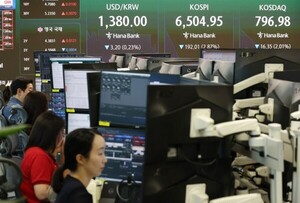
After an intraday plunge and rebound on August 25 to close at 6,742.73p (up 0.68%), the KOSPI lost momentum and entered a downturn on August 26 due to semiconductor industry concerns and massive foreign net selling. The market is currently experiencing high volatility driven by a combination of weak US semiconductor stocks, China's YMTC IPO, and the won-dollar exchange rate fluctuating in the 1,380 won range.
대한민국 증시 코스피 변동성 및 영향 요인 보고 — 2026-08-27
1. 코스피 시장 지표 및 주요 수급 현황
On August 25, the KOSPI dropped to an intraday low of 6,696.96p before rebounding to close at 6,742.73p, up 45.77p (0.68%) from the previous session.
In terms of supply and demand, heavy selling by foreign investors stood out. As of August 26, foreigners recorded a net sale of approximately 3.95 trillion won, while buying by retail and institutional investors helped offset the pressure and defend the index.
During intraday trading on August 25, stocks related to Samsung Group's governance drove the index decline. Despite announcing a shareholder return plan, Samsung Electronics tumbled -8.79%, Samsung Life Insurance fell -12.63%, and Samsung C&T dropped -8.60%.
2. 오늘의 핵심 변동성 요인
First, weakness in US semiconductor stocks and concerns over NVIDIA's earnings acted as the primary drivers of volatility. Immediately after the market opened on August 25, the spillover from sluggish US semiconductor shares caused the domestic market to plunge into the 6,400p range, and this "Nvidia Jitters" sentiment continued to weigh on the market on August 26.
Second, China's YMTC IPO issue fueled worries over the global semiconductor supply chain, negatively impacting South Korean semiconductor stocks. Market analysts on August 26 pointed to this issue as a major negative factor capping index rebounds.
Third, foreign capital outflow and the AI bubble debate are emerging. Some professors have mentioned the AI bubble and private credit risks, warning that the KOSPI could potentially crash below 5,000p, while pointing out that valuation burdens from rapid short-term gains are deteriorating investor sentiment.

3. 매크로 요인 및 경제지표
The won-dollar exchange rate dropped to 1,376 won during intraday trading on August 25, falling below key support levels such as the 200-week moving average, but later rebounded to the mid-1,380 won range driven by persistent foreign stock net selling and a stronger offshore dollar.
Regarding global macro events, the late August period features NVIDIA's earnings release, the Jackson Hole Symposium, and the Bank of Korea (BOK) monetary policy meeting as the three core events determining the direction of the KOSPI.

In terms of oil prices and interest rates, falling oil prices and interest rates on Wall Street have acted as a positive factor for the value of the South Korean won, which is expected to combine with export companies' demand for won conversion to help stabilize the exchange rate.
4. 분석 종합 및 투자자 참고사항
The market is currently in a high-volatility phase, reacting extremely sensitively to changes in the US semiconductor industry and shifts in foreign supply and demand. Repeating a V-shaped or "weak in the morning, strong in the afternoon" pattern for two consecutive days on August 25 and 26, the market is trading in a box pattern where downside rigidity exists alongside clear resistance at the top.
Investors should closely monitor NVIDIA's upcoming earnings announcement at the end of August and the results of the Bank of Korea's monetary policy meeting, and prepare for potential additional index adjustments, especially if foreign net selling exceeds 4 trillion won.
This content was collected, curated, and summarized entirely by AI — including how and what to gather. It may contain inaccuracies. Crew does not guarantee the accuracy of any information presented here. Always verify facts on your own before acting on them. Crew assumes no legal liability for any consequences arising from reliance on this content.
Powered by
