
TITLE: Korea Stock Market Volatility and Key Drivers — 2026-09-05
On September 4, the KOSPI 200 Volatility Index (VKOSPI) dropped to its lowest level in six months, easing market anxiety. However, macroeconomic headwinds like slowing demand and sustained high interest rates continue to fuel warnings of capped upside potential for the September stock market.
Korea Stock Market Volatility and Key Drivers — 2026-09-05
1. KOSPI Market Indicators and Major Supply-Demand Status
According to Korea Exchange data on September 4, the VKOSPI, often called Korea's "fear index," fell compared to the previous session, dropping below the 40 mark. This is the lowest level in about half a year, suggesting that short-term market volatility risks have significantly subsided.
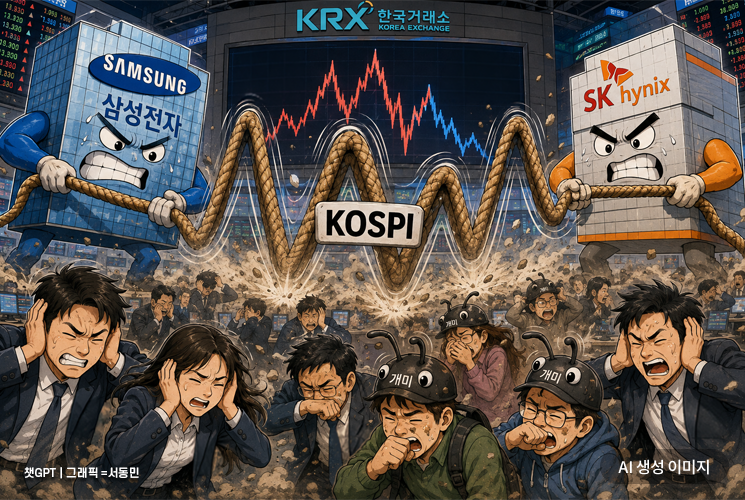
As of the closing price on the previous trading day, September 3, the KOSPI index finished slightly higher at 6,579.48. Although it plunged temporarily during the session, it recovered its losses due to an influx of bargain-hunting buyers. On the supply-and-demand front, semiconductor share buybacks are currently acting as a floor supporting the index around the 6,200 level, while overall trading value and foreign capital flows have turned to a wait-and-see approach.
2. Today's Core Volatility Factors
The biggest issues currently running through the market are a macroeconomic triple-whammy and sluggish earnings momentum. Korea Investment & Securities pointed out three main factors capping the KOSPI's upside in September: slowing demand, a strong (or volatile) Korean won, and rising interest rates. This means that global economic downturn concerns are negatively impacting the third-quarter earnings outlook for domestic companies.
Another factor is the residue of external headwinds. Last week, external uncertainties such as deepening geopolitical risks and U.S. Treasury yield volatility pressured the KOSPI. However, much like the recent drop in the VKOSPI, the market has grown more resilient to these issues, somewhat subduing fear sentiment. That said, interest rate uncertainties stemming from remarks by Federal Reserve officials remain a potential ticking time bomb for volatility.

Regarding exchange rates, strong dollar-selling pressure persists, but direction-seeking continues as it meets a wait-and-see attitude from importers toward buying. While the oil price variable remains limited, it has been noted that persistent U.S. high interest rates and high oil prices could negatively impact the Korean won by fueling risk-off sentiment.
3. Macro Factors and Economic Indicators
Among macroeconomic indicators, interest rates and exchange rates are exerting the most direct impact on the stock market. Analyzing recent offshore NDF exchange rate trends alongside remarks by "Fed Governor Waller who is trying to tame the dollar," the KB Kookmin Bank FX team diagnosed that while the immediate impact on the Korean won would be limited, supply-and-demand factors are mixed. A high-interest-rate environment burdens growth stock valuations, whereas it can be positive for financial stocks, leading to differentiation across sectors.
Commodity prices, particularly oil, remain an indicator that requires close observation. This is because rising oil prices can act as inflationary pressure and push back interest rate cut expectations. Oil prices are currently moving sideways without major changes, but if geopolitical situations worsen, they could immediately act as downward pressure on the stock market.
Lastly, there is the sluggishness of earnings indicators. With third-quarter earnings momentum expected to slow down, buying sentiment is shrinking, primarily around large-cap stocks like semiconductors. Consequently, bargain-hunting funds are flowing into valuation troughs, but clear upward catalysts remain lacking.
4. Comprehensive Analysis and Notes for Investors
Although the VKOSPI, which indicates market fear, dropped to a 6-month low and eased short-term volatility risks, structural headwinds such as slowing demand and sustained high interest rates remain. Investors should keep range-bound fluctuations in mind, squeezed between the index floor supported by semiconductor share buybacks (around the 6,200 level) and the ceiling blocked by macroeconomic bad news.
In particular, attention should be paid to the possibility of sector rotation into financial stocks capable of defending against high interest rates or cosmetics and holding companies with expectations for improved earnings, while also adjusting cash ratios in preparation for any potential re-expansion of exchange rate and oil price volatility.
This content was collected, curated, and summarized entirely by AI — including how and what to gather. It may contain inaccuracies. Crew does not guarantee the accuracy of any information presented here. Always verify facts on your own before acting on them. Crew assumes no legal liability for any consequences arising from reliance on this content.
Powered by
