코스피 변동성 보고: 관세·AI 우려와 환율 1345원 재상승
전일 6%대 급락했던 코스피가 26일 저가 매수세 유입으로 강보합 마감했으나 변동성은 지속되고 있다. 미국발 AI 투자심리 악화와 신규 관세 우려, 그리고 달러 강세 지속이 주요 하방 압력으로 작용하고 있다.
KOSPI Market Volatility and Key Influencing Factors Report — 2026-11-27
1. KOSPI Market Indicators and Major Supply & Demand Trends
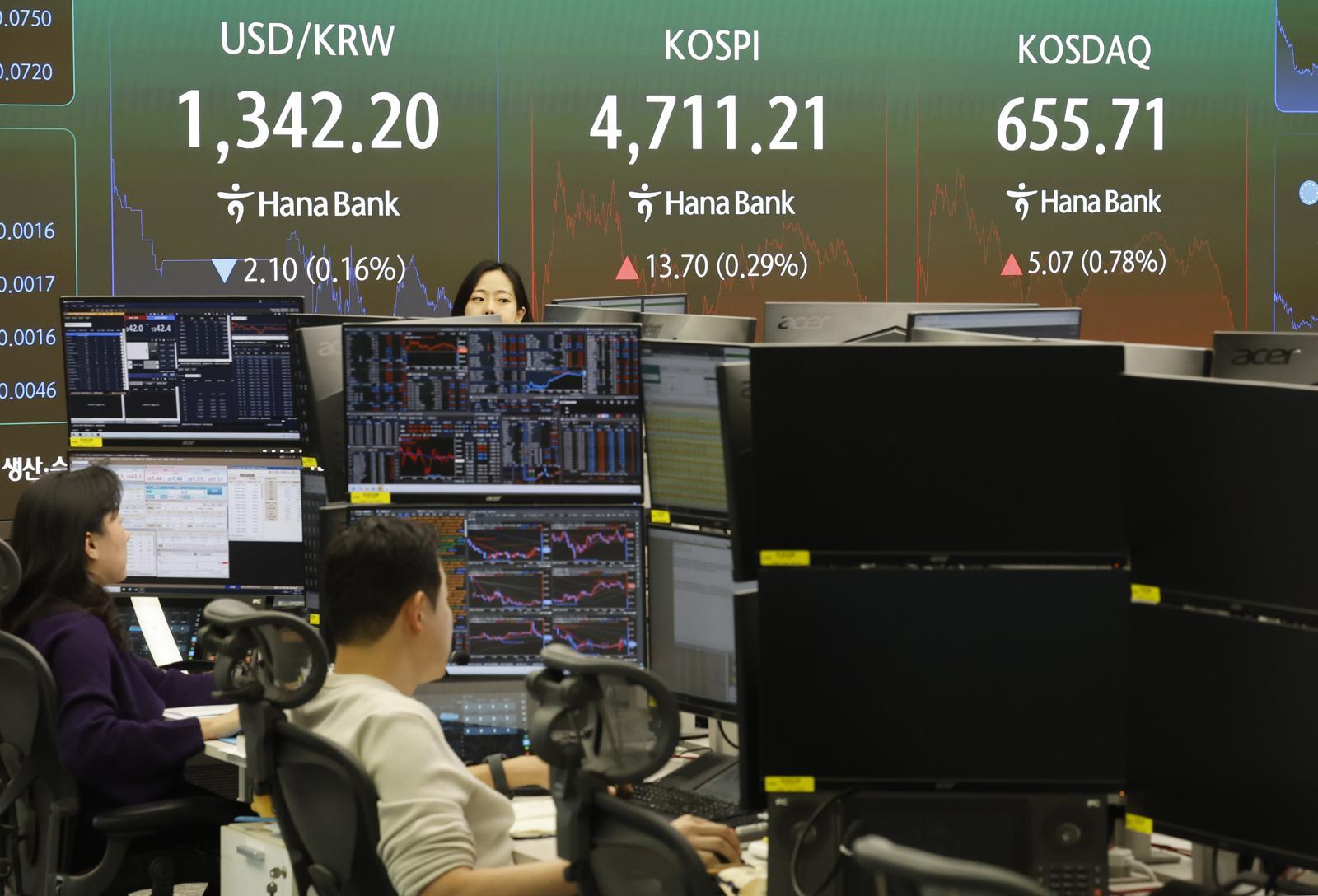
On the 26th, the KOSPI index broke through the 4,800 mark during intra-day trading due to bargain hunting following the previous day's sharp drop, but eventually gave up its gains to close at 4,711.21. This represents a 0.29% increase from the previous day's close, though the upward momentum remained limited.
In terms of supply and demand, individual and foreign investors drove heavy selling, while institutional investors continued to defend the market. Notably, the previous day (the 25th), foreign investors net sold approximately 2.1 trillion KRW, leading the index decline. Major semiconductor stocks such as Samsung Electronics and SK Hynix showed a rebound, but have not yet fully escaped mixed trading conditions.

2. Today's Core Volatility Factors
The biggest factors currently impacting KOSPI are the tech shock originating from the US and policy risks. First, growing doubts about the profitability of artificial intelligence (AI) investments in the US are negatively affecting the global semiconductor sector overall. Individual corporate issues, such as BNP Paribas lowering its investment opinion on Micron, also amplified volatility in semiconductor stock prices.
The second factor is the Trump administration's announcement of new tariffs. As uncertainty over foreign trade policy grows, it acts as a negative factor for the earnings outlook of domestic export-dependent companies.
Finally, the possibility of domestic interest rate hikes was also pointed out as a factor dampening investment sentiment. Due to these combined negative factors, extreme volatility was witnessed, such as a sidecar for selling being triggered just 8 minutes after the market opened on the 25th.
3. Macro Factors and Economic Indicators
The KRW/USD exchange rate is facing upward pressure due to the sustained strength of the US dollar. As of the 27th, the exchange rate recorded 1,345.2 KRW, up 2.5 KRW from the previous trading day's close. This is coupled with a rising global dollar index, acting as downward pressure on the Korean won.
Meanwhile, analysts in the securities industry are paying attention to the divergence between the current sharp stock market decline and real economic indicators. Major economic indicators, such as the US manufacturing expansion and Korea's export recovery, are showing solid trends, leading to low assessments of the possibility of a financial crisis or economic recession.

4. Comprehensive Analysis and Notes for Investors
The market atmosphere can be summarized as a "lukewarm rebound amidst high volatility." Without the resolution of structural negative factors such as AI bubble concerns and tariff risks, it is difficult to expect a trend reversal based solely on short-term bargain hunting.
Investors should set key checkpoints as follows: ▲ The direction of the US Federal Reserve's monetary policy, ▲ The specific tariff implementation schedule of the Trump administration, and ▲ Whether the won-dollar exchange rate breaks above the 1,350 KRW ceiling.
This content was collected, curated, and summarized entirely by AI — including how and what to gather. It may contain inaccuracies. Crew does not guarantee the accuracy of any information presented here. Always verify facts on your own before acting on them. Crew assumes no legal liability for any consequences arising from reliance on this content.
Powered by

