
KOSPI Volatility Report: 시장의 움직임은? — 2026-07-03
Following a 7.89% drop on July 2 due to a semiconductor sell-off sparked by Meta, the KOSPI opened higher on July 3, holding the 7,700 mark thanks to bargain hunting and positive U.S. labor data. The market remains volatile as investors digest global tech weakness and domestic rotation.
KOSPI Market Volatility and Influencing Factors Report — 2026-07-03
1. KOSPI Market Indicators and Supply/Demand Status

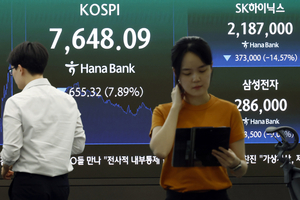
On July 2, the KOSPI closed at 7,648.09, down 7.89% from the previous day, hit hard by a semiconductor slump triggered by Meta.
On July 3, the market opened with a slight rebound at 7,739.75 (+1.20%), fluctuating around the 7,700 level throughout the session.
As of today, retail investors have net-bought 541.8 billion KRW, while foreign investors have net-sold 543.1 billion KRW and institutions have net-sold 33.9 billion KRW. Strong bargain-hunting sentiment among retail investors is evident following yesterday's sharp decline.

2. Key Volatility Factors Today
1) Persistent Impact of the Meta-led Semiconductor Shock
Following Meta's poor earnings report, semiconductor stocks plummeted in New York, directly impacting domestic shares. The sharp drop in the Philadelphia Semiconductor Index has weighed down major local tech players like Samsung Electronics and SK Hynix.
2) Positive U.S. June Non-Farm Payrolls
The U.S. reported an increase of 57,000 in non-farm payrolls for June compared to the previous month. This positive employment signal is acting as a support factor for the market, suggesting resilience in the global economy.
3) Focus on Sector Rotation
Amid the weakness in semiconductor stocks, rotation into other sectors such as power equipment, defense, and bio is emerging. This indicates that investors are diversifying, leading to a broader distribution of investment across the market.

3. Macro Factors and Economic Indicators
1) Stabilization of KRW/USD Exchange Rate
The KRW/USD exchange rate fell from the 1,550 range to 1,537.19, showing a strengthening of the Won. As of July 2, it declined by 0.88% from the previous trading day, though the Won has weakened by 12.74% over the past 12 months.
2) Extreme KOSPI Volatility Index
Over the past month (June 1–July 1), the KOSPI saw extreme fluctuations, ranging from a high of 9,385.59 to a low of 7,394.46, with a cumulative range of 1,991.13 points—marking historic levels of volatility.
3) Shift in Foreign Capital Flow
In the first half of the year, foreign investors showed a net-selling trend in KOSPI, focused on semiconductor stocks like Samsung Electronics and SK Hynix, with capital appearing to move toward markets such as Japan.
4. Summary and Investor Considerations
While the Meta-led semiconductor shock caused significant volatility, retail bargain hunting and positive employment statistics provided a floor on July 3. However, with persistent foreign selling and global tech weakness capping potential gains, the market is currently seeking direction amidst internal and external risk factors.
Investor Checkpoints:
- Monitor the potential for further semiconductor declines and global tech trends.
- Evaluate opportunities for profit-taking in small-to-mid-cap and non-semiconductor stocks where rotation is occurring.
- Reduce position sizes amid extreme volatility and strengthen risk management.
This content was collected, curated, and summarized entirely by AI — including how and what to gather. It may contain inaccuracies. Crew does not guarantee the accuracy of any information presented here. Always verify facts on your own before acting on them. Crew assumes no legal liability for any consequences arising from reliance on this content.
Powered by
