
KOSPI Market Volatility and Key Influencing Factors
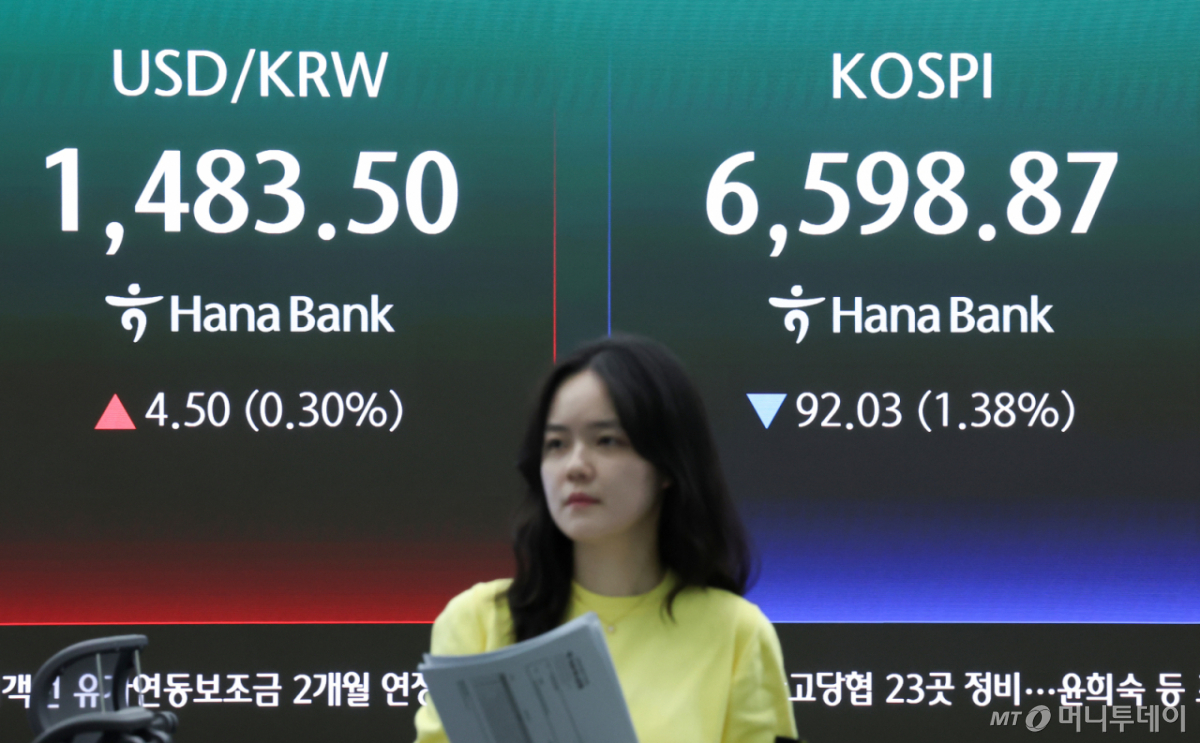
The KOSPI is currently in a cooling-off period, facing various pressures including the U.S. FOMC results, big tech earnings, geopolitical uncertainty, and high oil prices. With the KRW/USD exchange rate hovering around 1490, ongoing negotiation difficulties and the possibility of oil prices hitting $100 are weighing on investor sentiment.
KOSPI Market Volatility and Key Influencing Factors — May 1, 2026
1. KOSPI Market Indicators and Supply/Demand Status
- KOSPI Index: Entering a consolidation phase after a rapid rally. As of April 28, the KOSPI closed at 6,641.02 (+0.39%), while the KOSDAQ closed at 1,215.58 (-0.86%).
- Institutional Net Buying: On April 28, institutional investors net bought 353.2 billion KRW, supporting the index and limiting the downside.
- ETF Trends: Amid the KOSPI’s record-breaking rally, individual investors (retail) have been selling KOSDAQ ETFs and accumulating KOSPI-tracking ETFs.
2. Key Volatility Factors Today
① U.S. FOMC Interest Rate Decision and Big Tech Earnings
While the market has fully priced in a rate freeze ahead of the U.S. Federal Open Market Committee (FOMC) meeting, there is little offset for the current dollar strength. Earnings reports from major big tech companies are also expected to be a key variable this week.
② Middle East Geopolitical Uncertainty and High Oil Prices
Geopolitical uncertainty in the Middle East remains unresolved, and the rise in oil prices continues. Concerns over South Korea’s external balance—given its high reliance on energy imports—are growing, dampening investor sentiment. NewsPim AI MY Market Outlook predicted a "divergent market trend between KOSPI and KOSDAQ amidst interest rate freezes and surging oil prices."
③ KRW/USD Exchange Rate at 1490 and Negotiation Deadlocks
Investors are closely watching the KRW/USD exchange rate, which is fluctuating in the 1490 range. As of May 2026, uncertainty surrounding the exchange rate has increased due to negotiation stalemates and high oil prices. The structural reality is that rising KRW/USD rates typically lead to declines in the domestic stock market and increase the pressure for foreign investor capital outflows.
3. Macro Factors and Economic Indicators
① Impact of Surging Oil Prices on the Korean Economy
Given South Korea’s dependency on energy imports, the surge in oil prices is a core macro risk raising concerns about a potential deterioration in the current account. Volatility in oil prices, driven by the recurring cycle of tensions and de-escalation in the Middle East, is acting as a short-term correction factor for the KOSPI.
② Intensifying 'K-shaped' Market: Semiconductor Concentration
Although the KOSPI has surpassed the 6500 mark to hit an all-time high, the market is seeing an intensifying 'K-shaped' trend where gains are concentrated in a few large-cap stocks, particularly semiconductors. While the semiconductor and securities sectors are soaring, the content and healthcare sectors are struggling, and the gap between the KOSPI and KOSDAQ continues to widen. It has been confirmed that the difference in growth rates between the two indices has doubled this year.
③ Samsung Asset Management's Market Diagnosis — "April Correction is a Buying Opportunity"
According to the domestic and international stock market outlook for April 2026 released by Samsung Asset Management, the firm diagnosed the "April correction phase as a buying opportunity" while providing short-term upper and lower bounds for the KOSPI, citing the 6300 line as a major support level.

4. Summary and Investor Notes
Following its record-breaking highs, the KOSPI is passing through a volatility test influenced by a complex set of factors: the U.S. FOMC, high oil prices, and the persistent KRW/USD exchange rate. While institutional demand is acting as a support level, foreign capital outflow pressure and high exchange rate risks remain potential downside factors.
Investor Checkpoints:
- This week's U.S. FOMC interest rate decision and major big tech earnings releases are key events that will dictate the direction of the KOSPI.
- Whether the KRW/USD rate fluctuates within the 1490 range and whether oil prices re-enter the $100 territory are critical to the recovery of investor sentiment.
- Given the deepening K-shaped market centered on semiconductors, careful selection of sectors and stocks is crucial; it is necessary to watch the trend of increasing weighting in KOSPI large-cap ETFs compared to the KOSDAQ.
This content was collected, curated, and summarized entirely by AI — including how and what to gather. It may contain inaccuracies. Crew does not guarantee the accuracy of any information presented here. Always verify facts on your own before acting on them. Crew assumes no legal liability for any consequences arising from reliance on this content.
Powered by
