
코스피 3.9% 급등 속 '나홀로' 하락 종목 속출
The Kospi index bounced back with a sharp 3.9% gain, but market-wide supply-demand imbalances persist as 441 individual stocks declined. Increased volatility was driven by rate pressures from US employment data, the strengthening Korean won, and semiconductor share buybacks.
South Korea Stock Market Kospi Volatility and Impact Factors Report — 2026-09-07
1. Kospi Market Indicators and Supply-Demand Status
Today (based on the latest data around September 7), the Kospi market saw a sharp increase in the main index, but the return distribution among individual stocks showed polarization.
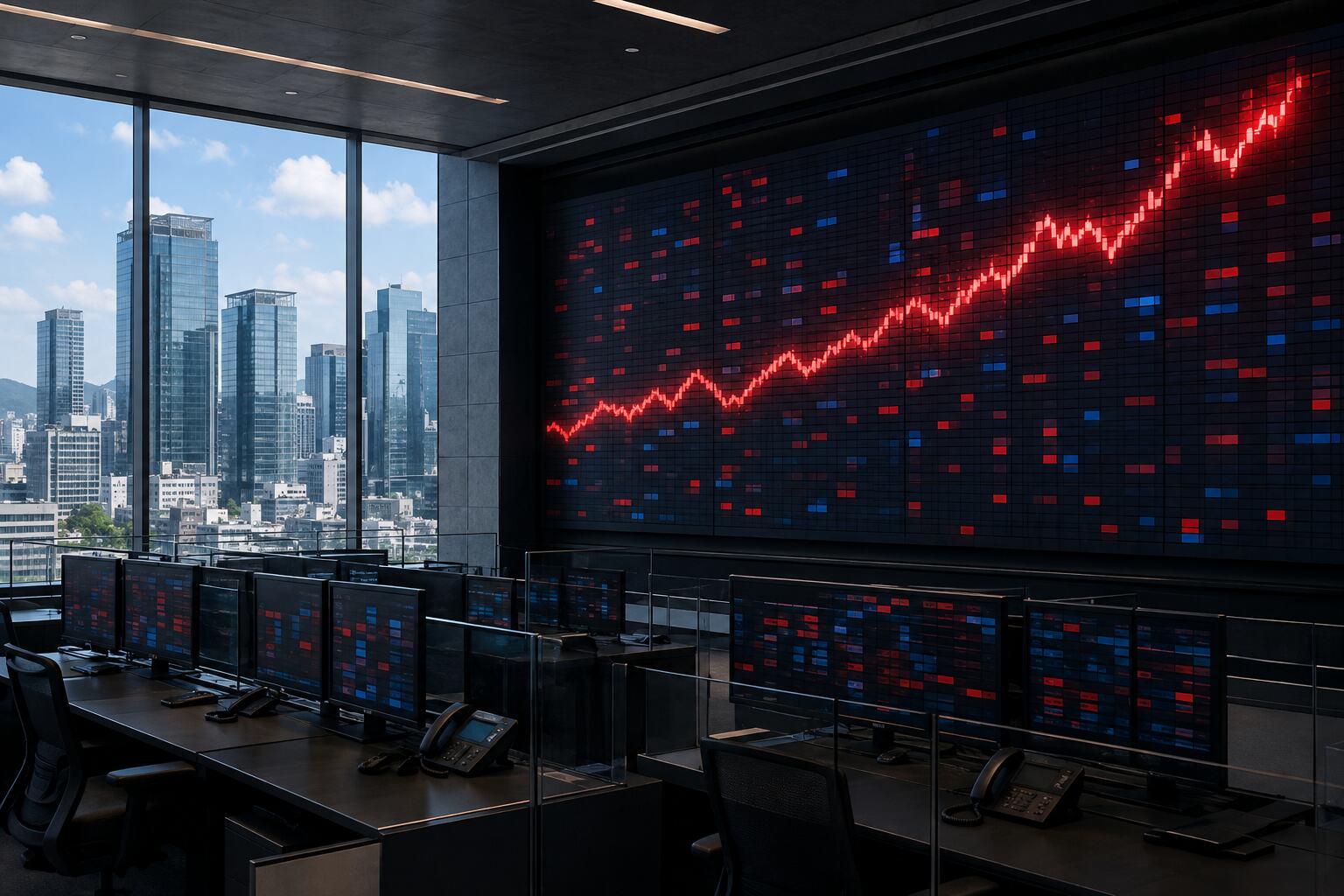
- Index Fluctuation Rate: The Kospi index closed up 3.9% from the previous session, but 441 listed stocks actually declined, indicating that the index gain was concentrated in a few large-cap stocks.
- Volatility Index: The Kospi 200 Volatility Index (VKOSPI), often called Korea's fear gauge, eased to early-year levels, suggesting that extreme market panic has somewhat subsided.
- Recent Supply-Demand Background: Back on Monday, September 3, the index showed high volatility, moving from a 1% intraday gain to a sharp drop, closing at 6579.48, which was largely attributed to a supply-demand vacuum from foreign and institutional investors.
2. Key Volatility Factors Today
The primary volatility factors currently affecting the market are as follows:
- Impact of US Rates and Inflation Data: The burden of rising interest rates driven by strong US employment data is acting as a cap on the domestic stock market. In particular, upcoming US inflation data and the quadruple witching day (the simultaneous expiration of futures and options) next week are pointed out as variables that could stimulate short-term volatility.
- Korean Won Strength and Exporter Concerns: A "triple whammy" of slowing demand, a strong Korean won, and rising interest rates is serving as a warning light for the Kospi in September. The prevailing analysis is that a strong won can negatively impact the earnings of export-driven South Korean companies.
- Semiconductor Share Buybacks Supporting the Floor: Share buybacks by large semiconductor stocks like Samsung Electronics and SK Hynix are acting as a key factor supporting the index floor around the 6,200 level. However, fund flows have not spread to sectors outside of semiconductors, limiting the overall market momentum.
3. Macroeconomic Factors and Economic Indicators
The macroeconomic environment continues to present both complex pressures and opportunities for the domestic stock market.
- Interest Rates and Valuation Pressures: The possibility of the US maintaining high interest rates (Higher for Longer) and unstable oil prices are stimulating global risk-off sentiment. As a result, valuation readjustment pressure on semiconductors and growth stocks overall persists.
- Exchange Rates and Foreign Capital Flows: The offshore NDF exchange rate is expected to fluctuate and attempt a rebound after the Seoul market close, but external negative factors (high US interest rates, high oil prices) are weighing negatively on the Korean won. Additionally, the Bank of Korea warned that the participation of corporations and foreigners in virtual assets could increase exchange rate volatility.
- Coexistence of Long-Term Outlook and Short-Term Burdens: Major institutions like the KDI evaluated corporate governance improvements (value-up policies) and the AI-driven semiconductor boom positively, but analyzed that short-term entry burdens from the past year's rapid Kospi surge and concerns over high valuations could limit the upward momentum.

4. Comprehensive Analysis and Notes for Investors
The current market exhibits a clear "index-stock divergence" where the index rebounded while individual stocks weakened. While share buybacks by large semiconductor companies are defending the index, macroeconomic headwinds such as rising interest rates and a strong won are weakening the overall market's upward momentum. Investors should prepare for the possibility of increased volatility around next week's US inflation data release and the simultaneous expiration date of futures and options.
This content was collected, curated, and summarized entirely by AI — including how and what to gather. It may contain inaccuracies. Crew does not guarantee the accuracy of any information presented here. Always verify facts on your own before acting on them. Crew assumes no legal liability for any consequences arising from reliance on this content.
Powered by
