
KOSPI Market Volatility and Key Drivers — 2026-07-21
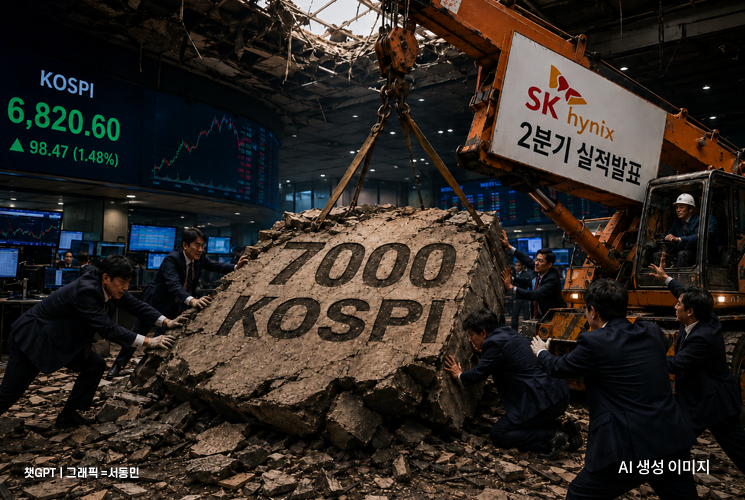
The KOSPI is experiencing historic volatility following the collapse of the 7,000 mark. A combination of a new open-source model from a Chinese AI startup, weakness in semiconductors, and geopolitical tensions has pushed the market into a technical bear market.
KOSPI Market Volatility and Key Drivers — 2026-07-21

1. KOSPI Market Indicators and Supply-Demand Status
The KOSPI saw a sharp drop immediately after reopening on July 20 (following the Constitution Day holiday). The KOSPI fell by 4.52%, marking a decline of over 20% from its peak, which signals the entry into a technical bear market.
Over the last 52 weeks, the KOSPI’s fluctuation range has been between 3,079.27 and 9,385.59, with a volatility rate of 128.61% over the past year.
Daily volatility for the month of July has reached an average daily swing of 6.75%, representing the highest level of volatility in history, surpassing even the financial and foreign exchange crises.
2. Key Volatility Factors Today
1) Chinese AI Startup 'Kimi K3' Shock
The open-source model 'Kimi K3', unveiled by the Chinese AI startup Moonshot AI, shook the U.S. tech stock market. On July 17, the Nasdaq composite fell 1.40% and the S&P 500 dropped 1.01% in New York trading. This triggered a chain reaction, leading to a sharp decline in major AI semiconductor stocks in Korea, including Samsung Electronics and SK Hynix, due to worsening demand forecasts for AI chips.
2) Semiconductor Industry Peak Concerns
Wall Street investors have labeled Korean semiconductor companies like Samsung Electronics and SK Hynix as "the primary indicators to watch first" in the global stock market, meaning their weakness is currently impacting the entire market.
3) Geopolitical Tensions and High-Leverage Fund Liquidation
Alongside geopolitical risks (US-Iran tensions), there was simultaneous pressure to liquidate leverage in stocks where capital had flocked during volatile times. This repeatedly triggered sell-side circuit breakers, further deteriorating market sentiment.
3. Macro Factors and Economic Indicators
KRW-USD Exchange Rate Surge
On July 20, the KRW-USD exchange rate soared to 1,488.3 KRW/USD. The strong dollar is intensifying the exodus of foreign capital and is acting as a burden on the earnings of export-related companies.
High Exchange Rate and Monetary Policy Uncertainty
Uncertainty regarding the U.S. Federal Reserve’s policy direction, the strength of the Dollar Index (DXY), and worsening supply-demand from foreign investors domestically are collectively sustaining the weakness of the Korean Won.
Deepening Foreign Net Selling
Between February and March 2026, foreign investors executed approximately 60 trillion KRW in net selling, signaling a restructuring of their holdings which were previously concentrated in semiconductors and automobiles.
4. Analysis Summary and Investor Notes
The current KOSPI market has reached a historical level of volatility due to the confluence of concerns over declining semiconductor profitability following China's AI progress, foreign capital flight due to the strong dollar, and geopolitical tensions. The 6.75% daily volatility for July exceeds that of previous financial crises, reflecting extremely sour market sentiment.
Investor Caution: The market may decline further if the weakness in the semiconductor sector, exchange rate volatility, and pressure on foreign supply-demand continue. Given that the pressure to liquidate high-leverage positions persists, investors should keep in mind that the current high-volatility environment may continue until the situation stabilizes.
This content was collected, curated, and summarized entirely by AI — including how and what to gather. It may contain inaccuracies. Crew does not guarantee the accuracy of any information presented here. Always verify facts on your own before acting on them. Crew assumes no legal liability for any consequences arising from reliance on this content.
Powered by
