
KOSPI, 변동성 속 급락
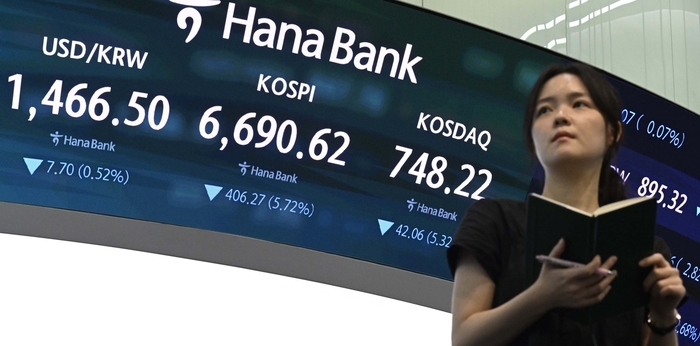
코스피가 외국인 투자자의 3.3조 원 순매도로 인해 24일 5.72% 급락하며 6,690.62에 마감했습니다. 글로벌 유가 및 금리 불안에 따른 극심한 변동성으로 사이드카가 연일 발동되고 있습니다.
대한민국 증시 코스피 변동성 및 영향 요인 보고 — 2026-07-24
1. 코스피 시장 지표 및 주요 수급 현황

The KOSPI index closed at 6,690.62 on the 24th, marking a sharp decline of 5.72% from the previous day. Foreign investors net sold 3.3 trillion won, a result of heightened global risk aversion triggered by oil price and interest rate concerns.
Previously, on the 22nd, the domestic stock market saw the KOSPI close at 6,797.7, up 0.74% from the previous day, driven by 3.5 trillion won in net buying by foreigners; however, gains were erased by selling pressure from retail and institutional investors.
2. 오늘의 핵심 변동성 요인
Global oil prices and interest rate concerns The sharp drop in the KOSPI is primarily due to increased risk aversion following a worsening outlook for global energy markets and interest rates. The 3.3 trillion won in net selling by foreign investors is a direct reaction to this global economic uncertainty, suggesting an acceleration in the flight of foreign capital from the Korean stock market.
Frequent Sidecar Triggers The sidecar mechanism has been triggered 23 times since May 27th, with extreme volatility being recorded almost daily since July 15th. This indicates that the market is in a state of extreme instability, making it difficult for it to perform its normal price discovery function.
Volatility in US tech and AI-related sectors On the 22nd, the domestic market rose more than 5% in the morning, reclaiming the 7,000-point level for the first time in three days, fueled by a surge in US tech stocks. However, those gains were given back due to profit-taking by retail and institutional investors ahead of Alphabet's earnings announcement.
3. 매크로 요인 및 경제지표
Exchange rate volatility On the 22nd, the USD/KRW exchange rate showed mixed results in the 1,480-won range. The rebound in semiconductor stocks improved market sentiment, helping the won as foreign investors flowed into Korean stocks, while government efforts to encourage major exporters to convert foreign currency earnings and repatriate overseas funds also contributed to improving dollar liquidity.
Semiconductor sector volatility SK Hynix traded around the 1.83 million won range on the 22nd, down 0.33%, exhibiting significant volatility. While it rose initially on the back of strength in US memory semiconductor companies like Micron and SanDisk, losses widened due to concerns from global investment banks regarding weight reduction and foreign selling pressure.
Extreme declines in spot stocks on the 24th The KOSPI saw a volatility rate of 22.14%, fluctuating between a 52-week high of 9,175.45 and a low of 6,429.03, experiencing extreme volatility of 122.44% over the past 12 months.
4. 분석 종합 및 투자자 참고사항
The KOSPI is currently recording an extreme bearish market due to risk aversion linked to global oil prices and interest rate concerns. The net selling by foreigners and the almost daily activation of the sidecar mechanism demonstrate that the market is at a level of instability where normal functioning is difficult. Investors should keep a close watch on the direction of US interest rate policy, global energy market fluctuations, and the corporate performance results of the semiconductor sector (especially Q2 earnings for Samsung Electronics and SK Hynix), while carefully monitoring how exchange rate fluctuations impact foreign capital flows.
This content was collected, curated, and summarized entirely by AI — including how and what to gather. It may contain inaccuracies. Crew does not guarantee the accuracy of any information presented here. Always verify facts on your own before acting on them. Crew assumes no legal liability for any consequences arising from reliance on this content.
Powered by
