
KOSPI Market Volatility and Key Drivers — 2026-05-31
The KOSPI has reclaimed the 8,000 level and is now eyeing 9,000, driven by heavy institutional buying and hopes for an end to the war in Iran. Even with this rally, a rise in the Korean "fear index" suggests some lingering market anxiety.
KOSPI Market Volatility and Key Drivers — 2026-05-31
1. KOSPI Market Indicators and Flow
On Thursday the 30th, the KOSPI hit an all-time high, powered by strong institutional buying. The index closed at 8,476.31, up 199.02 points (2.43%) from the previous session.
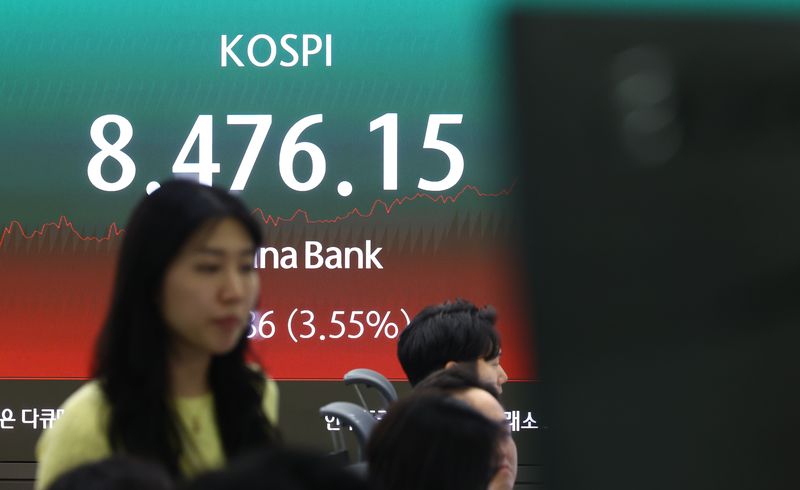
Institutional investors net-purchased 2 trillion KRW worth of shares that day, serving as the core engine for the recent improvement in market sentiment.
Having reclaimed the 8,000 mark just six trading days ago, the KOSPI has now broken its previous record, and investors are keenly watching for a potential push toward 9,000.
2. Key Volatility Factors Today

Expectations for an end to the war in Iran Hopes for an end to the war in Iran have been a major driver for the KOSPI. This easing of geopolitical risk has boosted demand for global risk assets, positively impacting the domestic stock market.
Tailwinds from U.S. tech stocks The strength of U.S. tech stocks has also helped pull the KOSPI higher. Positive sentiment toward the U.S. tech sector spread to domestic semiconductor firms like Samsung Electronics and SK Hynix, contributing to the index's growth. The KOSPI climbed 24% in May, defying the Wall Street adage: "Sell in May and go away."
Active improvement in institutional supply and demand With institutional investors maintaining net purchases in the 2 trillion KRW range, market liquidity conditions are improving, providing critical support for the strong rally in the spot index.
3. Macro Factors and Economic Indicators
KRW/USD exchange rate volatility The market is currently navigating ongoing volatility in the KRW/USD exchange rate. The government’s new reshoring initiative (a policy encouraging the return of overseas Korean companies) is drawing attention, and while the U.S. dollar is weakening against other major currencies, a trend of KRW weakness is being observed.
The USD/KRW rate has fluctuated by 8.62% over the past year, trading within a 52-week range of 1,347.07–1,538.45.
Bank of Korea benchmark rate freeze At its recent monetary policy meeting, the Bank of Korea decided to hold the benchmark interest rate steady at 2.5%. This decision was made amid concerns over the deepening weakness of the won, though internal disagreement persists, with some members calling for a rate hike.
4. Summary and Investor Checklist
The KOSPI continues to rally to all-time highs thanks to strong institutional support, hopes for an end to the war in Iran, and U.S. tech stock momentum. However, the simultaneous rise of the Korean "fear index" alongside the index's growth suggests that the market is still reflecting concerns about a potential correction from these highs.
Key points for investors to watch: First, monitor for any supply-demand imbalances between institutional and retail investors as the market attempts to break the 9,000 level. Second, keep a close eye on the KRW/USD exchange rate, as its volatility could impact foreign investment flows.
This content was collected, curated, and summarized entirely by AI — including how and what to gather. It may contain inaccuracies. Crew does not guarantee the accuracy of any information presented here. Always verify facts on your own before acting on them. Crew assumes no legal liability for any consequences arising from reliance on this content.
Powered by
