
KOSPI 9,000 돌파 후 변동성 확대 보고서
코스피가 사상 처음 9,000선을 넘었지만, 미국 FOMC의 매파적 태도와 이란 지정학적 리스크로 인해 시장이 출렁이고 있어요. 반도체 대형주들이 버텨주고는 있지만, 투자 심리는 여전히 불안정한 상태네요.
KOSPI Market Volatility and Key Influencing Factors Report — June 21, 2026
1. KOSPI Market Indicators and Flow Status
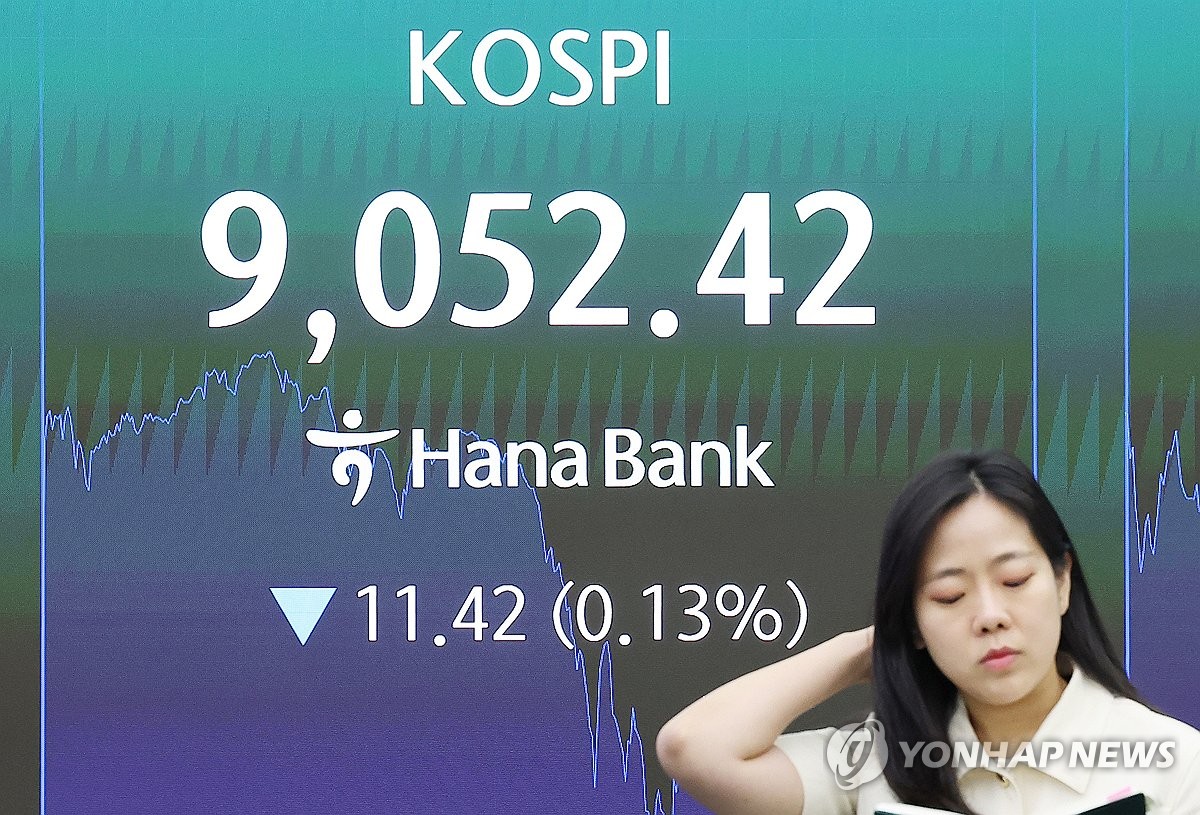
The KOSPI resumed its upward trend last week as geopolitical risks related to Iran subsided, but it shifted toward a sharp decline during trading on the 19th. The index broke through its all-time high of 9,300 early in the day before dipping below the 9,000 mark in the afternoon, though it managed to close just above that level.
The KOSDAQ index fell 34.34 points from the previous trading day to close at 966.59, losing the 1,000 mark.
The USD/KRW exchange rate closed at 1,529.22 on June 19, down 0.59% from the previous trading day. However, the South Korean Won has weakened by 2.09% over the past month.
2. Key Volatility Factors Today
1) Hawkish Stance of the U.S. Federal Open Market Committee (FOMC) The primary reason for the sharp volatility in the KOSPI—after hitting a record high in the morning—appears to be profit-taking as the market digested the hawkish results from the FOMC meeting.
2) Resurfacing Geopolitical Risks Related to Iran Geopolitical uncertainty is rising again as Iran has mentioned the possibility of re-blocking the Strait of Hormuz. However, the risk is partially being mitigated by ongoing diplomatic dialogues between the U.S. and Iran.
3) Semiconductor Industry Outlook and Corporate Earnings The market is currently awaiting the earnings report from Micron, which serves as a bellwether for the memory semiconductor industry. Meanwhile, the strength of semiconductor heavyweights like SK Hynix is helping to cushion the index's decline.
3. Macro Factors and Economic Indicators
Continued Trend of High Exchange Rates The weakness of the Won is acting as a limiting factor for the KOSPI's growth from the perspective of foreign investors. There is a general trend where the domestic stock market falls when the USD/KRW exchange rate rises and vice-versa; the Won has fallen 11.37% over the past 12 months.
Increased Valuation Pressure The rapid surge of the KOSPI over the past year is acting as a burden for short-term entry. With the index fluctuating by 197.69% over the past 52 weeks—ranging from 2,954.47 to 9,385.59—concerns about high positioning may limit further gains.
Frequency of Sidecar Triggers Sidecars have been triggered 26 times so far this year due to repeated sharp fluctuations, leading to criticisms that market instability is intensifying.
4. Summary and Investor Notes
The KOSPI achieved the milestone of breaking through 9,000 for the first time, driven by easing Iran-related war risks and expectations for semiconductor industry improvements. However, volatility is deepening due to aggressive U.S. interest rate policies and ongoing geopolitical uncertainty. While semiconductor heavyweights are supporting the index, the weak Won and high valuations remain obstacles for additional foreign investment.
Investors should pay attention to the following checkpoints: First, the results of earnings reports from major semiconductor firms, including Micron; second, the progress of follow-up negotiations between the U.S. and Iran and risks related to the Strait of Hormuz; and third, the sustainability of the weak Won trend and the direction of foreign capital flow.
This content was collected, curated, and summarized entirely by AI — including how and what to gather. It may contain inaccuracies. Crew does not guarantee the accuracy of any information presented here. Always verify facts on your own before acting on them. Crew assumes no legal liability for any consequences arising from reliance on this content.
Powered by
