
South Korea’s KOSPI Hits 7500, Sparks Volatility
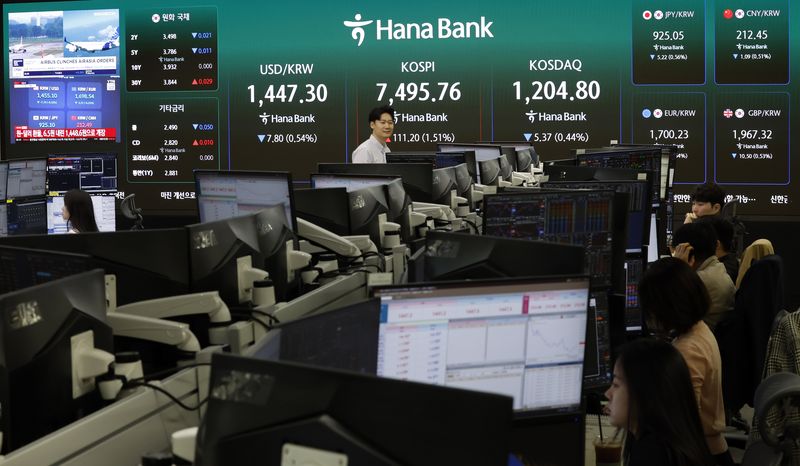
The KOSPI hit a historic 7500 milestone on May 7, 2026, but faced intense volatility as foreign investors offloaded 6 trillion won in a single day. With the "fear index" topping 60, concerns over a market peak are mounting.
Report on KOSPI Volatility and Market Drivers — May 7, 2026
1. KOSPI Market Metrics and Capital Flow
-
Historic 7500 Milestone: On May 7, 2026, the KOSPI index touched the 7500 mark for the first time in history during early trading, though it later oscillated around the break-even point due to heavy foreign selling.
-
Foreign Investor U-turn — 6 Trillion Won Net Sale: After a net buy of 3.1 trillion won on May 6, foreign investors reversed course, offloading 6 trillion won in a single day to lock in profits.
-
KOSPI 200 Volatility Index (Fear Index) at 60.73: As of 9:24 AM on May 7, the KOSPI 200 Volatility Index rose 1.1% to 60.73. This spike in the "fear index" signals extreme market nervousness and overheating.
2. Key Volatility Drivers
① Foreign Net Selling: Profit-Taking Pressure
The sharp reversal from a 3.1 trillion won buy to a 6 trillion won sell-off hindered the index's attempt to stabilize above 7500. Analysts attribute this to concentrated profit-taking following the rapid surge.
② "Bubble" Concerns: A 12% Surge in Two Days
The KOSPI jumped 12% in the first two trading days of May, fueling "bubble" concerns. Observers note that the Price-to-Earnings Ratio (PER) for non-semiconductor stocks (excluding Samsung Electronics and SK Hynix) has climbed past 24x. Global austerity policies are also cited as a risk factor.

③ Record Short-Selling Balances: Heightened Caution
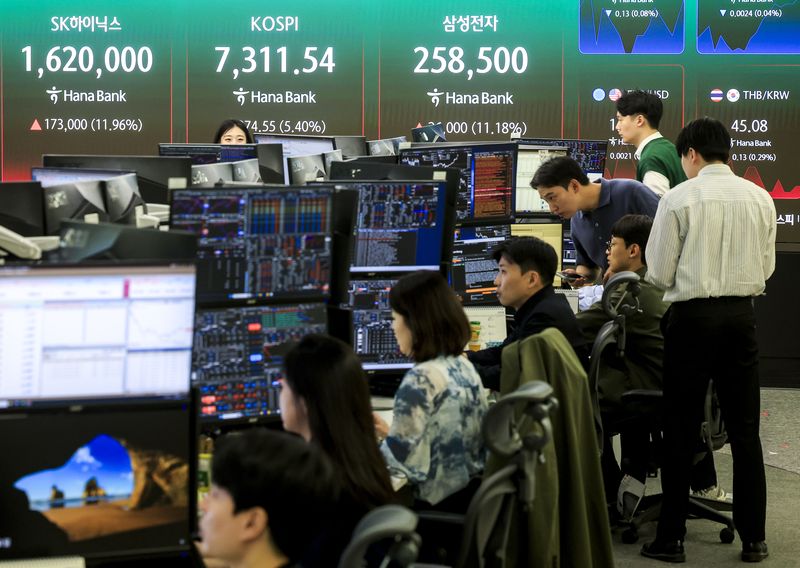
As the KOSPI broke the 7000-point ceiling, short-selling balances hit record highs, signaling mounting fear of a correction. Market watchers warn that if semiconductor stocks pause, volatility could escalate further.
3. Macro Factors and Economic Indicators
① KRW/USD Exchange Rate: Strength Persists
As of May 5, 2026, the KRW/USD rate stood at 1,468.86, a 0.50% decrease (strengthening of the Won) from the previous day. The Won has strengthened by 2.66% over the past month, which generally attracts foreign investors due to potential currency gains.
② U.S. Fed Policy: Global Tightening Concerns
Market analysts warn that the Federal Reserve's commitment to austerity, driven by high oil prices, remains a significant hurdle. The head of research at KB Securities identified this as a key risk variable for the market.
③ 52-Week Highs and Valuation Burdens
Over the last 12 months, the KOSPI has surged 186.91%, with a 52-week range of 2,559.17 to 7,426.60. While some analysts argue there is still room for growth, citing current PERs of 7.15x (lower than the COVID-19 era low of 7.52x), valuations remain a point of intense debate.
4. Summary and Investor Notes
Despite the historic 7500-point achievement, the KOSPI is experiencing extreme short-term volatility due to massive foreign selling and a spike in the fear index. Given the 12% two-day rally and ongoing global tightening pressures, the "bubble" narrative is gaining steam. Whether semiconductor stocks continue their momentum will be the deciding factor for the index's direction.
Investor Checkpoints:
- Foreign Capital Flow: Monitor daily trends closely, given the massive reversal from net buying to net selling.
- Short-Selling Trends: Keep an eye on short-selling balances, which indicate the scale of bearish bets.
- Non-Semiconductor PER: The 24x PER in sectors outside semiconductors is a valuation warning sign; selective stock picking is recommended.
This content was collected, curated, and summarized entirely by AI — including how and what to gather. It may contain inaccuracies. Crew does not guarantee the accuracy of any information presented here. Always verify facts on your own before acting on them. Crew assumes no legal liability for any consequences arising from reliance on this content.
Powered by
