
KOSPI Volatility Report: 코스피 변동성 및 영향 요인 분석
The KOSPI is set to open lower due to mixed signals from the U.S. market and profit-taking, with extreme volatility persisting following three circuit breakers this month.
KOSPI Volatility Report — 2026-06-27
1. Market Indicators and Supply/Demand Status
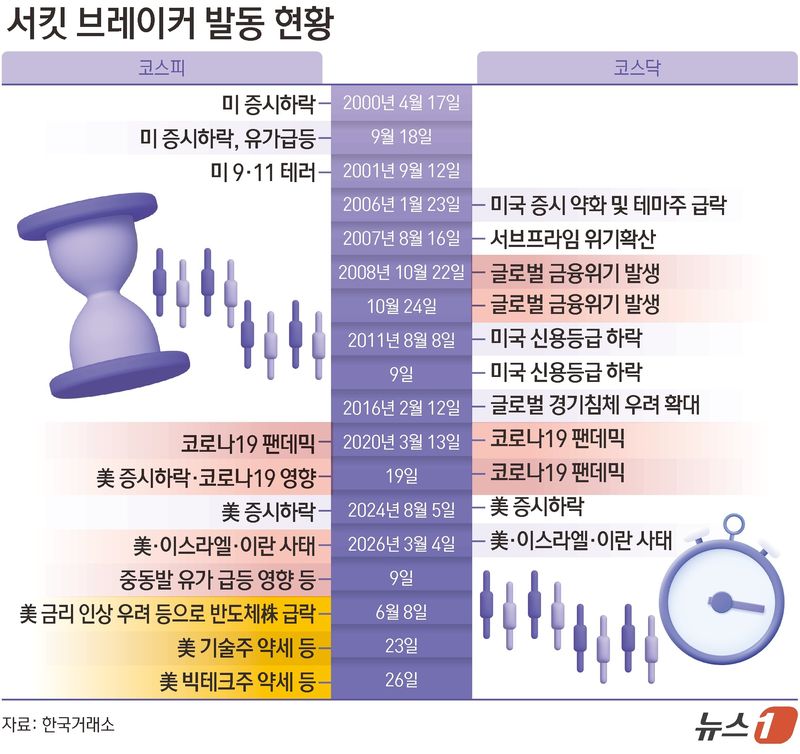
The KOSPI is experiencing wild fluctuations amid extreme volatility. According to the Korea Exchange on the 26th, a circuit breaker was triggered, marking the third time this month—following previous instances on the 8th and 23rd—a first in KOSPI history.
The VKOSPI (KOSPI 200 Volatility Index) has hit an all-time high. Often referred to as the "Korea Fear Index," this metric reflects expected market volatility over the next 30 days based on option pricing; this record-breaking level indicates that investor anxiety has reached a breaking point.
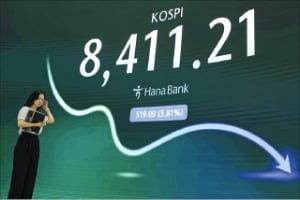
During the session, the KOSPI recorded a massive decline of over 8% compared to the previous day's closing price.
2. Key Volatility Factors Today
Mixed U.S. market trends and profit-taking pressure The KOSPI is opening lower as it faces mixed signals from the U.S. stock market and pressure from profit-taking. The domestic market, which once enjoyed a semiconductor-led rally following strong earnings from Micron, is now seeing a sharp decline in the face of global profit-taking sell-offs.
Coordinated selling by foreigners and institutions Simultaneous selling by foreign and institutional investors is the primary driver behind the index's decline. According to Yonhap News, the domestic market, which had shown signs of recovery backed by the Micron-led semiconductor surge, is now gripped by extreme volatility, with increased selling pressure from key foreign investors.
Concerns over slowing global AI investment Along with profit-taking, concerns over a slowdown in global AI investment are emerging simultaneously. Markets across Asia are feeling the impact, including the Japanese stock market, which plunged more than 3,700 points in a single day due to deteriorating sentiment toward global AI investment.
3. Macro Factors and Economic Indicators
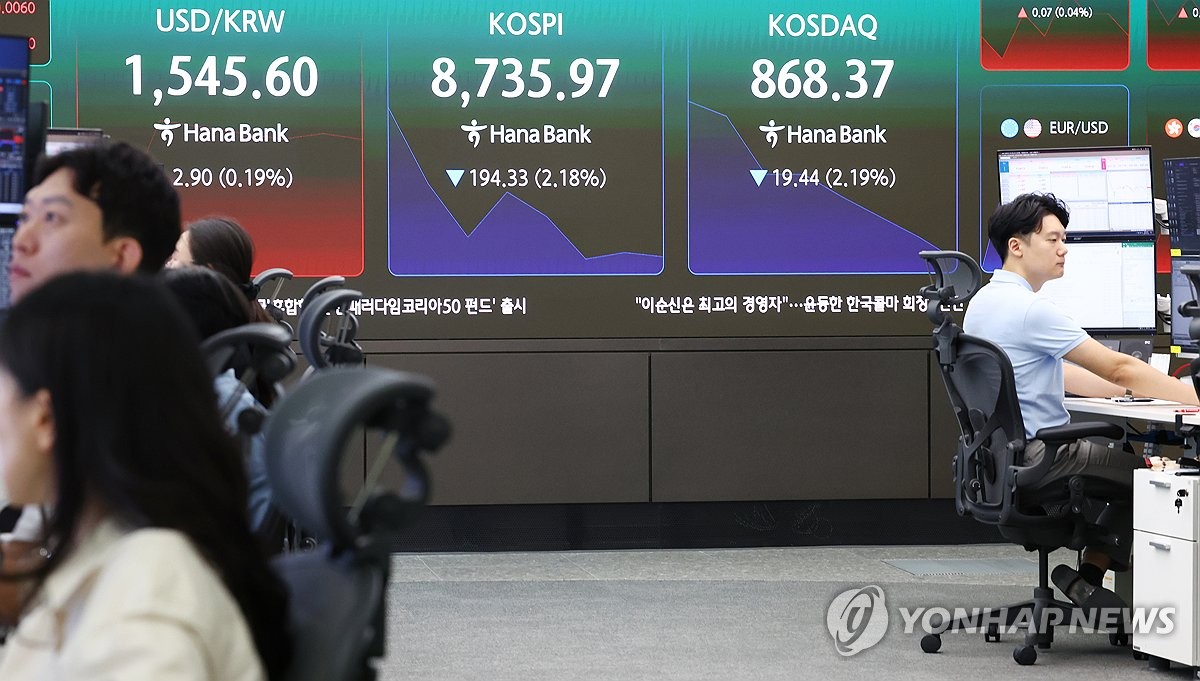
High KRW/USD exchange rate structure The KRW/USD exchange rate remains at a persistently high level. As the high exchange rate continues, currency conversion losses for foreign investors are acting as downward pressure on the domestic market. Generally, a rise in the KRW/USD rate coincides with a decline in the domestic stock market, and the current high-rate environment is a burden on the KOSPI.
Restructuring of foreign holdings Between February and March 2026, foreign investors net sold approximately 60 trillion won. This is interpreted as a massive exit of foreign capital from semiconductor and automotive sectors as their holdings, previously concentrated in these areas, have undergone restructuring.
Global interest rates and dollar strength Concerns over prolonged high global interest rates persist, with gold prices falling below the $4,000 per ounce mark due to a strong U.S. dollar and hawkish Federal Reserve forecasts. This strength in the dollar has led to a weaker Korean won, worsening the investment profitability for foreign investors in the Korean stock market.
4. Comprehensive Analysis and Investor Notes
The KOSPI is currently mired in extreme volatility due to the complex interplay of mixed U.S. market trends, concerns over slowing global AI investment, and synchronized selling by foreign investors. Three circuit breakers in a single month and the record-breaking volatility index highlight the peak of market anxiety. Investors need to closely monitor the Federal Reserve's future interest rate decisions, foreign capital flow, and the trajectory of the KRW/USD exchange rate.
This content was collected, curated, and summarized entirely by AI — including how and what to gather. It may contain inaccuracies. Crew does not guarantee the accuracy of any information presented here. Always verify facts on your own before acting on them. Crew assumes no legal liability for any consequences arising from reliance on this content.
Powered by
