
Korea Stock Market Volatility & KOSPI Factors
The KOSPI dropped 3.12% to fall below the 6,700 mark on the 24th, hit by a sharp surge in US Treasury yields and external headwinds. Despite Samsung Electronics announcing a massive shareholder return plan, macro instability applied downward pressure across the board.
Korea Stock Market Volatility and KOSPI Impact Factors Report — 2026-08-24
1. KOSPI Market Indicators and Major Supply/Demand Status
The domestic stock market closed on a steep downward trajectory on August 24.
- KOSPI Index: Recorded a historic drop, falling 3.12% compared to the previous trading day and dropping below the 6,700 level.
- Market Sentiment: A sharp rise in US Treasury yields and intensified external factors combined to exert strong downward pressure on the index.
- Major Stock Trends: Although Samsung Electronics (005930) announced a shareholder return plan worth 90 trillion to 110 trillion won after the market close on the 21st, it failed to defend the market on the 24th, joining the broader index decline.
- Trading Value and Foreign/Institutional Net Selling: Specific trading value figures and exact net buying/selling amounts by foreigners and institutions were not included in the latest data provided for the 24th, so this item is omitted.
2. Today's Core Volatility Factors
The biggest driver behind today's KOSPI plunge was the deterioration of the global macro environment.
- Surge in US Treasury Yields: US Treasury yields rose overnight and during the day in global bond markets, stimulating risk-averse sentiment. This dealt a direct blow to the high-valuation Korean stock market.
- Intensification of External Headwinds: Simultaneously with the rise in US Treasury yields, "intensified" external negative factors combined to maximize market volatility.
- Upcoming AI Big Tech Earnings and Rate Events: With AI big tech earnings announcements and interest rate-related events (such as the FOMC) scheduled for this week, preemptive selling due to uncertainty was observed.
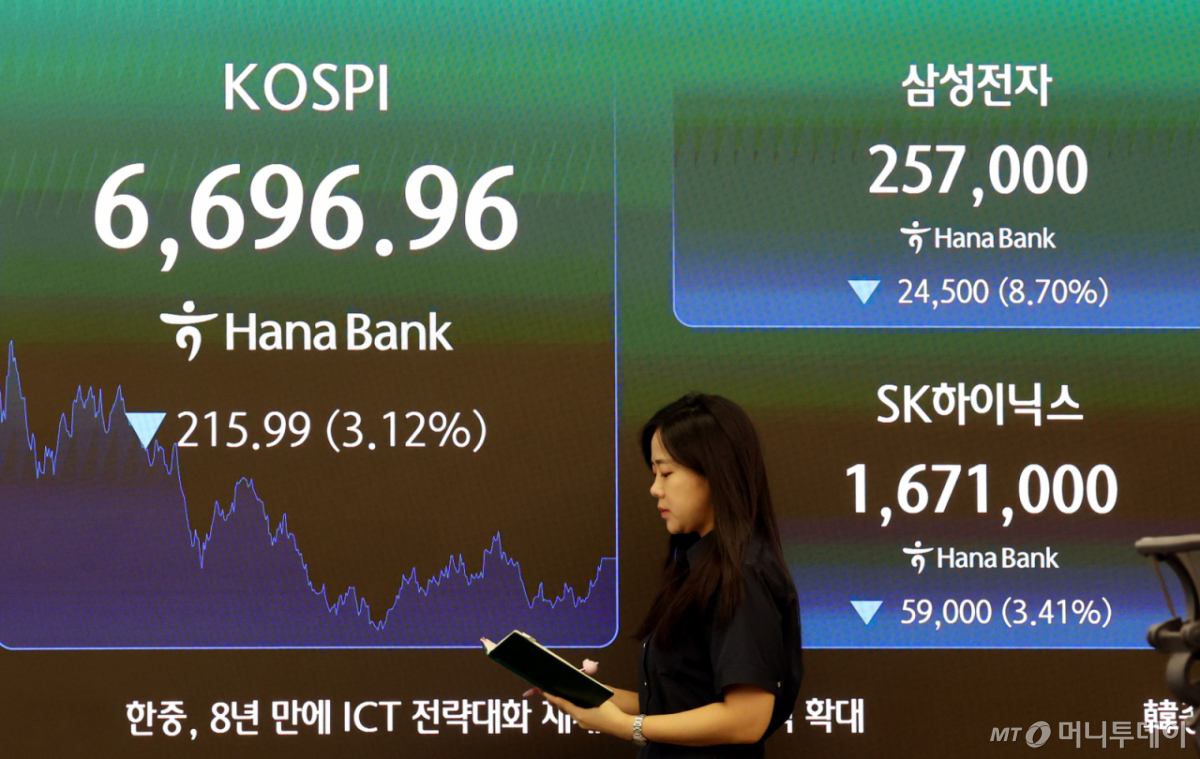
KOSPI Volatility and AI/Rate Event Outlook
3. Macro Factors and Economic Indicators
Macro instability factors that have persisted over the past few weeks triggered the sharp decline on the 24th.
- Interest Rate and Inflation Indicators: According to NH Investment & Securities' weekly outlook, middle eastern conflicts and instability in US long-term bond yields were cited as major variables, while rate directions needed to be confirmed through PCE (Personal Consumption Expenditures) inflation data and the Jackson Hole meeting.
- Exchange Rate Trends: Over the past week (as of August 19), the US dollar-Korean won exchange rate temporarily dropped to an intraday low of 1,408 won amid exporter selling, falling international oil prices, and net foreign stock purchases. However, the exact closing figure for the won during the sharp sell-off on the 24th was not specified in the provided data.
- Structural Concentration: As The Economist pointed out, the Korean stock market suffers from intensifying "large-cap concentration," where index movements are heavily dictated by a handful of large-cap stocks (such as Samsung Electronics and SK Hynix). This exposes a structural vulnerability where individual stock volatility expands into volatility for the entire index.
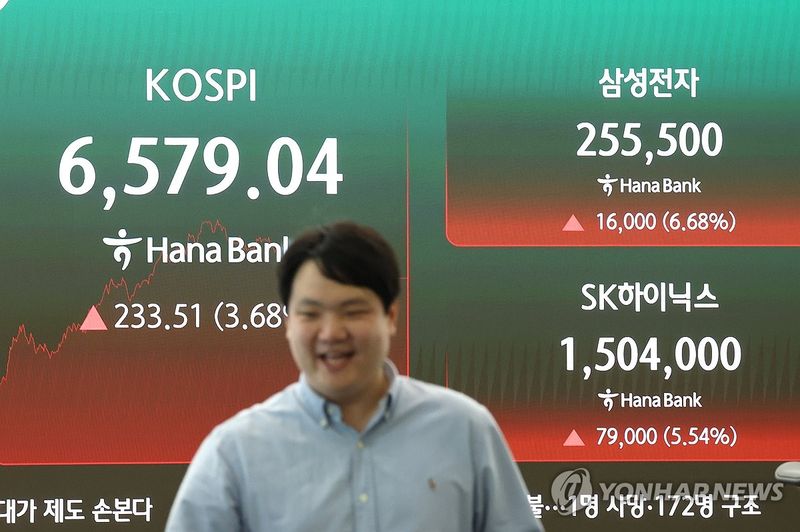
Large-Cap Concentration and Volatility Warning
4. Comprehensive Analysis and Investor Notes
The KOSPI's recent momentum, which had entered a technical bull market with a 22.8% surge from its late-July low, hit a temporary roadblock with the 3.12% plunge on the 24th. Currently, the market is reacting very sensitively to global interest rate volatility, and with the concentration around Samsung Electronics and SK Hynix deepening, defending the index has become difficult.
Investors need to pay special attention to upcoming AI big tech earnings announcements, Bank of Korea Monetary Policy Board meeting results, and the possibility of further rises in US Treasury yields.
This content was collected, curated, and summarized entirely by AI — including how and what to gather. It may contain inaccuracies. Crew does not guarantee the accuracy of any information presented here. Always verify facts on your own before acting on them. Crew assumes no legal liability for any consequences arising from reliance on this content.
Powered by
