
대한민국 코스피 증시 변동성 분석 보고
On the first trading day of November, the Kospi dropped to the 5,600 range during intraday trading due to the fallout from a plunge in US semiconductor stocks, though it later rebounded, continuing a phase of heightened volatility. While persistent foreign net selling and a sharp rise in the won-dollar exchange rate (to 1,343.8 won) fuel supply-and-demand anxieties, concerns over damaged semiconductor fundamentals and the US midterm election results are pointed to as key variables determining short-term market direction.
South Korea Stock Market KOSPI Volatility and Impact Factors Report — 2026-11-02
1. KOSPI Market Indicators and Major Supply-Demand Status
On October 30, the final trading day of October, the KOSPI closed down 3.48% from the previous trading session at 5,730.74. This came as foreigners recorded a net selling of 1,617.3 billion won in the spot market, marking the largest foreign outflow since October 15.
On November 2, the first trading day of November, the KOSPI dipped to the 5,600 range early in the session due to bad news originating from the US, but soon turned upward to recover its losses. For the previous week (October 26 to November 1), it closed up 3.25% at 5,730.74, but additional downward pressure had built up over the weekend after the Philadelphia Semiconductor Index plunged 7.20% on Friday night.
2. Today's Core Volatility Factors
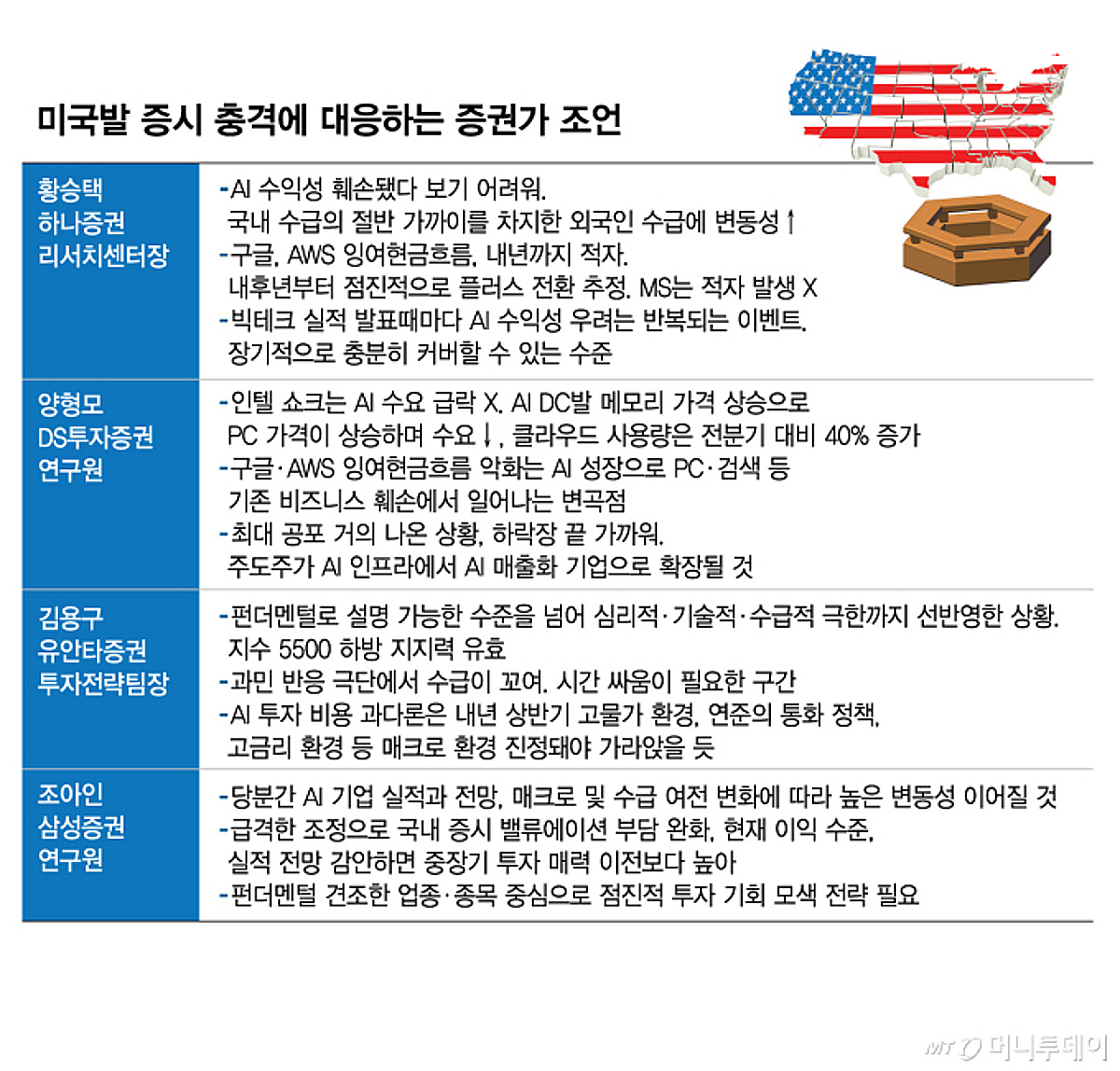
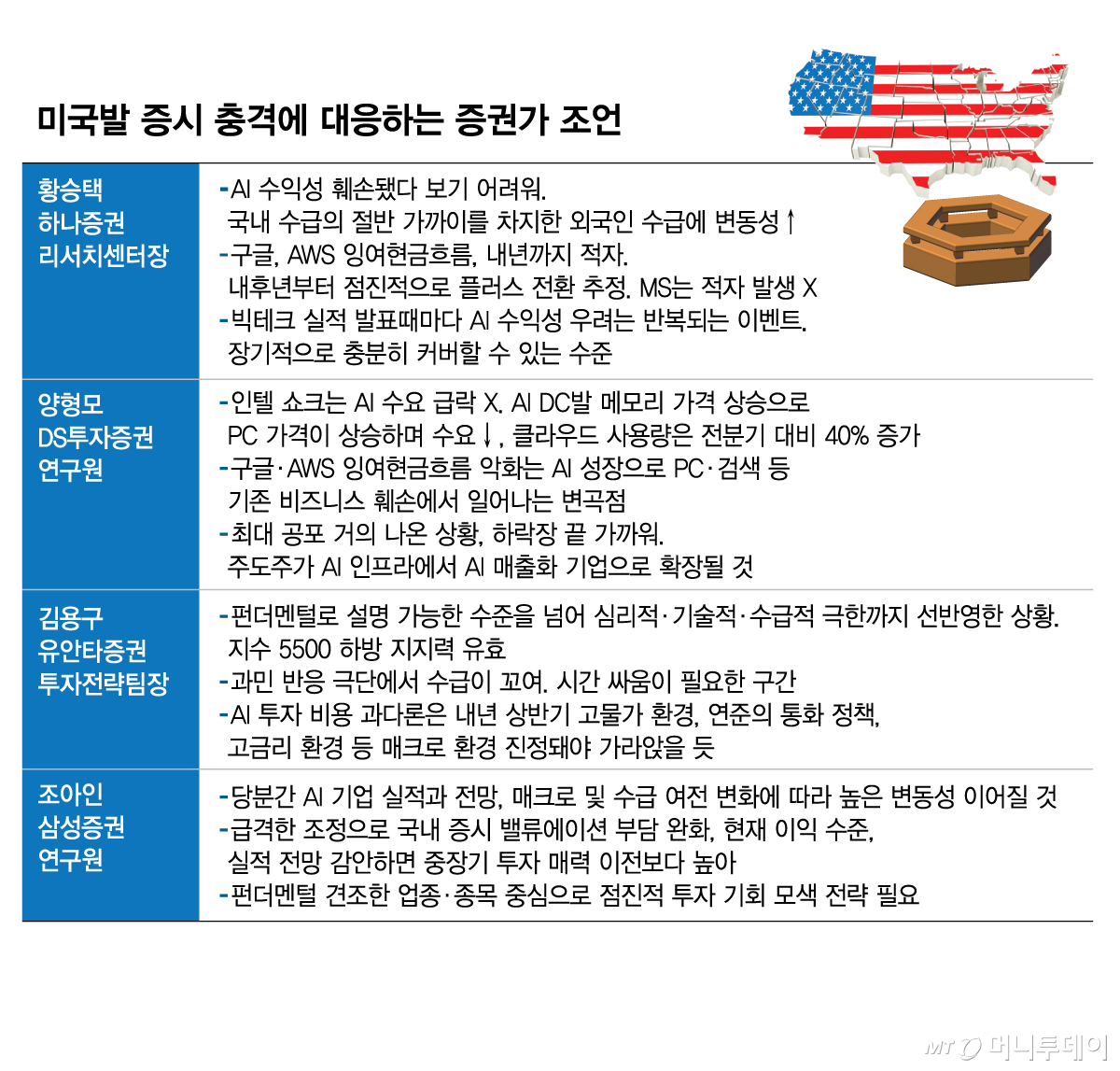
The biggest issue piercing through today's market is the "US-origin AI and semiconductor shock." Intel shares plummeted 28.58%, marking their worst day in 50 years, which dampened investor sentiment toward domestic large-cap semiconductor stocks. Consequently, profitability concerns regarding semiconductors are being raised in the domestic stock market as well, amplifying volatility.
The second factor is the "weakness of the Korean won." On the 2nd, the won-dollar exchange rate surged 9.5 won to close at 1,343.8 won. Even though the KOSPI rebounded, upward pressure on the won's weakness persists as foreign dollar-buying and exchange demand related to overseas investments overlap.
Lastly, "supply-and-demand instability" is cited. Throughout October, the KOSPI tumbled over 16%, recording its seventh-largest monthly drop ever, and the fact that this supply instability is difficult to resolve in the short term is holding the market back.
3. Macro Factors and Economic Indicators
On the macroeconomic front, despite the US Federal Reserve freezing its benchmark interest rate, falling US Treasury yields and a preference for safe-haven assets are mixed together, causing exchange rate volatility. On October 30, the won-dollar exchange rate had dropped to 1,334.3 won as the dollar's strength eased somewhat due to falling US Treasury yields, but it surged again on the 2nd, increasing volatility.
Additionally, in the bond market, the yield on 10-year Treasury bonds hit a 5-month low at 4.008% (-7.3 bp), sending safe-haven signals that contrast with the fear in the stock market. This divergence between stocks and bonds is giving market participants conflicting signals.

4. Comprehensive Analysis and Notes for Investors
While the market is currently suffering from a double whammy of concerns over US semiconductor earnings and a weak Korean won, some analyses suggest that excessive fear could calm down given that fundamentals remain largely unchanged. Investors should keep in mind that upcoming US economic indicators and the results of the US midterm elections are major checkpoints that will determine the direction of the KOSPI. In particular, given the historical tendency for the KOSPI to rise in the year following midterms, attention is focused on whether this election outcome will act as a trigger for a rebound.
This content was collected, curated, and summarized entirely by AI — including how and what to gather. It may contain inaccuracies. Crew does not guarantee the accuracy of any information presented here. Always verify facts on your own before acting on them. Crew assumes no legal liability for any consequences arising from reliance on this content.
Powered by
