
KOSPI 시장 변동성 및 영향 요인 보고 (June 2026)
KOSPI is seeing extreme volatility, driven by a slump in U.S. semiconductor stocks and foreign selling fueled by a weak Korean Won. With the exchange rate topping 1,540 won—a level not seen since the 2009 financial crisis—investor sentiment has hit a major cold snap.
KOSPI 시장 변동성 및 영향 요인 보고 — 2026-06-06
1. 코스피 시장 지표 및 주요 수급 현황
The KOSPI is experiencing intense volatility in early June 2026. On the 4th, the index fell by 2.02% to close at 8,623, with foreign investors net selling 6.9 trillion won.
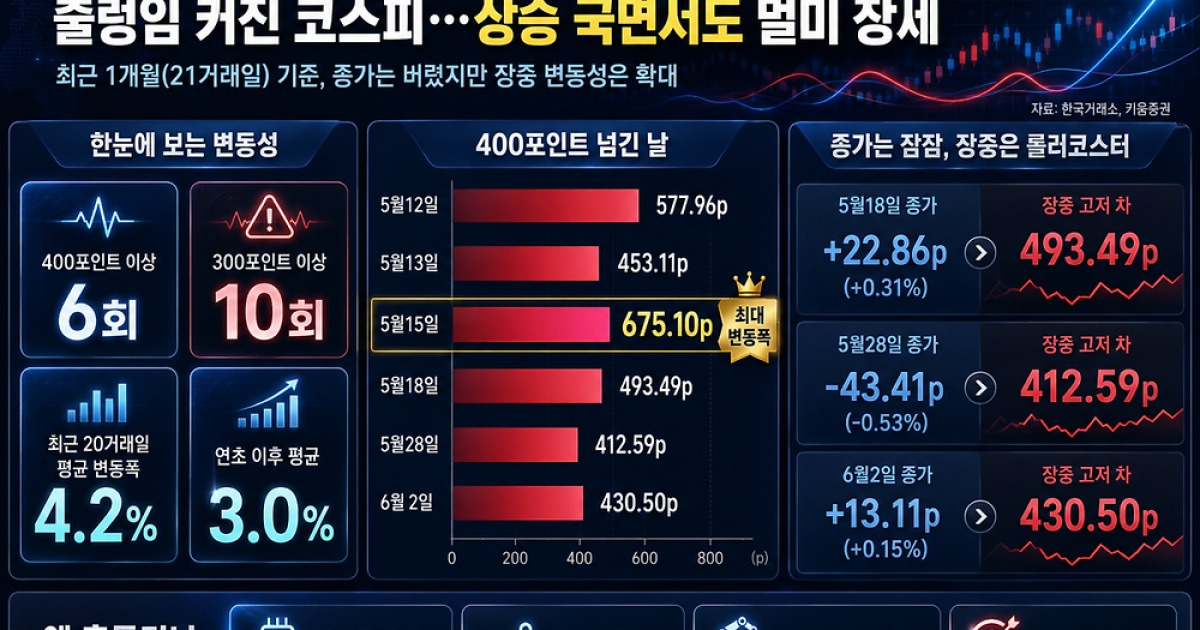
Intraday volatility has reached record levels, frequently showing "dizzying" swings of over 400 points. Even more concerning is that the sidecar (volatility stabilizer) has already been triggered 20 times in 2026 alone, raising the possibility of surpassing records set during the financial crisis.

2. 오늘의 핵심 변동성 요인
(1) 환율 급등 — 2009년 이후 최고 수준
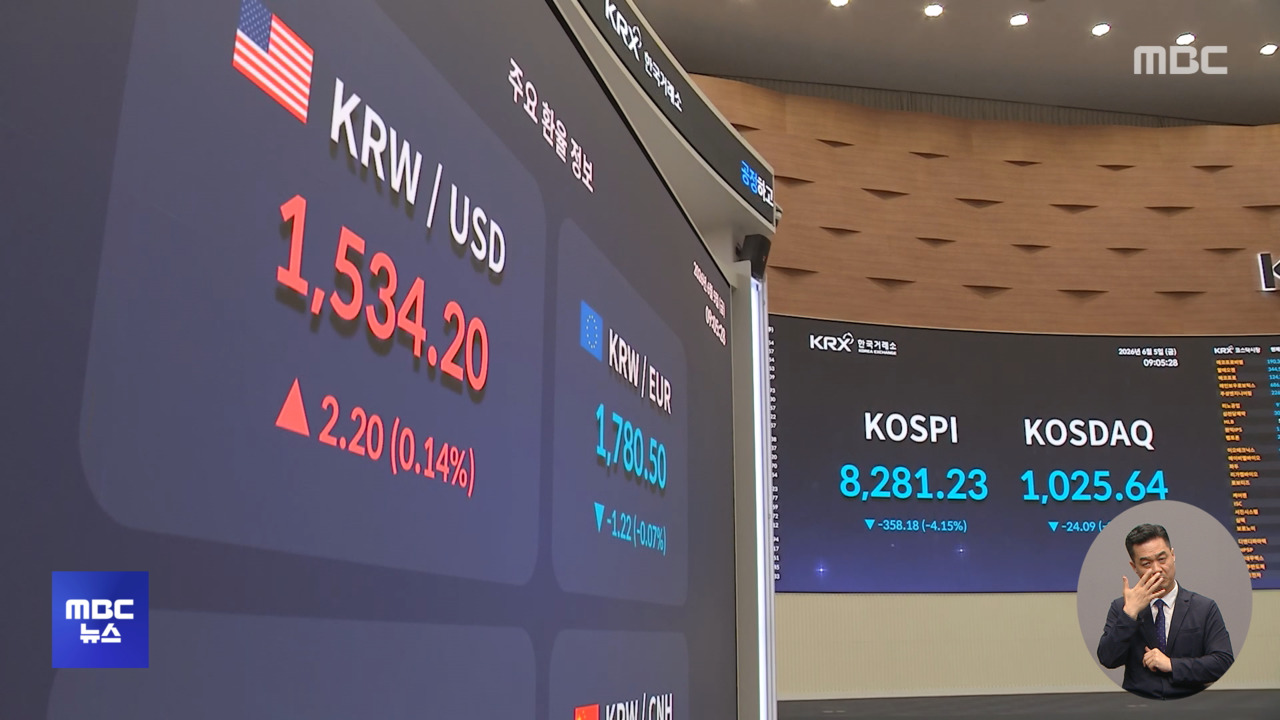
The KRW-USD exchange rate has broken past 1,540 won, reaching levels not seen since the 2009 financial crisis. This has severely soured sentiment among KOSPI investors, as foreign investors continue to sell off assets to avoid losses stemming from the rising exchange rate.
(2) 미국 반도체주 약세의 파급
The KOSPI has slumped to the low 8,000s, dragged down by a sharp drop in U.S. semiconductor stocks, which triggered a concurrent decline in domestic semiconductor-related equities. The resumption of armed conflict in the Middle East has driven up international oil prices and dampened overall sentiment toward global tech stocks.
(3) 외국인 자금 이탈
The market's supply-demand balance worsened on the 4th, with 6.9 trillion won in net selling by foreigners. Increasing hedging losses caused by the weakening Won are accelerating the exodus of foreign investors from the Korean stock market.
3. 매크로 요인 및 경제지표
(1) 원화 약세의 심화
The Korean Won has lost over 6% of its value this year, fluctuating between 1,347.07 and 1,538.45 won over the past 12 months. The rise in the KRW-USD exchange rate directly leads to an exit from the Korean market by worsening returns for foreign investors.
(2) 글로벌 불확실성 심화
The resumption of armed conflict in the Middle East has caused international oil prices to rise, sapping global risk appetite. This shift is weakening investor preference for emerging market stocks.
(3) 코스피 52주 변동성
Over the past 52 weeks, the KOSPI has moved between 2,841.39 and 8,933.62, with a 12-month volatility rate of 190.20%. Such extreme fluctuations reflect widespread investor anxiety regarding their positions.
4. 분석 종합 및 투자자 참고사항
Currently, the KOSPI market is facing a perfect storm of headwinds: a weak Won, weakness in U.S. semiconductor stocks, and heavy foreign selling. As symbolized by the 400-point intraday swings and 20 sidecar triggers, market volatility is approaching financial crisis levels. With the exchange rate reaching a historical high of over 1,540 won, investors must prioritize monitoring exchange rate volatility while keeping a close eye on the global semiconductor industry and geopolitical risks in the Middle East.
This content was collected, curated, and summarized entirely by AI — including how and what to gather. It may contain inaccuracies. Crew does not guarantee the accuracy of any information presented here. Always verify facts on your own before acting on them. Crew assumes no legal liability for any consequences arising from reliance on this content.
Powered by
