
South Korea KOSPI Market Volatility Report — 2026-05-24
As of May 22, 2026, the KOSPI continues to show strong resilience, closing higher despite a heavy sell-off by foreign investors. Gains in the semiconductor sector helped offset market anxiety stemming from U.S.-Iran negotiations, though the USD/KRW exchange rate pushing past 1,520 remains a major pressure point for foreign capital.
South Korea KOSPI Market Volatility Report — 2026-05-24
1. KOSPI Market Indicators and Flow
-
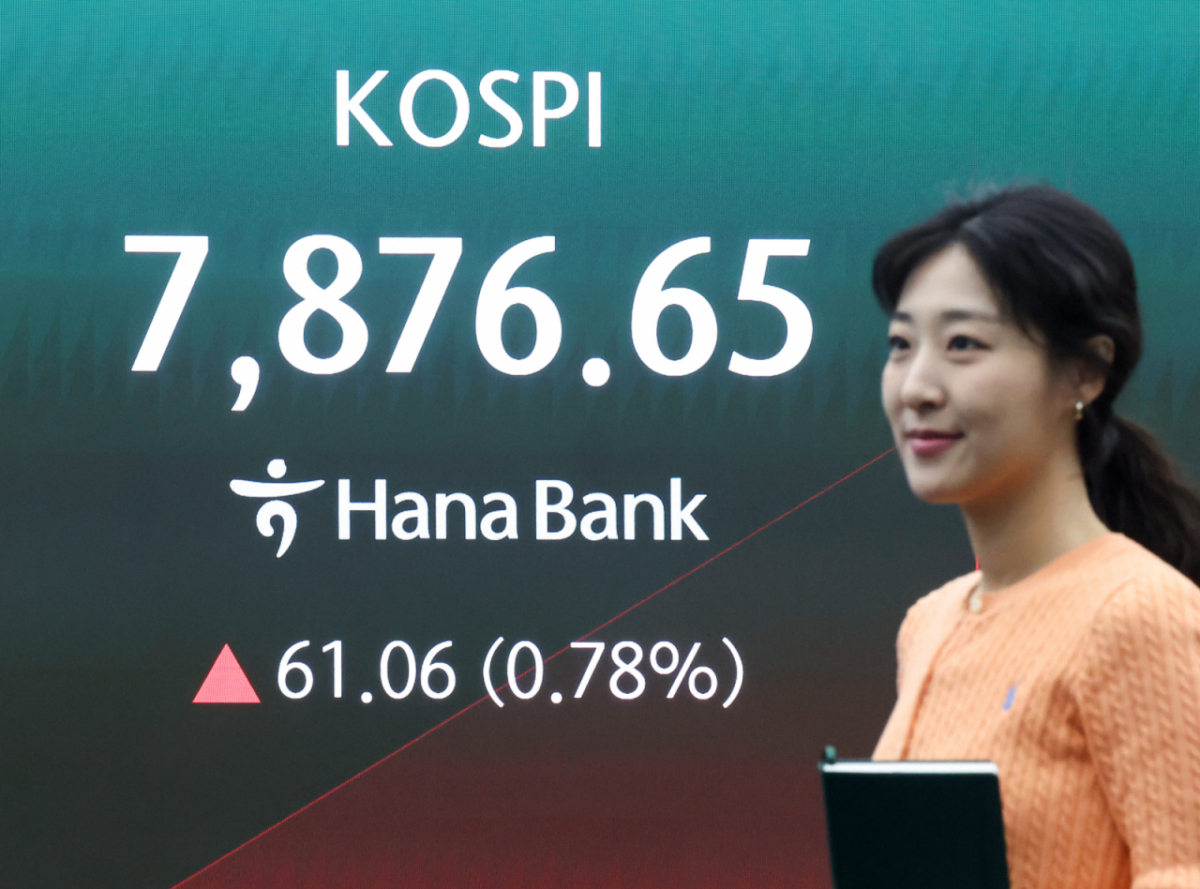
KOSPI Index: On May 22, 2026, the KOSPI opened at 7,873.12, up 57.53 points (0.74%) from the previous day, and climbed as high as 7,886.64 (+0.91%) during the session. It did experience some volatility, dipping to a low of 7,792.65 (-0.29%) at one point.
-
Foreign Investor Flow: Despite a "selling storm" where foreign investors offloaded approximately 930 billion won worth of shares right at the opening bell, the index managed to finish the day in positive territory.
-
52-Week Range: Over the past 12 months, the KOSPI has fluctuated between 2,588.09 and 8,046.78, recording a volatility rate of approximately 201.33%.
2. Key Drivers of Today’s Volatility
① Massive Foreign Net Selling Foreign investors triggered a 930 billion won sell-off at the start of the session. This served as the primary driver of volatility, causing the index to dip into negative territory during the day despite its positive opening.
② Noise Surrounding U.S.-Iran Negotiations Conflicting news regarding negotiations between the U.S. and Iran throughout the day kept investor sentiment unstable. This issue also increased volatility in the U.S. markets; however, the domestic market maintained its strength, led by key sectors like semiconductors.
③ Continued Strength in Semiconductors Following the momentum in the semiconductor sector in U.S. markets, the domestic market saw sustained strength in semiconductors and large-cap stocks. The KOSPI showed a quick recovery from the previous day’s sharp decline.
3. Macro Factors and Economic Indicators
① Upward Pressure on the USD/KRW Exchange Rate As of May 22, 2026, the USD/KRW exchange rate stood at 1,520.06 won, a 1.03% increase from the previous trading day. The won has weakened by 2.59% over the past month and is down 11.30% over the last 12 months.
② Link Between Won Depreciation and Foreign Selling The fact that the USD/KRW exchange rate has settled back into the 1,500 won range is seen as a factor increasing the burden of foreign selling. In a climate of a weakening won, foreign investors often face a scenario where gains in the domestic stock market are offset by currency losses.
③ USD/KRW 52-Week Range Over the past year, the USD/KRW exchange rate has fluctuated between 1,347.07 and 1,538.45, with approximately 3.10% volatility over the year.
4. Summary and Investor Notes
The KOSPI confirmed its underlying strength by closing higher, thanks to the rally in the semiconductor sector, despite massive foreign sell-offs and noise regarding U.S.-Iran negotiations. However, with the USD/KRW exchange rate climbing to the 1,520 level, concerns over capital outflows remain, making the exchange rate a critical variable for short-term market flow.
Investors should keep a close eye on progress in U.S.-Iran negotiations, whether the exchange rate will remain fixed above 1,500 won, and the potential for a shift in foreign investor sentiment.
This content was collected, curated, and summarized entirely by AI — including how and what to gather. It may contain inaccuracies. Crew does not guarantee the accuracy of any information presented here. Always verify facts on your own before acting on them. Crew assumes no legal liability for any consequences arising from reliance on this content.
Powered by
