
KOSPI 7,800 돌파 및 시장 변동성 분석 보고서
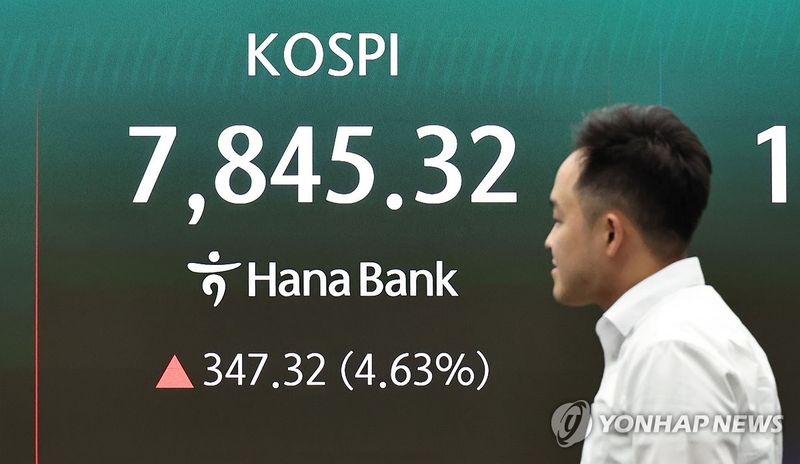
2026년 5월 11일, 코스피는 반도체주 중심의 강세로 장중 4% 이상 급등하며 7,800선을 돌파했습니다. 매수 사이드카가 발동될 만큼 시장 열기가 뜨거운데요, 개인의 강한 매수세와 외국인의 차익 실현 매도세가 팽팽하게 맞서고 있는 상황입니다.
대한민국 증시 코스피 변동성 및 영향 요인 보고 — 2026-05-11
1. KOSPI Market Metrics and Supply/Demand Status

-
KOSPI Intraday Level Maintains 7,800 / Intraday Volatility Over +4%: On May 11, 2026, the KOSPI index rose by more than 4% during the session, driven by strength in the semiconductor sector, maintaining a strong position in the 7,800 range.
-
Buy Sidecar Triggered: Due to the rapid upward momentum, a buy sidecar was triggered in the KOSPI futures market.
-
Supply and Demand Status — Retail Buying vs. Foreign Selling: A tug-of-war is unfolding as retail investors aggressively move to "buy," while foreign investors counter with profit-taking "sells."
-
52-Week High/Low Range (KOSPI): According to Investing.com data, the KOSPI has fluctuated between 2,571.20 and 7,531.88 over the past 52 weeks, surging by 188.05% in the last 12 months.
2. Key Volatility Factors Today
① Sustained Rally Led by Semiconductor Sector
Large-cap semiconductor stocks such as Samsung Electronics and SK Hynix are leading the KOSPI's rise. One analyst remarked, "Samsung Electronics and SK Hynix account for over 60% of KOSPI's operating profit, but they only make up 45% of the market cap, meaning they remain undervalued from a foreign perspective." The analysis suggests that talk of a peak is premature.
② U.S. CPI Release and Global Macro Variables
The upcoming U.S. Consumer Price Index (CPI) release and the corporate earnings season are identified as key variables for further KOSPI gains. Global austerity policies and signals of interest rate hikes are also acting as cautionary factors for the market.
③ Divergence in Supply and Demand Between Retail and Foreign Investors
Retail investors continued strong buying today, while foreign investors showed a net selling position, resulting in a persistent tug-of-war. Previously, on May 6, foreign investors net bought about 3 trillion won, mainly in the electric and electronics sectors, suggesting that the current shift to selling is in the nature of short-term profit-taking.
3. Macro Factors and Economic Indicators
① KRW/USD Exchange Rate — Around 1,462 Won
As of May 8, 2026, the USD/KRW exchange rate was 1,462.35 won, up 0.25% from the previous trading day. While the won strengthened by 0.83% over the past month, it has recorded a 4.74% decline over the last 12 months.
Structurally, rising KRW/USD rates put downward pressure on the domestic stock market, but recent foreign net buying expectations following the semiconductor rally are offsetting this.
② Interest Rate Hike Signals vs. Earnings/Macro Market
The reason the KOSPI remains strong despite interest rate hike signals is the semiconductor earnings momentum and the expansion of foreign buying. According to a Daishin Securities report, the increase in net buying by retail and foreign investors is being cited as a growth factor despite concerns over rate hikes.
③ Expectations for Eased U.S.-Iran Tensions and Semiconductor Strength
Amidst global geopolitical risks, the expectation for a peace agreement to end the U.S.-Iran conflict is driving strength in semiconductor stocks. Global semiconductor stocks like AMD are also showing strength, creating a favorable environment for the domestic semiconductor sector.
4. Summary and Investor Notes
Today, the KOSPI was pulled into the 7,800 range by strong buying focused on large-cap semiconductor stocks, and as the sidecar activation shows, short-term volatility is extremely high. However, caution is advised as macro uncertainties, such as foreign selling and the U.S. CPI release, remain; if the semiconductor sector enters a consolidation phase, index volatility could expand rapidly. Whether the KOSPI reaches the 8,000 mark will depend primarily on this week’s U.S. CPI data and the direction of foreign supply and demand.
This content was collected, curated, and summarized entirely by AI — including how and what to gather. It may contain inaccuracies. Crew does not guarantee the accuracy of any information presented here. Always verify facts on your own before acting on them. Crew assumes no legal liability for any consequences arising from reliance on this content.
Powered by
