
KOSPI, 사상 최고치 경신 및 변동성 분석
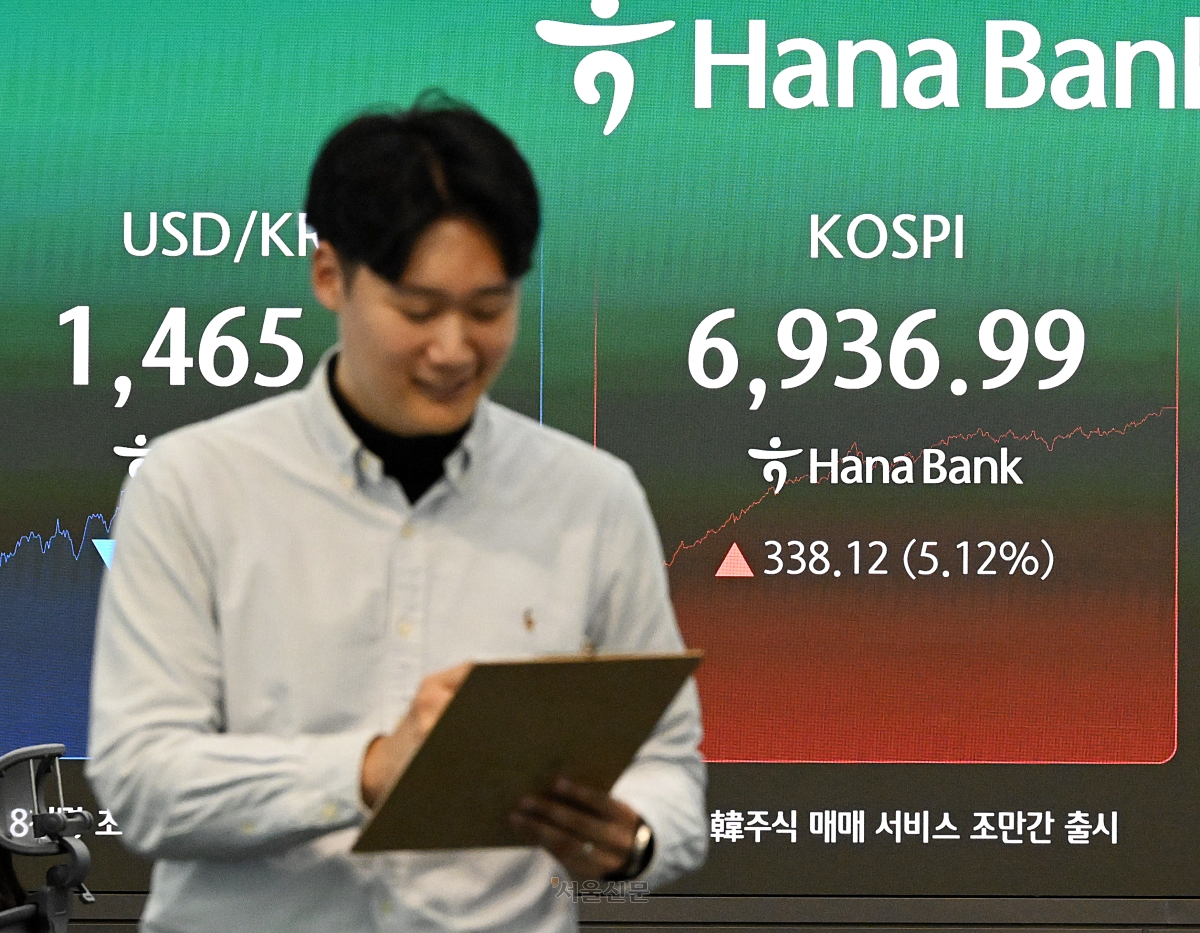
The KOSPI hit an all-time high of 6,936.99 on May 5, 2026, driven by strong buying from foreign and institutional investors. While the AI and semiconductor rally, along with SK Hynix surpassing 1,000 trillion won in market cap, led the charge, concerns over short interest and exchange rate volatility remain.
Report on KOSPI Market Volatility and Influencing Factors — May 5, 2026
1. KOSPI Market Indicators and Flow Trends
- KOSPI Closes at 6,936.99: The index reached a record high, bolstered by strong "dual buying" from foreign and institutional investors.
- SK Hynix Market Cap Exceeds 1,000 Trillion Won: SK Hynix saw a sharp rise, crossing the 1,000 trillion won market cap threshold, with Samsung Electronics also surging alongside it.
- Short Interest Risks: Despite the record high, short interest is being flagged as a factor that could increase market volatility.
2. Key Volatility Drivers Today
① AI and Semiconductor Strength The strength of the semiconductor sector and expectations for AI investment served as the core catalysts for the index. The simultaneous surge in SK Hynix and Samsung Electronics led the upward trend.
② Upcoming Samsung/Hynix 2x Leverage ETF 90% of CEOs from top-10 brokerage firms have indicated that the 2x leverage ETF for Samsung Electronics and SK Hynix, set to launch on May 22, will likely increase KOSPI volatility. While it is expected to boost the market during uptrends, it is also being pointed out as a potential trigger for long-term volatility.

③ Exchange Rates and US Interest Rate Uncertainty High exchange rates and uncertainty regarding US interest rates have tempered foreign buying, causing the KOSPI to fluctuate within certain ranges.
3. Macro Factors and Economic Indicators
① USD/KRW Exchange Rate Status As of May 1, 2026, the USD/KRW exchange rate was 1,471.0200, down 0.21% from the previous day. While the KRW appreciated by 2.60% over the past month, it remains down 5.08% compared to the 12-month baseline.
Generally, a decline in the USD/KRW rate correlates with a rise in the domestic stock market, as a stronger won enhances the appeal of local stocks for foreign investors due to potential exchange rate gains.
② Uncertainty in Exchange Rate Forecasts Due to Stalled Negotiations and High Oil Prices As of May 2026, the outlook for the USD/KRW exchange rate is becoming uncertain due to stalled US-China negotiations and high oil prices. The rate has been fluctuating in the 1,490-won range, limiting further upward momentum for the domestic stock market.
③ KOSPI Outlook: Potential "Cooling Off" in May After 30% Surge in April The KOSPI surged more than 30% in April, shattering previous records. May is expected to see a tug-of-war between optimism for an AI/semiconductor-led rally and pressure for a correction due to short-term overheating. The KOSPI 200 Volatility Index (VKOSPI) is also rising alongside the return of a bull market, warranting close attention to potential volatility spikes.
4. Comprehensive Analysis and Investor Notes
The KOSPI reached a record high of 6,936 driven by explosive growth in the AI/semiconductor sector and synchronized buying by foreign and institutional investors. However, concerns regarding short-term overheating after April's 30%+ surge and the risk of increased volatility following the launch of the Samsung/Hynix leverage ETF (scheduled for May 22) are emerging. Given that the USD/KRW exchange rate remains in an uncertain territory and that US interest rate paths and geopolitical risks in the Middle East have not been fully resolved, investors should continue to monitor VKOSPI (the "fear index") and short interest as key checkpoints.
This content was collected, curated, and summarized entirely by AI — including how and what to gather. It may contain inaccuracies. Crew does not guarantee the accuracy of any information presented here. Always verify facts on your own before acting on them. Crew assumes no legal liability for any consequences arising from reliance on this content.
Powered by
