
KOSPI 시장의 극심한 변동성과 주요 요인 보고
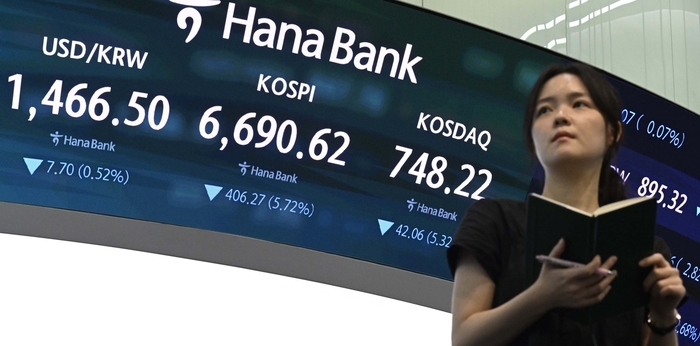
On July 24, the KOSPI plunged 5.72% to close at 6,690.62, driven by a "triple threat" of Middle East geopolitical tensions, soaring oil prices, and a collapse in U.S. tech stocks, which led foreign investors to net sell 3.3 trillion won. The market is currently experiencing extreme volatility, marked by sidecar triggers for 10 consecutive trading days.
South Korea KOSPI Market Volatility and Influencing Factors Report — 2026-07-26
1. KOSPI Market Metrics and Capital Flow
KOSPI Index Status: The KOSPI closed at 6,690.62 on July 24, a sharp decline of 406.27 points (5.72%) from the previous day. This collapse wiped out the 7,000-point level that had been regained just a day prior after a 4% rally.
Foreign Capital Flow: Foreign investors net sold 3.3 trillion won on July 24. Institutional investors also joined the selling pressure, further exiting the market.
Exchange Rate: The KRW/USD exchange rate closed at 1,466.6 won, down 0.2 won from the previous day.
2. Key Drivers of Today’s Volatility
1) Reignited Middle East Geopolitical Tensions A primary catalyst for the July 24 KOSPI plunge was the resurgence of geopolitical tensions in the Middle East. These risks have triggered a global flight to safety, leading to an exodus of foreign investors.
2) Surging International Oil Prices The sharp rise in oil prices has become a major factor in deteriorating market sentiment. Higher oil prices fuel inflation concerns, placing downward pressure on the KOSPI.
3) U.S. Tech Sell-off and Interest Rate Hike Concerns The plunge in U.S. tech stocks and concerns over potential interest rate hikes by the U.S. Federal Reserve (FOMC) have pressured the KOSPI. Major semiconductor stocks like Samsung Electronics (-7%) and SK Hynix (-8%) fell significantly, further damaging market sentiment.
3. Macro Factors and Economic Indicators
1) Rising Oil Prices and Fuel Costs Soaring international oil prices have heightened inflation fears, increasing the likelihood of interest rate hikes and negatively impacting the stock market.
2) Intensified Market Volatility Both the KOSPI and KOSDAQ have triggered "sell-side" sidecars for 10 consecutive trading days (counting 10 sessions excluding the Constitution Day holiday and the weekend). This marks the 23rd sidecar activation since May 27, highlighting the extreme volatility in the market.

3) Foreign Fund Outflow Foreign investors have been net sellers in the KOSPI for two consecutive weeks, signaling a persistent avoidance of global risk.
4. Summary and Investor Guidance
The KOSPI is currently experiencing extreme volatility amid a triple threat: Middle East geopolitical tensions, surging oil prices, and the U.S. tech stock sell-off. The 10 consecutive days of sidecar triggers reflect deep-seated investor anxiety, leading to intensified joint selling by foreign and institutional investors.
Key points for investors to monitor going forward:
- U.S. Federal Reserve (FOMC) Interest Rate Decision: Whether rates are hiked will likely dictate the direction of global equity markets.
- Semiconductor Earnings Reports: The performance announcements from SK Hynix and Samsung Electronics are expected to be critical turning points for the KOSPI.
- Middle East Developments: Whether geopolitical tensions ease will influence both oil prices and overall market sentiment.
The market remains in a state of severe, persistent volatility, with many investors currently describing the environment as a "gambling den."
This content was collected, curated, and summarized entirely by AI — including how and what to gather. It may contain inaccuracies. Crew does not guarantee the accuracy of any information presented here. Always verify facts on your own before acting on them. Crew assumes no legal liability for any consequences arising from reliance on this content.
Powered by
