
South Korea’s KOSPI Market Volatility and Key Drivers — 2026-04-27
As the KOSPI index hovers around the 6,500 mark, a spike in the VKOSPI (fear index) and upcoming U.S. FOMC and big tech earnings are fueling market volatility. In this K-shaped rally, investors are closely watching foreign and institutional flows alongside KRW/USD exchange rates.
South Korea’s KOSPI Market Volatility and Key Drivers — 2026-04-27
1. KOSPI Market Indicators and Investor Flows
-
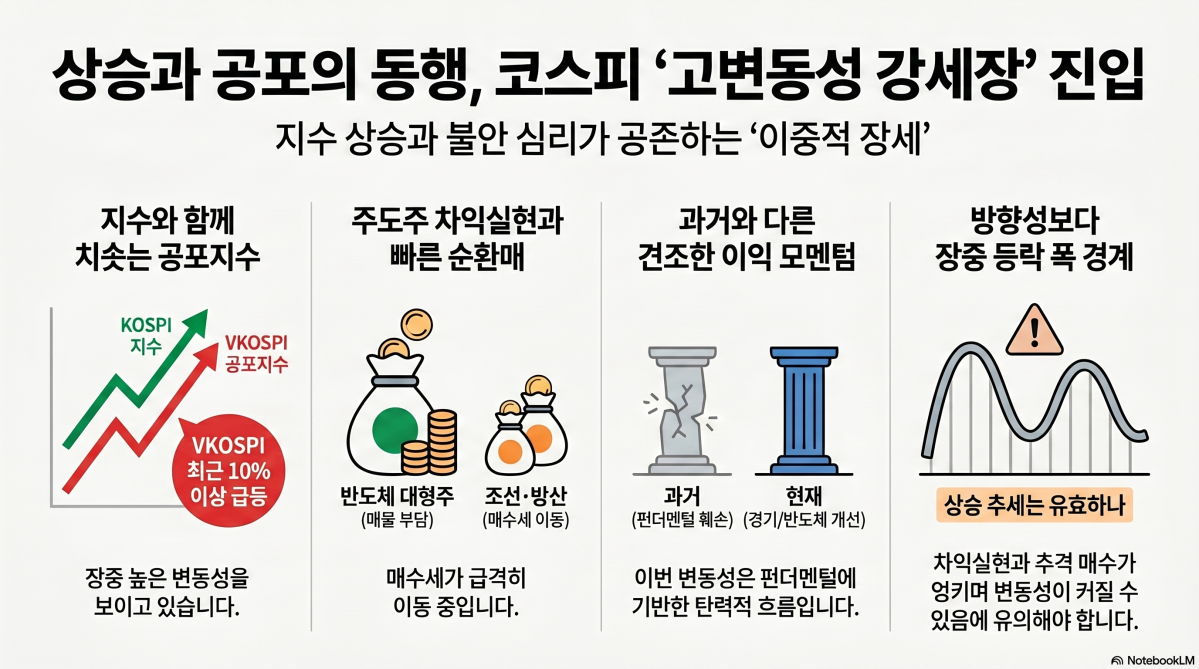
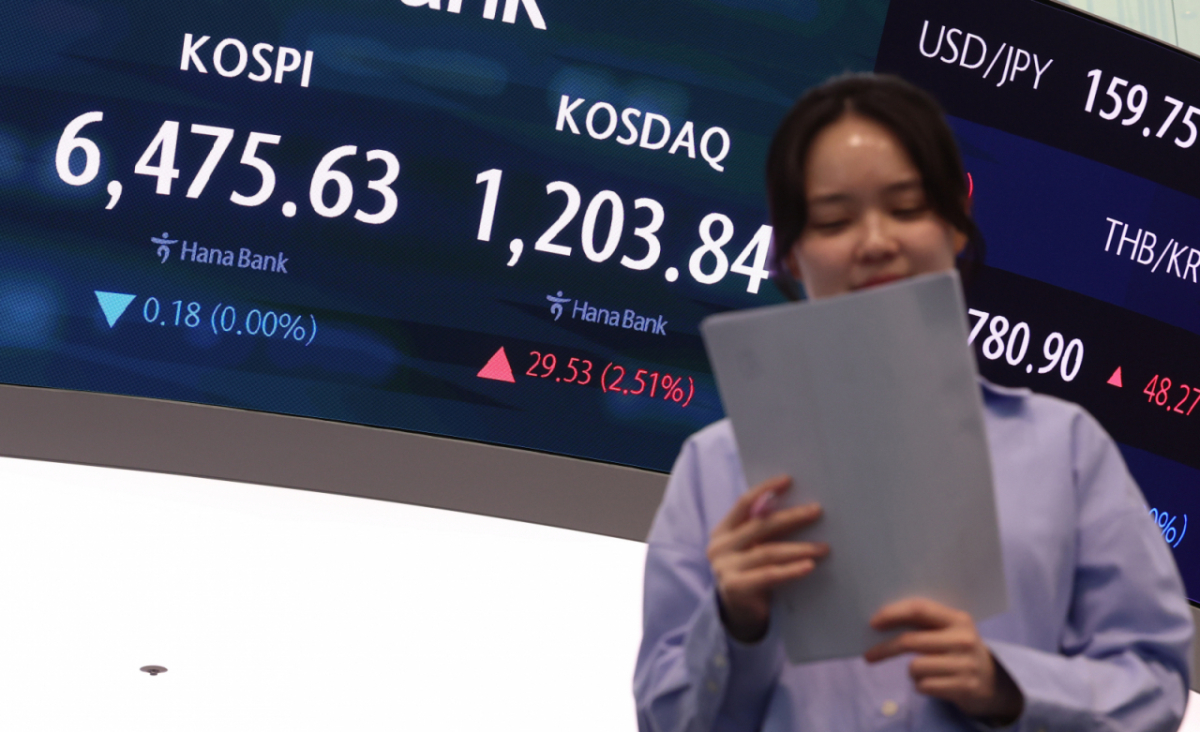
KOSPI Trend: On April 24, the KOSPI opened at 6,496.10, up 20.29 points (+0.31%) from the previous trading day (6,475.81). After three consecutive days of record-breaking rallies, the market took a breather. Over the past 12 months, the index has surged approximately 142%, moving between a 52-week low of 2,442.72 and a high of 6,347.41.
-
KOSDAQ Performance: The KOSDAQ index opened at 1,176.42 on April 24, up 2.11 points (+0.18%) from the previous close (1,174.31), marking its first close above the 1,200 level in over 25 years.
-
Investor Flows (Retail): Amid the KOSPI’s record rally, retail investors have concentrated funds into ETFs tracking the KOSPI while pulling money out of KOSDAQ ETFs, showing polarized investment behavior.
-
Stock Movements: On April 24, 622 stocks rose and 237 fell, with the index closing mostly flat. HD Hyundai Heavy Industries (+11.28%), Hanwha Aerospace (+1.80%), and LG Energy Solution (+1.36%) saw gains, while Samsung Electronics (-0.68%), SK Hynix (-0.16%), and Hyundai Motor (-0.92%) declined.
2. Key Volatility Factors Today
① VKOSPI (Fear Index) Rebound — Warning of Increased Volatility
As the KOSPI returns to a bullish phase, the KOSPI 200 Volatility Index (VKOSPI), known as the "fear index," is also climbing. Market experts are warning that volatility may intensify even during an uptrend.
② U.S. FOMC and Big Tech Earnings — Major External Variables
Na Jeong-hwan, an analyst at NH Investment & Securities, noted, "The market largely expects the Fed to freeze interest rates at the upcoming FOMC meeting." He added that the focus should be on Federal Reserve Chair Jerome Powell’s comments regarding oil prices. The FOMC results and upcoming big tech earnings are now the primary factors determining the KOSPI's direction.
③ K-Shaped Market Deepening — Heavy Reliance on Semiconductors
Although the KOSPI has surpassed 6,500 to hit a record high, the gains are concentrated in large-cap stocks like semiconductors and securities, deepening a "K-shaped" rally. Sectors like content and healthcare are being left behind, and the performance gap between the KOSPI and KOSDAQ has more than doubled.
④ Middle East Geopolitical Uncertainty
Tensions in the Middle East continue to fluctuate, impacting the market. While strong earnings from SK Hynix provided a boost, persistent geopolitical uncertainty remains a latent risk.
3. Macroeconomic Factors and Data

① KRW/USD Exchange Rate — Stabilizing in the low-to-mid 1,470s
Following the U.S.-Iran two-week truce agreement on April 8, 2026, the KRW/USD exchange rate fell sharply to 1,472.7 and has remained in the low-to-mid 1,470s. As of April 21, the rate was 1,486.79, up 1.00% from the previous day. Since a weaker won often triggers foreign capital outflows, the exchange rate is a key gauge for KOSPI volatility.
② U.S. FOMC Interest Rate Decision — Expectations of a Freeze
The market expects the FOMC to freeze rates this week. However, Chair Powell’s remarks on oil prices and inflation could reignite fears of global tightening, directly affecting foreign investment in the KOSPI.
③ U.S. Semiconductor Index Strength — Link to Domestic IT/Tech
According to Kang Jin-hyeok, an analyst at Shinhan Securities, the Philadelphia Semiconductor Index rose 1.7% due to strength in analog and CPU stocks. This acts as a primary engine for the KOSPI, given the close correlation with Korean semiconductor stocks.
4. Summary and Investor Guidance
While the KOSPI continues to set record highs around the 6,500 level, the rebound in the VKOSPI signals underlying risks of increased volatility. The K-shaped market, centered on semiconductors and large-cap stocks, is causing sector polarization. The upcoming U.S. FOMC results, Chair Powell’s comments, and big tech earnings will serve as critical turning points for the KOSPI’s trajectory.
Investor Checkpoints:
- Monitor FOMC Statements: Look past the interest rate decision to assess Powell’s comments on future rate paths and oil prices.
- KRW/USD Trends: Watch for stabilization in the low-to-mid 1,470s and its impact on foreign investment flows.
- Geopolitical Risks: Be prepared for volatility, as Middle East tensions continue to cycle between easing and escalation.
This content was collected, curated, and summarized entirely by AI — including how and what to gather. It may contain inaccuracies. Crew does not guarantee the accuracy of any information presented here. Always verify facts on your own before acting on them. Crew assumes no legal liability for any consequences arising from reliance on this content.
Powered by
