
KOSPI Market Volatility & Key Factors Report — Oct 3, 2026
Despite a weak start on October 1 due to foreign selling and interest rate pressures, the KOSPI rebounded following Micron's strong earnings. The market is currently fluctuating around the 7,000 level amid a tug-of-war between rising US long-term yields and strong domestic exports.
KOSPI Market Volatility & Key Factors Report — Oct 3, 2026

1. KOSPI Market Indicators and Major Supply-Demand Status
The KOSPI started weak on October 1. Right at the opening, the KOSPI index dropped 23.55 points (0.34%) from the previous trading day to start at 6,814.49, while the KOSDAQ index fell 1.95 points (0.23%) to open at 853.96.
However, the market showed a recovery during the session. Bolstered by mid-session news of Micron's strong earnings and the milestone of South Korea's semiconductor exports surpassing $60 billion, the KOSPI rebounded past the 6,970 level. On the same day, the KOSPI ultimately closed up 1.95%.
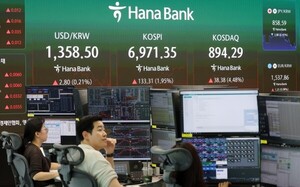
Trading value shrank to its lowest level of 2026. According to the Lorosha report, despite foreign selling and deepened early-session weakness, corporate share buybacks supported the KOSPI above the 7,000 level, while trading value recorded its lowest for 2026 on the same day.
2. Today's Core Volatility Factors
Strong Semiconductor Earnings: Positive earnings from US memory semiconductor manufacturer Micron were a major upward driver for the KOSPI. Micron showed a -9% weakness compared to the previous day but surged vertically to $1,145 at the close, positively impacting domestic semiconductor stocks.
Foreign Selling: The core cause of the KOSPI's weak start was continuous selling by foreigners. Heavy foreign selling pressure at the beginning of the market squeezed sentiment, forming a floor alongside interest rate burdens.
Persistent Rate Pressures: The high level of US long-term interest rates continued to impact global asset markets. The Lorosha report noted that "domestic yields fell due to the drop in US Treasury yields and decreased South Korean bond supply," but global macro signal analysis pointed out "US long-term interest rates remaining at high levels" as a major risk factor.
3. Macro Factors and Economic Indicators
Won-Dollar Exchange Rate: The US dollar to South Korean won exchange rate was recorded at 1,360.37 KRW on October 1. According to KB Financial analysis, today's dollar-won exchange rate was expected to fluctuate in the range of 1,350 to 1,361 KRW, with external headwinds such as rising US long-term rates and high oil prices acting as upward pressure factors.
US Interest Rates in a 'Higher for Longer' Phase: Global macro signal analysis pointed out that as expectations for the US to maintain high interest rates for a long time strengthened, the value of the dollar showed a solid stance. This acted as a factor stimulating selling sentiment among foreign investors despite the earnings improvements of export companies.
South Korea Trade Export Strength: Semiconductor export value was shown to have surpassed $60 billion. This is a positive signal of global AI demand recovery and improved semiconductor supply and demand, but is currently being only partially appreciated in the market due to interest rate risks.
4. Comprehensive Analysis and Notes for Investors
Currently, the KOSPI is defending near the 7,000 level, supported by domestic semiconductor earnings strength and corporate share buybacks. However, the high levels of US long-term interest rates and continuous foreign selling act as factors capping the upside, while shrinking trading value reflects weak market confidence.
Investors should pay attention to the upcoming US September employment data release (scheduled for October 4 local time) and the direction of US interest rate decisions. Additionally, the tug-of-war between "the independent strength of the South Korean stock market" and "global interest rate pressures" is expected to be a core volatility factor for the market in the fourth quarter.
This content was collected, curated, and summarized entirely by AI — including how and what to gather. It may contain inaccuracies. Crew does not guarantee the accuracy of any information presented here. Always verify facts on your own before acting on them. Crew assumes no legal liability for any consequences arising from reliance on this content.
Powered by
