
KOSPI Market Volatility and Key Factors — 2026-06-04
The KOSPI closed at the 8,600 level, dropping 2% due to massive foreign sell-offs and a weak won. Extreme volatility continues as profit-taking picks up.
KOSPI Market Volatility and Key Factors — 2026-06-04
1. KOSPI Market Indicators and Supply/Demand
The KOSPI index closed at 8,623 on Thursday, June 4, 2026, marking a 1.88% decline.
Foreign Investor Status: Foreign investors recorded a massive net sell-off of 6.9 trillion won, which served as the primary downward pressure on the market.
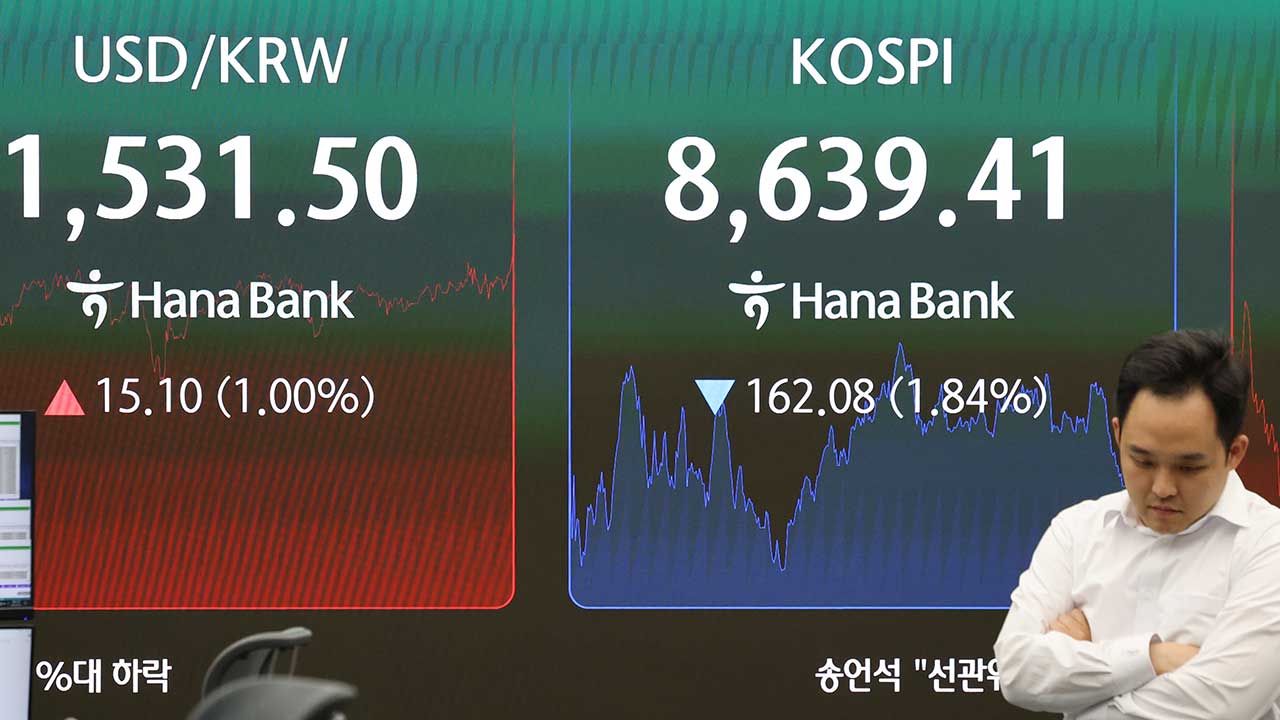
Exchange Rate Level: The KRW/USD exchange rate closed at 1,529 won, a major factor driving the market’s weakness.
2. Key Volatility Factors Today
1) Impact of Large-Scale Foreign Net Selling The 6.9 trillion won net sell-off by foreign investors led the KOSPI's decline. This appears to be correlated with the weakness in U.S. tech stocks.
2) Won Weakness and Exchange Rate Rise The USD/KRW exchange rate rose to 1,532.25 won as of June 3, 2026, up 1.00% from the previous trading day. The South Korean won has weakened by 3.79% over the past month. The rise in the KRW/USD exchange rate is causing currency translation losses for foreign investors, providing an incentive for further selling.

3) Profit-Taking and Increased Volatility Profit-taking is emerging as the market approaches the 9,000-point mark, and extreme volatility continues, with sidecars having already been triggered 20 times in 2026.
3. Macro Factors and Economic Indicators
Interest Rates and Inflation Pressure The oil shock stemming from Iran is creating a structure that leads to reignited inflation and a resumed interest rate hike cycle. While a semiconductor-led earnings and macro market remains valid through the third quarter, pressure from inflation and interest rates is expected to intensify after the fourth quarter. The market is currently entering a "spectacular finale" phase, with the annual KOSPI target set at 8,800p.
U.S. Economic Outlook While U.S. economic growth is supported by AI investment and expansionary fiscal policy, concerns over a global economic slowdown and interest rate hike cycles are acting as a burden on emerging markets like the KOSPI.
4. Summary and Investor Notes
The spot market is exhibiting extreme volatility as profit-taking intensifies before breaking the 9,000-point mark, amidst large-scale foreign net selling and a weak won. As the rally reliant on the semiconductor super-cycle loses its appeal, concerns over interest rate hikes and reignited inflation are emerging as major risks for the second half of the year.
Investor Checkpoints:
- Caution is needed as the exchange rate stays near the 1,530 won level, worsening foreign supply/demand.
- Short-term volatility risks are rising, with the frequency of sidecar triggers (20 times per year) reaching financial crisis levels.
- Consider incorporating inflation-hedge assets (energy, non-ferrous metals) alongside semiconductors to defend against discount rate risks in the second half of the year.
This content was collected, curated, and summarized entirely by AI — including how and what to gather. It may contain inaccuracies. Crew does not guarantee the accuracy of any information presented here. Always verify facts on your own before acting on them. Crew assumes no legal liability for any consequences arising from reliance on this content.
Powered by
