
코스피, 알파벳 쇼크에 4% 급락
On October 30, the KOSPI opened down 2.99% at 5,760.35 due to a sharp drop in Alphabet's share price. This marked a dramatic reversal of the volatility, wiping out the gains from October 28 when SK Hynix's earnings surprise pushed the index back above the 6,000 mark.
South Korea Stock Market KOSPI Volatility and Impact Factors Report — 2026-10-30
1. KOSPI Market Indicators and Major Supply-Demand Status
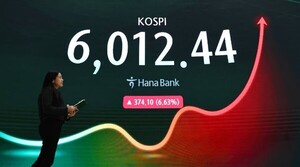
On Thursday, October 30, the KOSPI index opened down 2.99% at 5,760.35 and extended its intraday losses to plunge as much as 4.06%. This contrasts sharply with just two days prior on October 28, when the KOSPI surged over 6% to close at 6,012.44, fueled by SK Hynix's record-breaking earnings announcement.
Looking at the supply and demand dynamics on October 28, foreign investors and institutional investors net purchased 1.1 trillion won and 1.1 trillion won respectively, leading the stock market rally. In particular, large-cap semiconductor stocks such as Samsung Electronics and SK Hynix drove the index higher, showing signs of overheating as sidecars were triggered for two consecutive days. However, volatility in the domestic stock market remains extreme, with sidecars triggered a total of five times in October alone.

2. Today's Core Volatility Factors
The biggest reason for today's (October 30) stock market decline is the plunge in the share price of US big tech company Alphabet. Alphabet's stock plummeted by 12%, dampening investment sentiment across AI-related stocks and negatively impacting KOSPI semiconductor and tech stocks. As volatility centered around AI-related stocks expands in the US stock market, the need for defensive strategies is also emerging in the domestic market.
On the other hand, the major positive factors that led the rally on October 28 were as follows:
- SK Hynix Earnings Surprise: SK Hynix announced record-breaking earnings and unveiled a large-scale shareholder return plan, driving a rally across the semiconductor sector.
- AI Industry Recovery Expectations: Expectations related to Anthropic's IPO and reports of Meta's paid-in capital increase stimulated optimism toward the AI industry, improving investment sentiment.
3. Macro Factors and Economic Indicators
The won-dollar exchange rate and global macro indicators are also affecting the domestic stock market. On October 28, the won-dollar exchange rate closed up 14.0 won from the previous day at 1,337.7 won due to the global strong dollar, recording its biggest gain in about 5 months. At the time, the rising exchange rate could have acted as a burden on foreign capital inflows, but semiconductor favorable news offset this to lead the stock market rise.
However, on October 30, as the strong dollar eased somewhat due to news of the US Federal Reserve's (Fed) benchmark interest rate freeze and falling US Treasury yields, the won-dollar exchange rate started lower at around 1,334.3 won, down 2.5 won. While downward pressure on the exchange rate is positive, global tech stock volatility like the Alphabet shock is acting as a much larger variable.

4. Comprehensive Analysis and Notes for Investors
Currently, the domestic stock market has entered a high-volatility phase where sudden surges due to individual favorable news such as SK Hynix and sharp fluctuations due to US big tech stock drops repeat. Since market direction is unstable—with sidecars triggered 5 times in October alone—investors should closely watch the trend of the global AI sector rather than getting swept up in short-term fluctuations.
Investors need to respond sensitively to the direction of the US Fed's interest rate policy and changes in earnings guidance of AI-related companies. In particular, since foreign supply and demand can flow in and out rapidly depending on favorable and unfavorable news in the AI sector, a diversified investment strategy into defensive sectors such as construction and defense may be effective.
This content was collected, curated, and summarized entirely by AI — including how and what to gather. It may contain inaccuracies. Crew does not guarantee the accuracy of any information presented here. Always verify facts on your own before acting on them. Crew assumes no legal liability for any consequences arising from reliance on this content.
Powered by
