
코스피, 외국인 매도와 연준 매파 발언에 7천선 붕괴
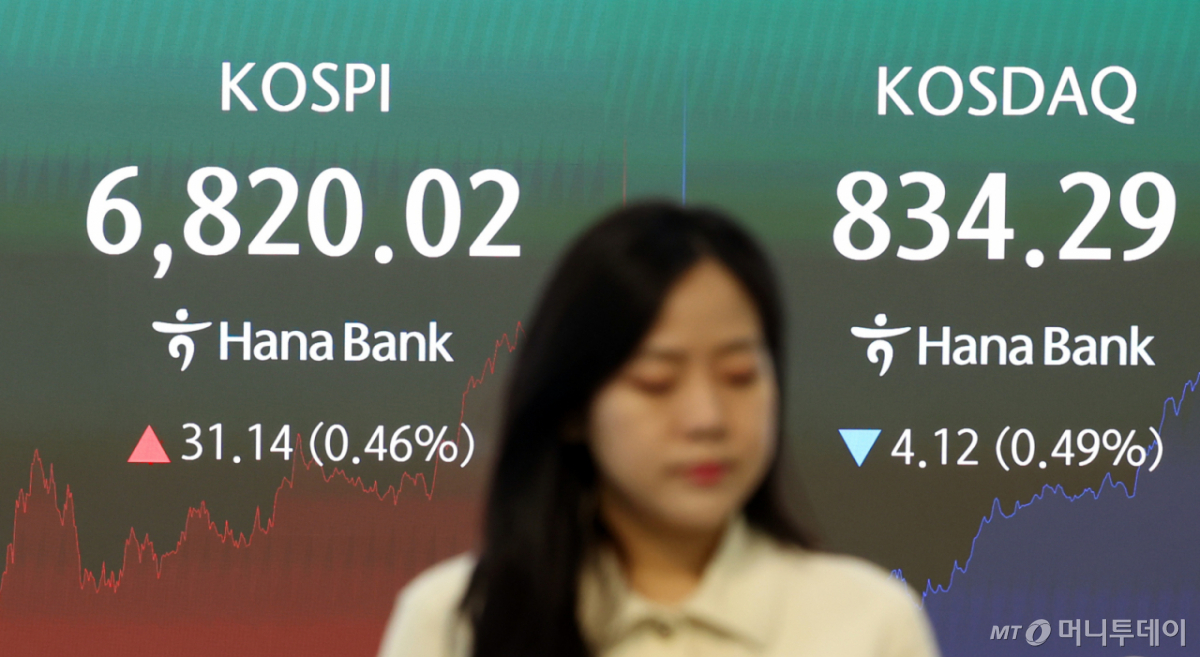
The Kospi closed at 6,788.88, failing to reclaim the 7,000 mark as the Fed chair's hawkish remarks and persistent net selling by foreign investors weighed on the market. While the V-KOSPI fell below 50 points for the first time in four months, easing panic somewhat, trading volume hit a yearly low, signaling a cautious wait-and-see attitude.
South Korea Stock Market Volatility and Kospi Key Factors Report — 2026-09-01
1. Kospi Market Indicators and Major Supply-Demand Trends
Last week (August 24–28), the Kospi index fell 124.07 points (1.79%) from the previous week's close to 6,788.88, fluctuating around the 6,000 range throughout the month. In particular, Kospi trading volume hit a yearly low in August, which, combined with foreign investors extending their net selling streak for four consecutive months, dealt a blow to biotech and securities stocks.
On the supply-demand front, the outflow of foreign capital stands out. In February and March 2026 alone, approximately 60 trillion won in net selling occurred, an analysis attributes to the restructuring of foreign holdings centered on semiconductors and automobiles. This foreign selling pressure is also linked to the Korean won's depreciation pressure driven by a strong dollar and increased offshore dollar demand.
2. Today's Key Volatility Factors
1) Hawkish Remarks by Fed Chair (or Current Fed Chair Kevin Warsh) and Rate Hike Expectations Due to the U.S. Federal Reserve chair's hawkish remarks, expectations of U.S. rate hikes resurfaced, preventing the Kospi from breaking above the 7,000 mark and dragging it to a close at 6,788.88. This fueled concerns over tightening global liquidity and acted as a direct downward pressure on the domestic stock market.
2) Plunge in the Volatility Index (V-KOSPI) and Impact of Leverage Product Regulations The Kospi 200 Volatility Index (V-KOSPI) fell below 50 points for the first time in four and a half months. Following a sharp correction of 38.6% from its July peak, market volatility has physically calmed down due to factors such as tightened regulations on single-stock leverage products.
3) End of Q2 Earnings Season and Lack of Momentum With the second-quarter earnings announcements wrapped up, earnings-related momentum has faded, leaving market uncertainty driven by external variables. As earnings-based upside momentum weakens, investors are reacting more sensitively to macroeconomic data such as U.S. interest rates and employment indicators.
3. Macro Factors and Economic Indicators
Volatility of the KRW/USD Exchange Rate The KRW/USD exchange rate has been fluctuating in the 1,370–1,380 won range. Although it dipped below 1,380 won the previous day, it rebounded to the mid-1,380 won range due to continued net stock selling by foreigners and strong offshore dollar demand. Generally, a weak Korean won (rising exchange rate) triggers foreign capital outflows, exerting a negative impact on the domestic stock market.
Interest Rates and Oil Prices Trends A decline in international oil prices and U.S. Treasury yields could serve as positive factors for a stronger won and the domestic stock market, but these are currently offset by U.S. rate hike expectations. The market views a further sharp spike in interest rates as unlikely, but the tedious sideways movement in the 6,000 range continues as investors await a new upward trigger.

4. Comprehensive Analysis and Notes for Investors
Despite the drop in the volatility index, the market currently has a strong "wait-and-see" and "defensive" character due to the plunge in trading volume and foreign selling. September is historically known as a low-return month (averaging -0.68% since 2000), increasing the popularity of defensive assets like income investments and covered call ETFs among investors fatigued by volatile markets.
Investors should treat upcoming U.S. employment indicators, rate-related events, and shifts in foreign supply and demand next week as key checkpoints. In particular, if the KRW/USD exchange rate exceeds 1,420 won, foreign selling could accelerate, making it necessary to closely monitor exchange rate trends.
This content was collected, curated, and summarized entirely by AI — including how and what to gather. It may contain inaccuracies. Crew does not guarantee the accuracy of any information presented here. Always verify facts on your own before acting on them. Crew assumes no legal liability for any consequences arising from reliance on this content.
Powered by
