
KOSPI hits 52-week high; FOMC and Big Tech in focus
As the KOSPI continues its bull run by hitting a 52-week high, the upcoming U.S. FOMC meeting (April 28–29) and Big Tech earnings reports are shaping up to be major drivers of market volatility. Meanwhile, the won-dollar exchange rate is trending downward due to easing tensions in the Middle East, creating a favorable environment for foreign investment.
South Korean Stock Market: KOSPI Volatility and Key Influencing Factors — 2026-04-28
1. KOSPI Market Indicators and Trading Status
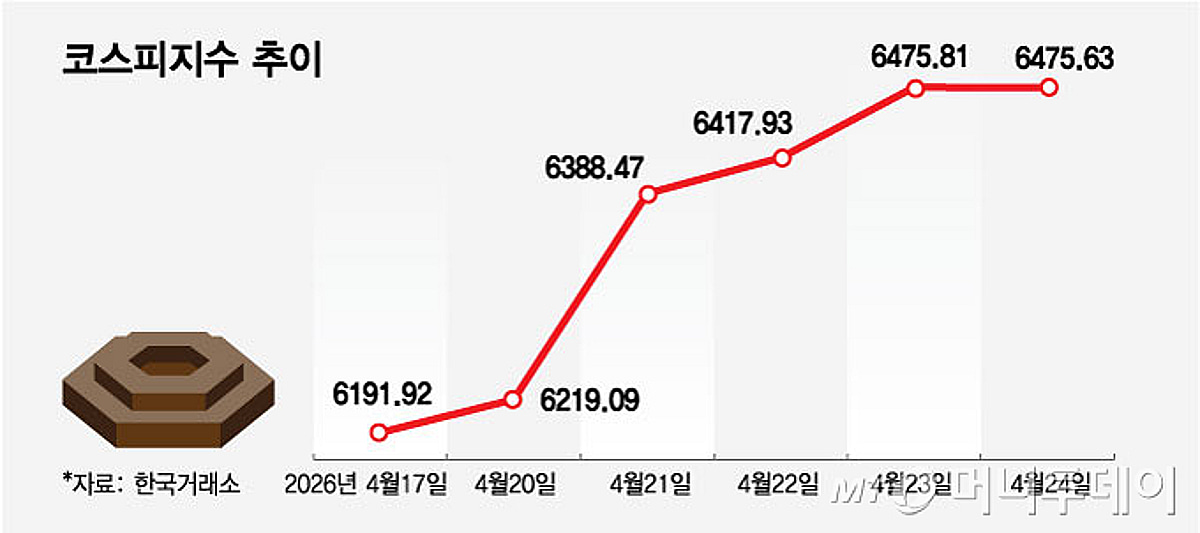
- KOSPI hits 52-week high: In early trading on April 27, the KOSPI rose to 6,557.78, setting a new 52-week high. Gains in SK Hynix and Samsung Electronics led the index.

-
Domestic market cap exceeds 6 quadrillion KRW: With both KOSPI and KOSDAQ trending upward, the total market capitalization of South Korean stocks surpassed 6 quadrillion KRW for the first time in history.
-
Trading trends: As of April 27, retail and foreign investors maintained a net buying stance, supporting the index's growth. In contrast, institutional and program selling acted as a drag on the market.
-
Investor trading data: Trading data by investor type for April 27 was released via Yonhap News, highlighting clear divergences in the strategies of different market participants.
2. Key Volatility Factors Today
① U.S. FOMC Meeting (April 28–29) The biggest variable this week is the U.S. Federal Open Market Committee (FOMC) meeting held on April 28–29 (local time). How the Federal Reserve (Fed) responds to inflation concerns driven by higher international oil prices has become a critical variable for global stock markets. Domestic securities firms, including NH Investment & Securities, are urging investors to pay close attention to the FOMC results.
② U.S. Big Tech Earnings (Earnings Season) Earnings reports from U.S. Big Tech companies, including Alphabet and Amazon, are scheduled for this week. Following SK Hynix's record-breaking earnings report, which boosted expectations for the semiconductor and IT sectors, market participants are watching to see if U.S. Big Tech results will provide further upward momentum.
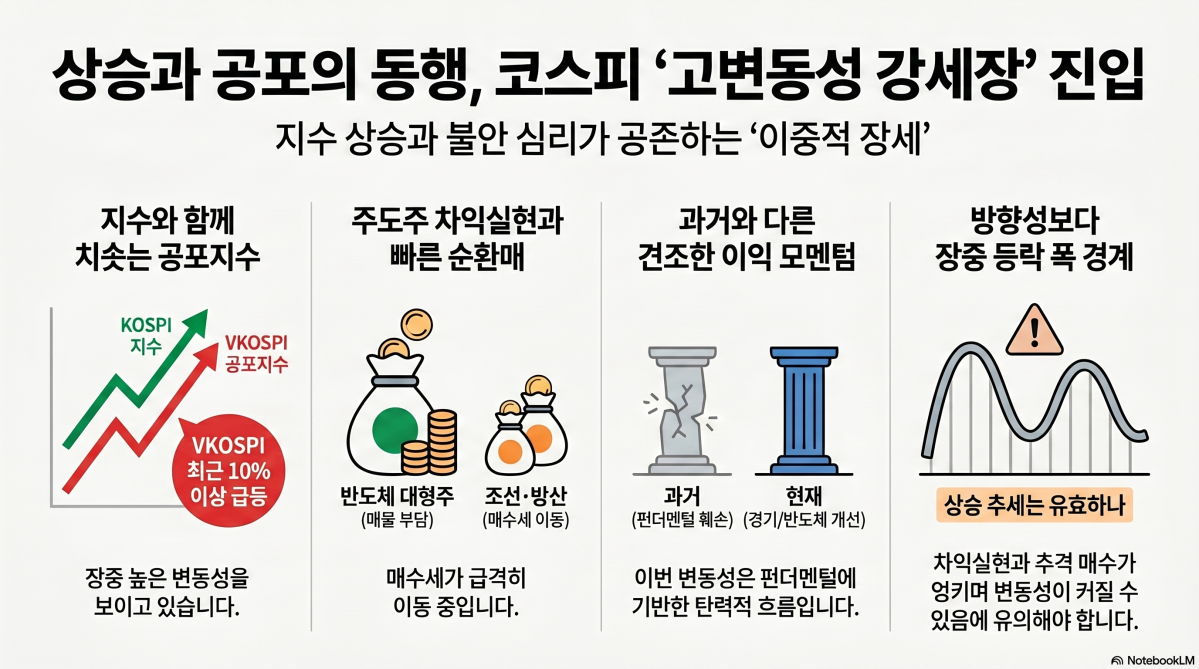
③ Concurrent rise in VKOSPI (Fear Index) As the KOSPI market returns to a bullish phase, the KOSPI 200 Volatility Index (VKOSPI), known as the "fear index," is also rising. This suggests that despite the bull market, participants are remaining cautious about volatility risks.
3. Macroeconomic Factors and Indicators
① Lower Won-Dollar Exchange Rate — Favorable for Stocks In the Seoul foreign exchange market on April 27, the won-dollar exchange rate closed at 1,472.5 KRW, down 12.0 KRW from the previous trading day. The sharp drop was driven by expectations of easing Middle East tensions and supply-demand factors. As of April 26, the USD/KRW was 1,475.69, down 0.06% from the previous day, with the won strengthening 1.98% over the past month. A lower exchange rate (stronger won) increases the attractiveness of the domestic stock market for foreign investors, acting as a tailwind.
② Deepening 'K-shaped Market' Centered on Semiconductors While the KOSPI has broken through the 6,500 level to reach an all-time high, the "K-shaped" trend, where growth is concentrated in a few large caps like semiconductors and securities, is deepening. While semiconductors and securities lead the rally, content and healthcare sectors remain sluggish, and the performance gap between KOSPI and KOSDAQ for the year has doubled.
③ Middle East Tension: Easing and Recurrence Last week, the domestic stock market appeared to be preparing for a new leap forward, putting the scars of the Iran war behind it. However, the cycle of rising and easing tensions in the Middle East continues to keep international oil prices volatile, creating uncertainty in global stock markets amid persistent inflation concerns.
4. Market Summary and Investor Notes
The KOSPI is maintaining its strength, hitting a 52-week high thanks to a mix of positive factors, including record earnings from SK Hynix, a stronger won, and eased tensions in the Middle East. However, investors should be wary of potential short-term volatility following the sharp rally, as evidenced by the concurrent rise in the fear index (VKOSPI). The key checkpoint this week is the result of the U.S. FOMC meeting on April 28–29. The Fed’s decision on interest rates and signals regarding their future policy path will be the primary factors determining global capital flows and the direction of the KOSPI. Furthermore, because of the deepening K-shaped market concentrated in semiconductors, a selective approach by sector is recommended.
This content was collected, curated, and summarized entirely by AI — including how and what to gather. It may contain inaccuracies. Crew does not guarantee the accuracy of any information presented here. Always verify facts on your own before acting on them. Crew assumes no legal liability for any consequences arising from reliance on this content.
Powered by
