
KOSPI Market Volatility and Key Drivers — 2026-06-08
The KOSPI index plummeted by over 8%, triggering a circuit breaker. Foreign selling continues as US semiconductor earnings disappoint, expectations for interest rate hikes rise, and the KRW/USD exchange rate crosses the 1,540 mark for the first time since the 2009 financial crisis.
KOSPI Market Volatility and Key Drivers Report — 2026-06-08
1. KOSPI Market Indices and Liquidity Status
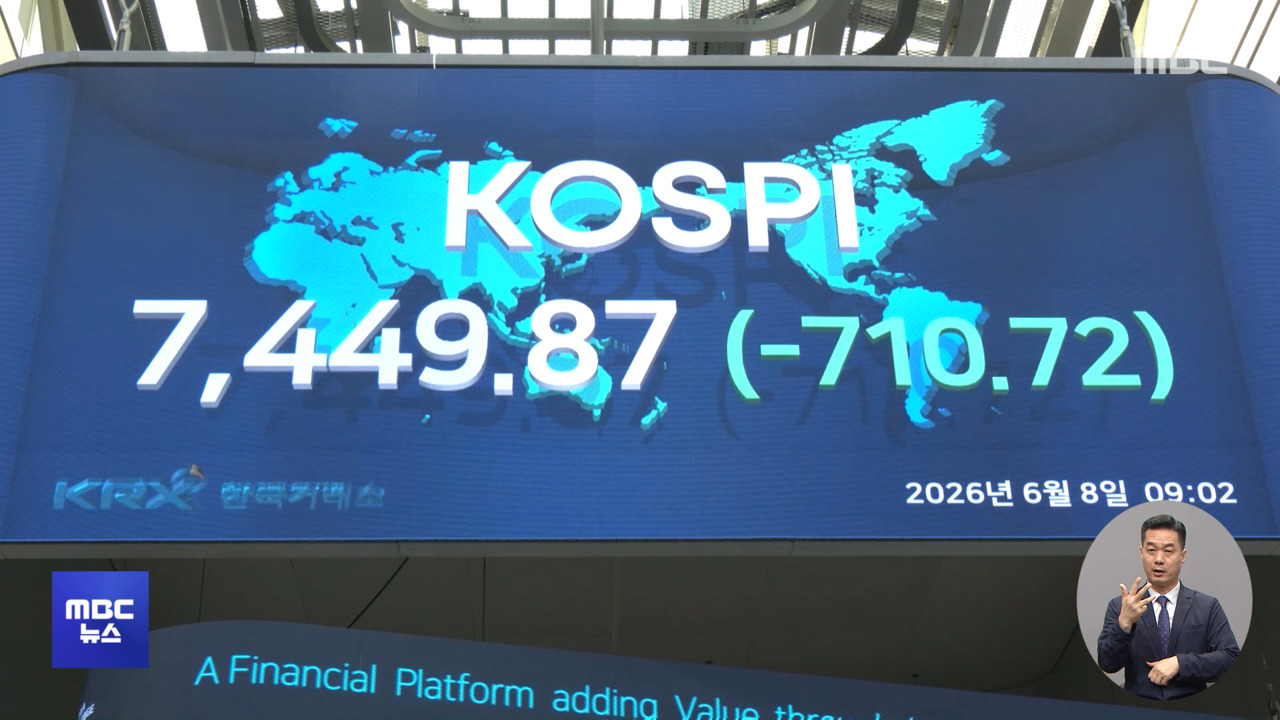
The KOSPI index plummeted by over 8% today due to a global downturn triggered by lackluster performance in US semiconductor stocks, leading to the activation of a circuit breaker that temporarily halted trading. The KOSPI has shown extreme volatility over the past week, fluctuating within a 52-week range of 7,053.84 to 8,933.62, recently dropping to the 7,400 level during the sharp decline.
Foreign investor selling has intensified significantly. Despite a current account surplus, the heavy selling pressure in the KOSPI market appears to be a phenomenon linked to the surge in the KRW/USD exchange rate.
2. Key Drivers of Today’s Volatility
① Disappointing US Semiconductor Earnings and Global Correction
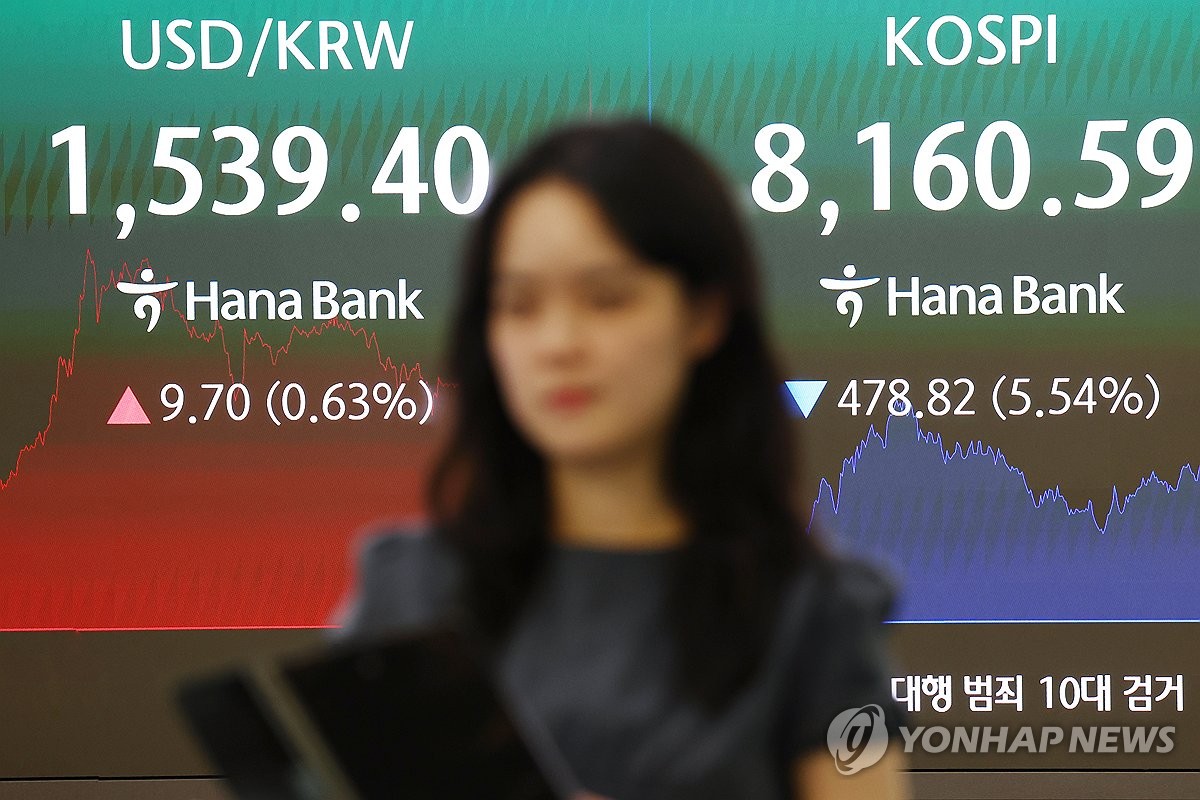
The primary cause of today’s plunge is the poor performance of US semiconductor companies. Broadcom's earnings report for the second quarter (February–April) of fiscal year 2026 missed market expectations, sending global semiconductor stocks into a collective correction. This has had a direct impact on major Korean semiconductor companies like Samsung Electronics and SK Hynix, dragging down the KOSPI index.
② Strengthened Expectations for US Interest Rate Hikes
Concerns over inflation coupled with the rising possibility of US interest rate hikes have severely dampened investor sentiment. There is talk of the KOSPI potentially recording a correction of more than 20%, and experts are advising investors to maintain a wait-and-see approach for now while waiting for clear signals of a market bottom.
③ Surge in KRW/USD Exchange Rate (Surpassed 1,540 KRW)
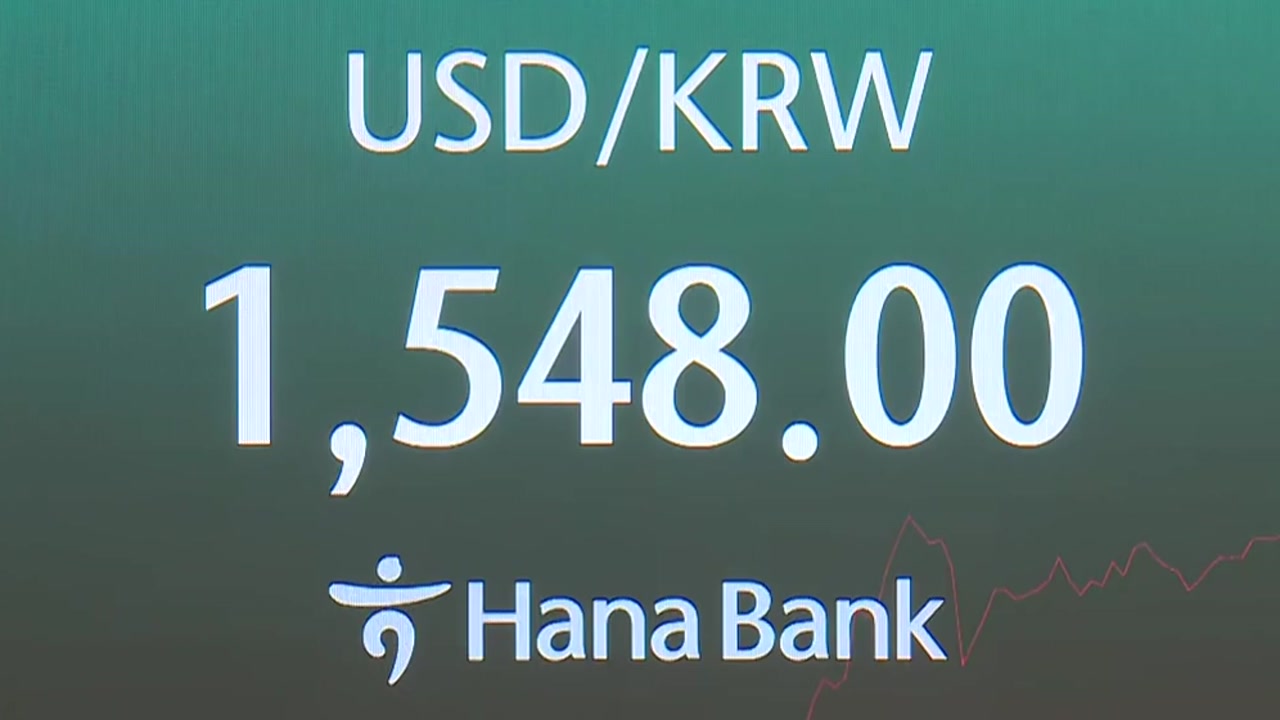
The KRW/USD exchange rate crossed 1,540 during intraday trading, reaching this level for the first time since the 2009 financial crisis. A high exchange rate hurts the profitability of foreign investors, ultimately acting as selling pressure on the Korean stock market. The structural relationship where the domestic stock market falls as the KRW/USD rate rises is currently in full effect.
3. Macro Factors and Economic Indicators
Concerns over Interest Rate Hike Cycle
Global financial markets are pricing in expectations for US interest rate hikes, placing upward pressure on discount rates for the KOSPI. A structure is forming where potential oil price shocks from the outbreak of an Iran war could lead to re-ignited inflation and a resumption of the interest rate hike cycle.
Intensified Exchange Rate Volatility
The USD/KRW pair has fluctuated by 9.92% over the past year, moving between its 52-week range of 1,347.07 and 1,538.45 before breaking past 1,540 today. A high exchange rate increases the burden on the banking sector to manage CET1 ratios, acting as a strain on the overall financial system.
Reversal of the Semiconductor Supercycle
The semiconductor supercycle, which had recently propelled the KOSPI toward the 8,800-point level, has sharply reversed due to poor global earnings. It is time to consider rebalancing portfolios toward inflation-hedged assets (energy and non-ferrous metals).
4. Analysis Summary and Investor Considerations
The stock market is currently in a "triple shock" situation caused by the combination of poor US semiconductor earnings, interest rate hike concerns, and the surge in the KRW/USD exchange rate. As the KOSPI faces extreme volatility, investors are seeing increased losses, with the triple-leveraged ETF 'KORU' losing half its value in a single week.
Checkpoints to Monitor:
- Continuous monitoring of whether the US Federal Reserve (Fed) signals further interest rate hikes
- Whether the KRW/USD exchange rate breaks through the 1,550 resistance level
- Additional earnings announcements from global semiconductor companies (Samsung Electronics, SK Hynix, etc.)
- Changes in Middle East geopolitical risk factors
This content was collected, curated, and summarized entirely by AI — including how and what to gather. It may contain inaccuracies. Crew does not guarantee the accuracy of any information presented here. Always verify facts on your own before acting on them. Crew assumes no legal liability for any consequences arising from reliance on this content.
Powered by
