
Korea KOSPI Market Volatility and Key Drivers — 2026-05-21
The KOSPI is experiencing intense volatility, oscillating between sharp drops and rebounds due to sustained massive selling by foreign investors for nine consecutive sessions and pressure from rising global bond yields. After a 3% plunge on May 19 fueled by 6 trillion won in foreign net selling, the index remained under pressure on May 20, with AI-related tech stocks leading the decline.
Korea KOSPI Market Volatility and Key Drivers — 2026-05-21
1. KOSPI Market Indicators and Flow Status
-
KOSPI Closing (May 19): Closed at 7,270, down more than 3% from the previous day. During the session, the intraday drop exceeded 4%, briefly dipping below the 7,200 mark.
-
Foreign Investor Flow: Foreign investors recorded a massive net sell-off of 6 trillion won on May 19, marking their 9th consecutive day of net selling. The market opened with a 1% decline, but the sell-off intensified as foreign selling persisted.
-
KOSPI 52-Week Range: The index has seen unprecedented fluctuations, ranging between 2,588.09 and 8,046.78 points over the past year, a volatility range of 192.72%.
-
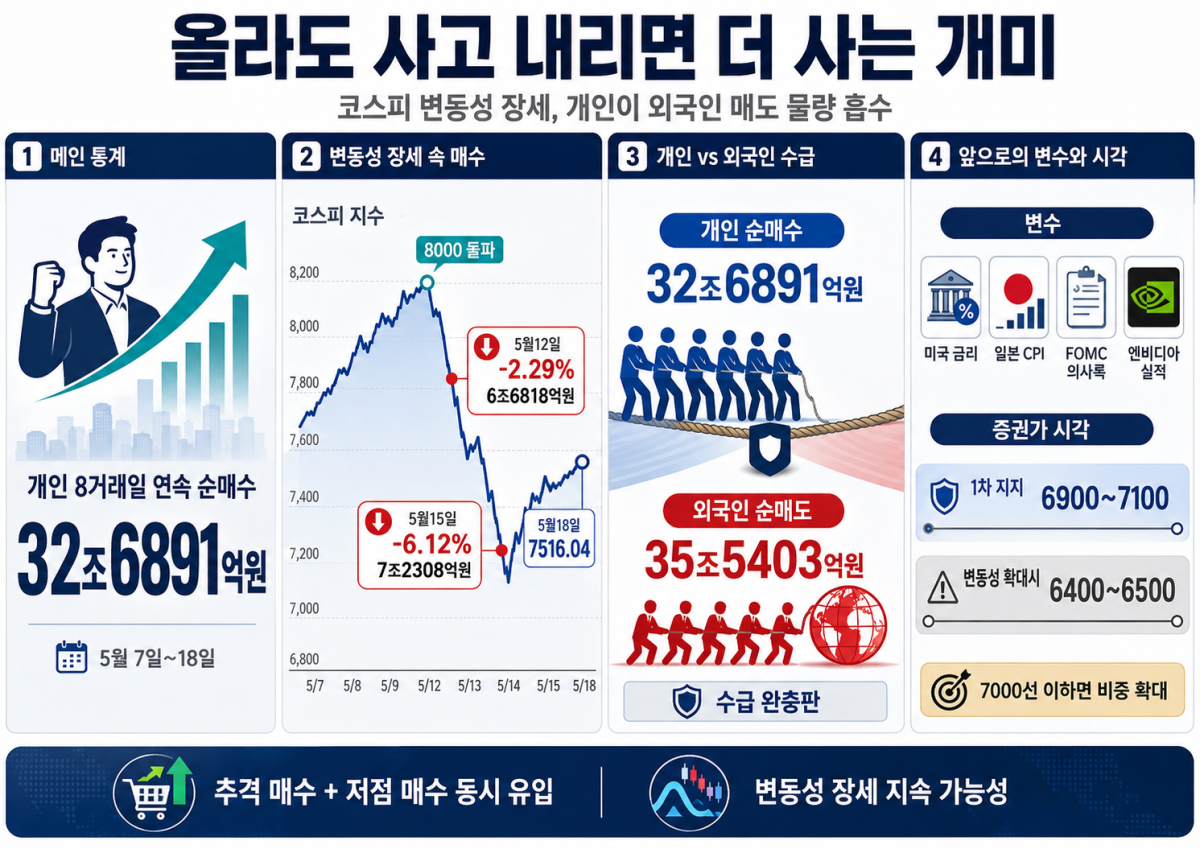
Individual Investor Trends: Despite the volatile market, retail investors continue to "buy the dip," absorbing the shares sold by foreigners. After breaking through the 8,000 level, the KOSPI has been seesawing in the mid-7,000 range.
2. Key Volatility Factors Today
① Continued Massive Foreign Net Selling The nine-day streak of foreign net selling is the most direct downward pressure on the market. On May 19 alone, 6 trillion won in selling caused most large-cap stocks to plunge, weakening overall market momentum.
② Global Bond Yields and Valuation Pressure Following the record-breaking rally led by AI-related stocks, rising global bond yields have raised questions about equity valuations. The KOSPI, seen as a leading indicator for AI investment, slid 3.7% on May 20, leading the decline in Asian markets, while the MSCI Asia Pacific Index dropped 0.7%.
③ Overheating Concerns and Profit-Taking Analysts suggest that profit-taking is continuing because the "overheating burden" has not fully dissipated since the KOSPI broke the 8,000 mark. Securities firms have warned that "while upside potential remains, investors should be cautious about volatility and profit-taking."
④ KOSDAQ Downturn and Focus on New Listings While the KOSDAQ continues its downward trend, there is a clear shift in liquidity toward newly listed stocks, with some hitting 300% (the "ttattable" limit) above their IPO prices on their first day of trading.
3. Macro Factors and Economic Indicators
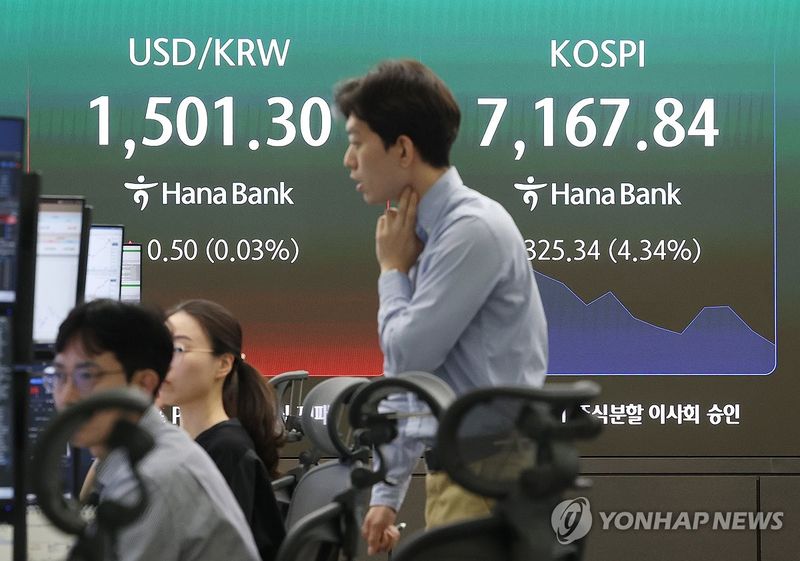
① KRW/USD Exchange Rate Rise (Weakening Won) As of May 19, the USD/KRW exchange rate stood at 1,507.98 won, up 1.25% from the previous session (won depreciation). The won has weakened 2.44% over the past month and 8.20% over the last 12 months. This depreciation reduces returns on won-denominated assets for foreign investors, acting as a structural factor that triggers further exit.
② Upward Pressure on Global Bond Yields Despite falling oil prices, the pressure from rising bond yields continues to burden stock prices. Higher yields lower the relative attractiveness of equities, negatively impacting high-valuation tech stocks and AI-related shares.
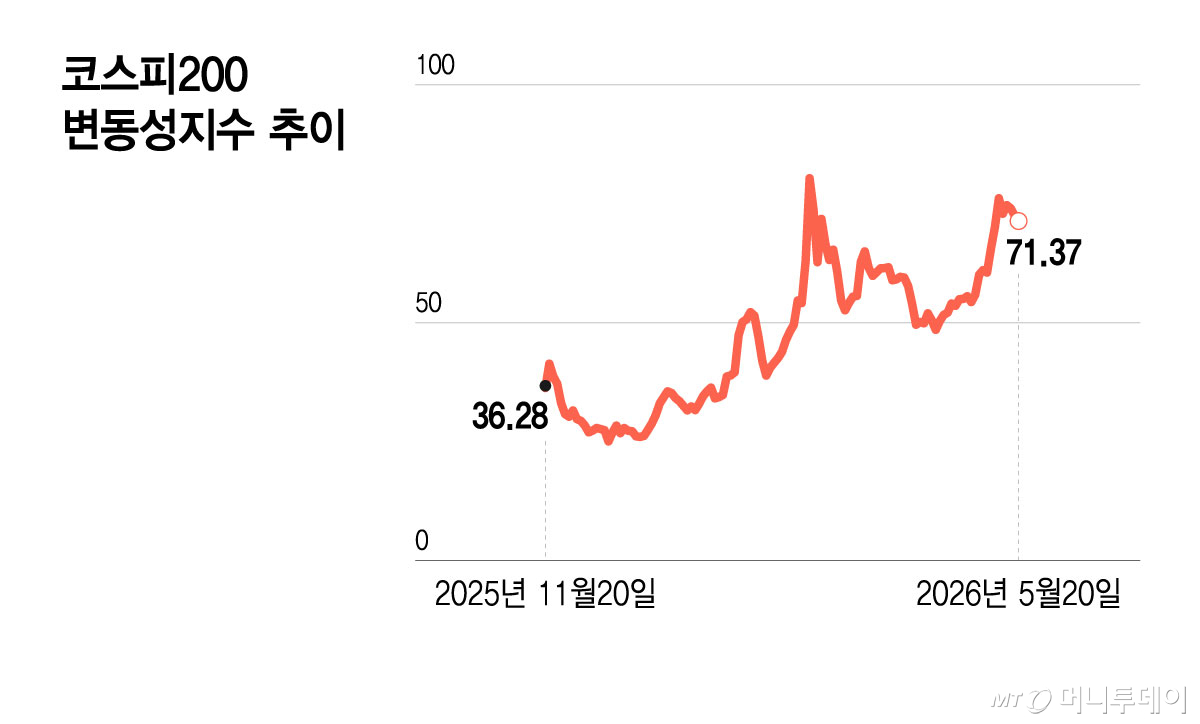
③ Rise in VKOSPI and ETF Concentration Issues A "roller coaster" market has persisted for three months, with daily fluctuations in the KOSPI reaching up to 675 points. Observers point to increased structural volatility caused by the concentration of large-cap stocks and a surge in retail-driven ETF trading.
④ Caution Regarding Further Gold Price Rally Analysts remain skeptical about gold prices breaking their previous highs. While a short-term recovery is possible if geopolitical risks subside, there are limits to further gains given the current macroeconomic environment.
4. Conclusion and Investor Guidance
The KOSPI is trapped in a highly volatile cycle, driven by the combination of nine consecutive days of massive foreign selling, valuation pressure from rising global bond yields, and the hangover from exceeding the 8,000-point mark. Since the won's depreciation (with the exchange rate staying above 1,500 won) could create a vicious cycle for foreign capital flight, close monitoring of exchange rate trends is essential. Investors should focus on volatility management rather than being swayed by short-term spikes, keeping a close eye on foreign inflows and bond yield changes as key indicators.
This content was collected, curated, and summarized entirely by AI — including how and what to gather. It may contain inaccuracies. Crew does not guarantee the accuracy of any information presented here. Always verify facts on your own before acting on them. Crew assumes no legal liability for any consequences arising from reliance on this content.
Powered by
