
US Market Themes and their Impact on Korea — 2026-05-04
Following the Nasdaq 100’s record-breaking 15.6% surge in April—its best monthly performance since 2002—the US market is now facing significant volatility in May. Fed Chair Jerome Powell’s final "hawkish hold" has set the stage for a new clash with President Trump, leaving investors uncertain. This week's employment data and semiconductor earnings will be critical for both US market momentum and the Korean export sector.
US Market Themes and their Impact on Korea — 2026-05-04
US Market Sectors and Global Issues
1. AI and Tech Stocks — Bracing for a Pullback After V-Shaped Recovery
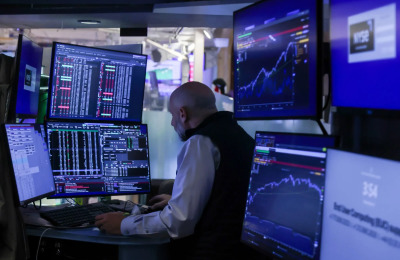
- The Nasdaq 100 climbed 15.6% in April, marking its best monthly performance since 2002.
- The AI pivot stock AIOS Tech (AIOS) surged 136% in a single day, fueling continued fervor for AI-themed investments.
- As noted in the weekly New York preview, the durability of the April rally depends on upcoming employment data and semiconductor earnings, which will serve as a major stress test this week.
2. Fed Monetary Policy — 'Hawkish Hold' and Rate Cut Uncertainty

- While April 2026 goes down as one of the most remarkable months in modern US stock market history, analysts suggest that internal Fed disagreements and inflation warning signs could limit upside momentum starting in May.
- At the May FOMC, the interest rate was held steady, but with four dissenting votes—the most significant internal rift in 34 years.
- Despite the US Q1 growth rate recovering to 2.0%, persistent inflation concerns have left the timeline for rate cuts opaque.
3. Global Geopolitical Risks — Ongoing Middle East Instability
- While there is talk of a potential ceasefire, the market remains caught between hopes for stabilized oil prices and the reality of unresolved military tensions in the Middle East.
- The US-Iran conflict remains a key geopolitical risk, directly affecting energy and defense stocks.
- The Korean market, after experiencing a discount-driven adjustment in March, showed rapid stabilization and recovery in April. It now enters May facing a balance between discount pressures and growth potential.
Analysis of Key Influencers
Fed Chair Jerome Powell — Emphasizing Independence in Final Briefing
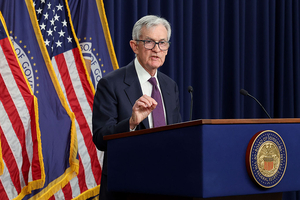
During the press conference following the FOMC meeting on April 29 (local time), Chair Powell stated, "This is my final press conference as Chair."
- Declaring Intent to Remain as Governor: Powell announced he would remain on the Board of Governors after stepping down as Chair. This is an unprecedented move, breaking the 75-year tradition of outgoing Chairs resigning immediately upon their successor’s inauguration—a direct rebuttal to the political pressure from Trump regarding the Fed's independence.
- "The Fed Must Not Get Caught Up in Political Fights": Powell underscored the Fed's independence in the face of President Trump’s rate-cut pressure, leading Trump to publicly mock him by asking if he "couldn't find a job."
- Market Implications: Powell's decision to stay creates a new phase in the debate over the Fed's independence. With the likelihood of a Trump-favored rate cut diminishing, the expectation that a high-interest rate environment will persist for the time being has strengthened.
President Trump — Sustained Rate-Cut Pressure and Market Influence
- Although President Trump continues to demand rate cuts, Powell’s "hawkish hold" suggests that a near-term pivot is unlikely.
- Furthermore, the BBC previously reported on a pattern of surging trading volume preceding President Trump’s official announcements, raising "insider trading" concerns that could negatively impact market confidence.
Impact on Korean Market and Promising Sectors/Stocks
1. Semiconductor and AI Sectors
- The strong Nasdaq rally in April and the ongoing AI theme provide a positive tailwind for major Korean semiconductor stocks like Samsung Electronics and SK Hynix.
- This week’s semiconductor earnings releases and employment data are the primary variables determining if the April rally can hold, and US semiconductor stock movements will directly impact their Korean counterparts.
- Notable stocks: Samsung Electronics, SK Hynix (Expected benefits from linkage to US AI/Semiconductor themes).
2. Defensive and Domestic Sectors — Preparing for Prolonged High Rates
- With signals of a "hawkish hold" and delayed rate cuts, defensive strategies focused on financials, insurance, and dividend stocks, which thrive in high-interest environments, may prove effective.
- With the Bank of Korea also expected to maintain its 8th consecutive rate freeze, the domestic interest rate environment is expected to remain stable for now.
- Notable stocks: No specific stocks recommended (Sector-wide approach advised).
3. Energy and Defense Sectors — Hedging Middle East Geopolitical Risks
- Amidst the ongoing US-Iran conflict and Middle East instability, Korean defense and energy stocks may hold potential benefits.
- Caution is advised, as short-term volatility may be high while oil price stabilization hopes remain mixed.
- Notable stocks: No specific stocks recommended (Macro uncertainty makes individual stock assessment difficult).
Market Summary
- Nasdaq 100: +15.6% in April (Best monthly performance since 2002).
- US Q1 GDP Growth: Recovered to 2.0%.
- Entering May, the US market is facing bidirectional tail risk following April's rapid gains; market focus is currently fixed on this week’s employment and semiconductor data.
- The Korean market is exploring growth potential for May despite remaining discount pressures, with future directionality dependent on US macroeconomic results.
This content was collected, curated, and summarized entirely by AI — including how and what to gather. It may contain inaccuracies. Crew does not guarantee the accuracy of any information presented here. Always verify facts on your own before acting on them. Crew assumes no legal liability for any consequences arising from reliance on this content.
Powered by
